
Your anxiety isn’t random — here’s what your nervous system is actually trying to tell youYou’re doing something completely normal—scrolling your phone, lying in bed, or just sitting quietly.
Nothing is wrong. No bad news. No pressure.
But suddenly… your heart starts racing. Your chest feels tight.
And a wave of anxiety hits you out of nowhere.
So you ask yourself:
“Why do I feel anxious for no reason?”
Here’s the truth most people don’t realize:
It’s not “no reason.”
It’s just a reason you haven’t identified yet.
Your body reacts before your mind understands.
And in many cases, hidden triggers like gut imbalance, blood sugar changes, or silent stress buildup are already at work.
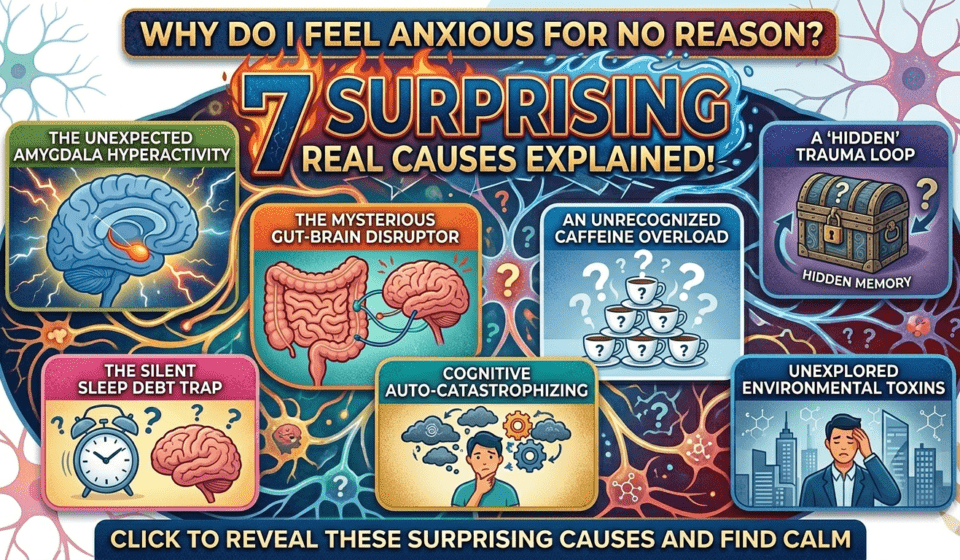
In this guide, you’ll uncover the 7 real causes of sudden anxiety—and more importantly, how to take control of it before it takes control of you.
40M Americans affected by anxiety disorders annually
3xMore likely to have anxiety if a close relative has it
70%Of people never identify a clear trigger for episodes
Table of Contents
Why Does Anxiety Feel Like It Comes Out of Nowhere?
When you feel anxious for no reason, the first thing most people do is panic about the panic — which, ironically, makes everything worse. But here’s what’s actually happening beneath the surface:
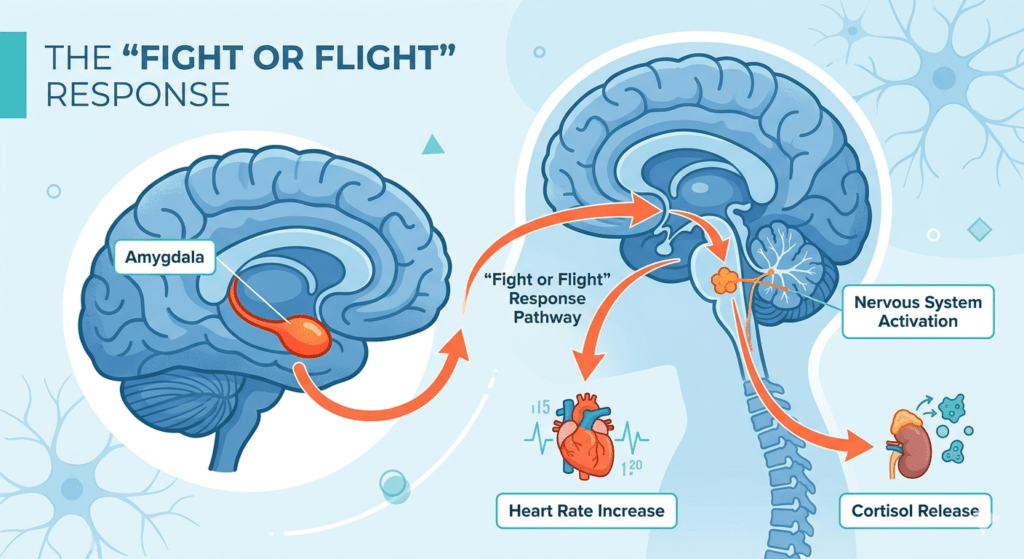
Your amygdala — the brain’s alarm system — doesn’t wait for your rational mind to catch up. It processes threats in milliseconds. So by the time you’re consciously aware of feeling nervous, your body is already in fight-or-flight mode: heart racing, palms sweating, muscles tensed.
What triggered it? It could be a sound that subconsciously reminded you of something frightening. A shift in light. A smell. An internal chemical imbalance. The trigger may be invisible to you — but it’s real. And understanding the real causes behind sudden, unexplained anxiety is the first powerful step toward managing it.
🧠
7 Real Causes of Feeling Anxious for No Reason
Cause 1
Chronic Stress Overload — Your Brain Stuck in “On” Mode
How Hidden Stress Triggers Unexplained Anxiety
You might not feel consciously stressed at this moment — but your nervous system keeps score. Work pressure, relationship tension, financial worries, and daily micro-stressors accumulate silently in the body. Over time, your brain enters a state of hypervigilance, where it keeps stress hormones like cortisol and adrenaline activated even during calm moments.
This means your body is essentially primed and ready for a threat that never arrives. When that pent-up stress energy finally releases, it can feel like sudden, random anxiety — but it’s anything but random. It’s your system finally exhaling a breath it’s been holding for weeks.
⚠️ Watch for This
If you feel most anxious during downtime — evenings, weekends, vacations — chronic stress accumulation may be the hidden culprit behind your unexplained nervous episodes.
Cause 2
Sleep Deprivation & Morning Cortisol Spikes
Why You Feel Anxious for No Reason When You Wake Up
Many people report waking up already anxious — before the day has even started. This often isn’t psychological. It’s hormonal. Cortisol (your “wake-up hormone”) surges in the early morning to help you become alert. But when you’re sleep-deprived or chronically overtired, this cortisol surge can be exaggerated, triggering anxiety symptoms the moment you open your eyes.
Poor sleep also impairs the prefrontal cortex — the rational, calming part of your brain — making it harder to regulate the emotional reactions triggered by the amygdala. The result: more anxiety, less ability to talk yourself down from it.
Quick Sleep Tips to Reduce Morning Anxiety
- 1Aim for 7–9 hours of consistent sleep each night
- 2Avoid screens for 60 minutes before bed (blue light disrupts melatonin)
- 3Keep your bedroom cool and dark — your body sleeps better at 65–68°F
- 4Avoid caffeine after 2 PM to prevent disrupted sleep cycles
Cause 3
Blood Sugar Crashes & Diet Triggers
The Surprising Link Between Food and Feeling Anxious Without a Reason
Skipping meals or eating highly processed food causes your blood sugar to spike and then crash. When blood sugar drops, your body interprets it as an emergency — releasing adrenaline to try to restore balance. The physical symptoms of low blood sugar are nearly identical to anxiety: racing heart, shakiness, dizziness, irritability, and a sense of doom.
Caffeine is another sneaky culprit. Similarly, alcohol may feel calming initially but triggers a neurological rebound effect that often produces sharp anxiety the following day.
💡 Pro Tip
Try keeping a food-mood journal for two weeks. Track what you eat and when anxiety spikes. You may discover powerful patterns connecting your diet to your most intense episodes of unexplained nervousness.
Cause 4
Hormonal Imbalances — The Invisible Anxiety Driver
How Hormones Make You Feel Anxious for No Apparent Reason
Hormones are powerful regulators of your emotional state. When they shift — due to PMS, perimenopause, pregnancy, postpartum changes, or thyroid dysfunction — your nervous system becomes significantly more sensitive. Even minor stressors can trigger intense anxiety responses during hormonal fluctuations.
Thyroid disorders are especially overlooked. Both hypothyroidism and hyperthyroidism can produce anxiety-like symptoms, including heart palpitations, restlessness, and unexplained worry. If you experience random anxiety alongside fatigue, weight changes, or temperature sensitivity, ask your doctor for a thyroid panel.
Hormonal Conditions Linked to Anxiety Spikes
- ✓Premenstrual syndrome (PMS) and PMDD
- ✓Perimenopause and menopause
- ✓Postpartum hormonal changes
- ✓Hyperthyroidism or hypothyroidism
- ✓Adrenal fatigue and cortisol dysregulation
Cause 5
Unprocessed Trauma & Emotional Memory
Past Trauma as a Silent Cause of Feeling Anxious Without Knowing Why
Trauma isn’t always a dramatic, single event. Emotional wounds from childhood, toxic relationships, grief, or years of subtle neglect can become stored in the body — not just in memory. When something in your environment unconsciously resembles a past threat (a voice tone, a smell, a crowded space), your nervous system can trigger a full anxiety response before your conscious mind connects the dots.
This is why anxiety can feel so irrational. The logical brain says “nothing is wrong.” But the body’s survival system recognized a pattern it learned to fear years ago. This phenomenon is at the core of post-traumatic stress and complex PTSD — conditions that can exist without dramatic flashbacks, showing up instead as persistent, unexplained anxiety.
✅ What Helps
Somatic therapy, EMDR (Eye Movement Desensitization and Reprocessing), and trauma-focused CBT have strong research support for healing the nervous system patterns left behind by unprocessed trauma.
Cause 6
Genetics & Brain Chemistry
Why Feeling Anxious for No Reason Can Run in Families
Anxiety isn’t purely a product of your circumstances. Research consistently shows that anxiety disorders are heritable. If a parent, sibling, or close relative struggles with anxiety, your own risk is meaningfully higher — not because anxiety is inevitable, but because you may have inherited a nervous system that’s wired to be more sensitive to stress signals.
Cause 7
Underlying Anxiety Disorder — GAD, Panic Disorder, or PTSD
When Feeling Anxious for No Reason Is a Sign of Something Bigger
Sometimes, persistent unexplained anxiety is a sign of an underlying clinical condition that hasn’t yet been diagnosed. The most common include:
- →Generalized Anxiety Disorder (GAD)— characterized by “free-floating” anxiety with no specific trigger, persistent worry, and an inability to relax
- →Panic Disorder— sudden, intense anxiety attacks that may have no apparent cause and often peak within 10 minutes
- →PTSD— trauma-related hyperarousal that creates a constant state of emotional alertness
- →Health Anxiety— fear of physical symptoms that creates a feedback loop of worry and physical sensations
According to the National Institute of Mental Health, GAD affects millions of adults and often develops gradually in early adulthood — with many people going years without proper diagnosis or support.
How to Calm Unexplained Anxiety Right Now
Proven Techniques to Stop Anxiety for No Reason in Its Tracks
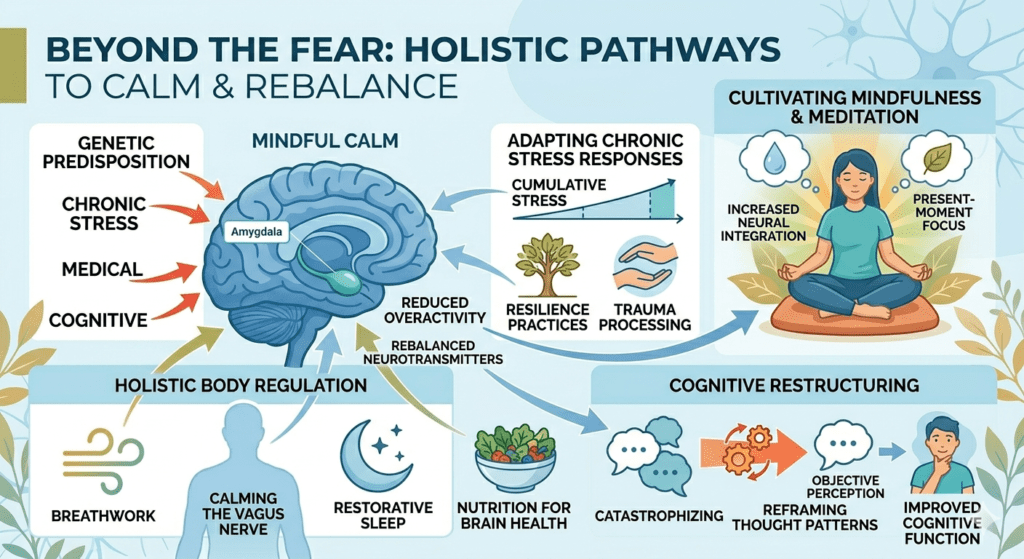
When a wave of unexplained nervousness hits, the goal isn’t to fight it — it’s to signal safety to your nervous system. Here are evidence-backed strategies that work:
Box Breathing (4-4-4-4)
Inhale for 4 seconds → Hold for 4 seconds → Exhale for 4 seconds → Hold for 4 seconds. Repeat 4 times. This directly activates the parasympathetic nervous system, switching your body from “threat mode” to “safe mode.”
The 5-4-3-2-1 Grounding Method
Name 5 things you can see → 4 you can physically touch → 3 you can hear → 2 you can smell → 1 you can taste. This interrupts the anxiety spiral by pulling your attention into the present moment.
Progressive Muscle Relaxation
Systematically tense and release each muscle group for 5 seconds, starting from your feet upward. This physically discharges tension stored in the body — often the physical “home” of unexplained anxiety.
Anxiety Journaling
Write down when the anxiety occurred, what you were doing, how you felt physically, and any thoughts that were present. Over time, this creates a powerful map of your hidden triggers — turning “no reason” into a clear, manageable pattern.

Why Do I Feel Anxious for No Reason — When Should I Seek Help?
Occasional unexplained anxiety is a normal human experience. But if the feeling is frequent, intense, or starting to affect your daily life, relationships, or work — that’s your body’s clear signal that it needs more support than self-help alone can provide.
⚠️ Seek Professional Support If You Notice:
Trusted Resources to Learn More
These authoritative sources offer deeper, evidence-based information about anxiety causes and treatment:🏛️National Institute of Mental Health (NIMH)Comprehensive guide to Generalized Anxiety Disorder — causes, symptoms, and treatment options🏥Mayo Clinic — Anxiety DisordersMedical overview of anxiety symptoms, causes, risk factors, and when to see a doctor📖Healthline — Anxiety Triggers ExplainedMedically reviewed breakdown of 11 common anxiety triggers and how to identify yours
The Bottom Line: Your Anxiety Has a Reason
When you feel anxious for no reason, the truth is there is a reason — it’s just happening beneath the surface of your conscious awareness. Whether it’s chronic stress, poor sleep, hormonal shifts, blood sugar crashes, past trauma, your genetics, or an underlying anxiety disorder, unexplained anxiety is always a message from your nervous system. The goal isn’t to silence it — it’s to understand it. With the right tools and support, you can move from confusion and fear to clarity and calm.
Internal links:
- https://mysportinfo.com/why-does-my-anxiety-come-and-go-suddenly/
- https://mysportinfo.com/7-signs-of-poor-gut-health-and-anxiety/
- https://mysportinfo.com/best-time-to-take-probiotics-for-gut-health/
Conclusion: You’re Not Alone — And It Gets Better
So the next time you ask yourself, “Why do I feel anxious for no reason?” — remember this: your body isn’t malfunctioning. It’s communicating. These 7 real causes of unexplained anxiety prove that what feels random is almost always rooted in something specific: your biology, your history, your habits, or your brain’s learned patterns of response.
The most empowering thing you can do is stop blaming yourself for the anxiety and start getting curious about it. Track your patterns. Learn the grounding techniques. Improve your sleep and nutrition. And if anxiety for no reason is becoming a regular part of your life, please reach out to a mental health professional — because you deserve real, lasting relief.
You are not weak. You are not broken. Your nervous system is just asking for help.