
Anxiety After Eating: (5 Gut Triggers) is real — and your gut is behind it. If your heart races, chest tightens, or your mind spirals right after a meal, you are not imagining it and you are not alone.
You finish eating. Instead of feeling satisfied and calm, something shifts. Your body gets restless. Your thoughts spiral. A wave of unease hits — and you have no idea why.
Here is what most people never find out. Anxiety after eating is not random. It is a direct gut signal — and your digestive system is sending it every single time.
Your dige stive system and brain are deeply connected. And certain hidden gut triggers can silently activate anxiety responses after meals.
In this guide, you’ll uncover the 5 powerful gut triggers behind anxiety after eating—and exactly how to take control of them.

Table of Contents
What Is Anxiety After Eating?
Anxiety After Eating: 5 Gut Triggers starts with understanding this:
Post-meal anxiety — also called postprandial anxiety — occurs when anxiety symptoms appear during or shortly after eating. It happens because your gut and brain communicate constantly through the gut-brain axis. According to Harvard Health, this connection is so powerful that gut dysfunction is now recognised as a direct driver of anxiety disorders.
Your meal does not just affect your stomach. It affects your mood, your hormones, and your entire nervous system simultaneously..
Anxiety After Eating: 5 Gut Triggers Explained
1. Blood Sugar Spikes and Crashes
One of the most common causes of anxiety after eating is unstable blood sugar.
When you eat refined carbs or sugar, your blood sugar spikes rapidly then drops fast. Your body releases adrenaline to compensate. That adrenaline flood produces racing heart, shakiness, and sudden overwhelming anxiety — symptoms almost identical to a panic attack. Many people visit the emergency room convinced something is seriously wrong, when blood sugar is the entire cause.
This condition is often linked to reactive hypoglycemia.
A report from Cleveland Clinic explains how blood sugar drops can trigger anxiety-like symptoms.
2. Gut-Brain Axis Imbalance
Your gut produces around 90% of serotonin—your “calm” chemical.
When your gut is inflamed, imbalanced, or irritated, it sends distress signals directly to your brain through the vagus nerve. Your brain receives these signals and fires anxiety responses — even when nothing emotionally stressful is happening in your life.
Research published in Frontiers in Psychiatry highlights how gut health influences anxiety through neural pathways.
Read our article on can IBS cause anxiety to understand how gut inflammation directly drives post-meal anxiety.
3. Gut Dysbiosis (Microbial Imbalance)
Inside your gut lives a community of bacteria.
When gut bacteria are balanced, your microbiome produces calming neurotransmitters that keep anxiety under control. When dysbiosis occurs — harmful bacteria outnumber beneficial ones — this production collapses. Your gut starts sending alarm signals instead of calm signals. Every meal feeds this imbalance and triggers post-meal anxiety as a result.
Read our guide on best supplements for anxiety and gut health for the best probiotic strains that reduce anxiety after eating.
4. Food Sensitivities and Inflammation
Some foods trigger hidden reactions:
- Dairy
- Gluten
- Processed foods
These don’t always cause immediate symptoms—but they create internal inflammation.
Your body responds with stress → anxiety
90% — of serotonin is made in your gut — disruption here fires anxiety directly after meals
15–90 mins — is when anxiety after eating typically peaks following a trigger meal
3x — more likely to experience post-meal anxiety if you have gut dysbiosis or IBS
5. Caffeine and Hidden Stimulants
Combining meals with coffee, tea, or sugary caffeinated drinks overstimulates your nervous system during digestion. Caffeine blocks the calming adenosine receptors in your brain while simultaneously spiking cortisol and adrenaline. During the already-active process of digestion, this creates a perfect storm for post-meal anxiety and even panic attacks in sensitive individuals.

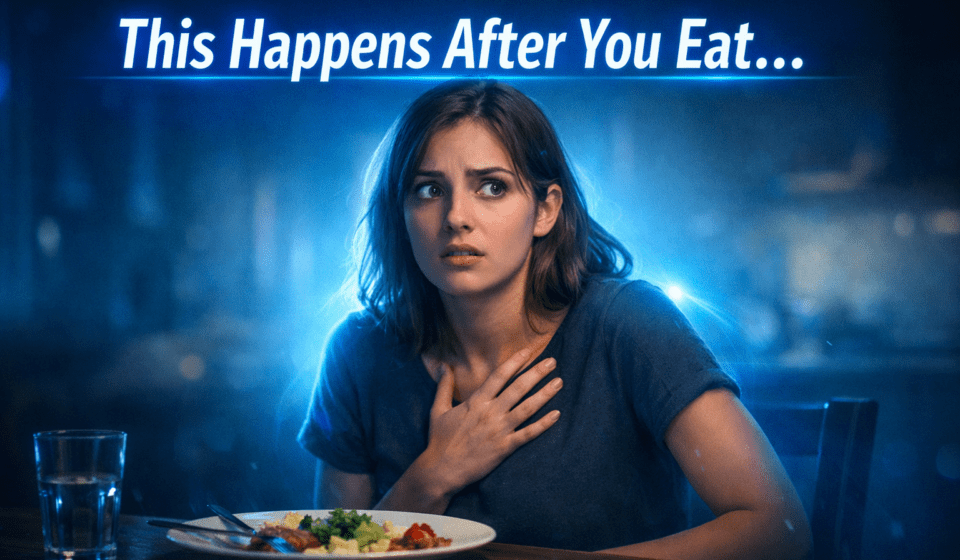
Cup of coffee next to meal, person holding chest looking uneasy
Symptoms of Anxiety After Eating
If you’re experiencing Anxiety After Eating: 5 Gut Triggers, you may notice:
- Racing heart after meals
- Tight chest
- Bloating or discomfort
- Sudden uneasiness
- Brain fog
These are physical responses—not just mental stress
How to Stop Anxiety After Eating Immediately
Here’s what works fast:
- Eat slowly — take at least 15 minutes per meal and chew every bite thoroughly. Sit upright after eating to support proper digestion and reduce vagus nerve pressure. Drink warm water during and after meals to calm your digestive tract. Take a 10 minute slow walk after eating to activate digestion without spiking your nervous system. Practice 4-4-6 breathing — inhale 4 counts, hold 4, exhale 6 — to activate your vagus nerve and bring your post-meal anxiety down within minutes.
These actions calm both digestion and your nervous system

Long-Term Fix for Anxiety After Eating
To fix Anxiety After Eating: 5 Gut Triggers, focus on consistency:
- Build every meal around protein, healthy fat, and fibre to stabilise blood sugar and prevent the adrenaline crashes that trigger anxiety after eating. Reduce sugar and refined carbohydrate intake immediately — these are the fastest acting anxiety triggers in your diet. Keep a food and mood diary for 2 weeks to identify your personal trigger foods. Add a probiotic daily to restore gut bacterial balance and reduce the gut inflammation firing your post-meal anxiety. Limit caffeine to mornings only and never combine it with meals.
Control the cause, not just the symptom
When to Seek Help
Consult a professional if:
- Anxiety happens after every meal
- Symptoms feel intense
- You experience panic attacks
A healthcare expert can evaluate:
- Gut disorders
- Food sensitivities
- Hormonal imbalance
Related Article
Why Do I Feel Anxious for No Reason? (7 Real Causes + Fixes)
gut-brain connection explained”
Final Thought
Anxiety After Eating: 5 Gut Triggers is not something to ignore.
It’s your body communicating.
Once you understand:
- what you eat
- how your gut responds
- and what triggers your system
You move from confusion to control.
FAQ Section
What is anxiety after eating?
Anxiety after eating is a physical and mental response triggered by gut-related factors like blood sugar changes, digestion, or food sensitivities.
How long after eating does anxiety start?
It can begin within 15 minutes to 2 hours depending on the trigger.
Can gut health cause anxiety?
Yes. Poor gut health directly affects mood through the gut-brain connection.
What foods trigger anxiety after eating?
Sugary foods, refined carbs, caffeine, processed foods, and personal sensitivities.
INTERNAL LINKS:
- https://mysportinfo.com/why-do-i-feel-anxious-for-no-reason/
- https://mysportinfo.com/why-does-my-anxiety-come-and-go-suddenly/
- https://mysportinfo.com/7-signs-of-poor-gut-health-and-anxiety/
- https://mysportinfo.com/best-time-to-take-probiotics-for-gut-health/
FOR COMPLETE GUIDE: https://mysportinfo.com/gut-health-and-anxiety-complete-guide/