
If you’ve asked this, you’re not alone—and more importantly, you’re not imagining it.
One moment you feel normal…
Next moment your chest feels tight, your thoughts race, and you don’t even know why.
That’s the frustrating part—there’s no clear trigger.
Here’s the truth most people miss about Why Does My Anxiety Come and Go Suddenly
Sudden anxiety is rarely random.
It’s your body reacting to internal signals you’re not aware of.
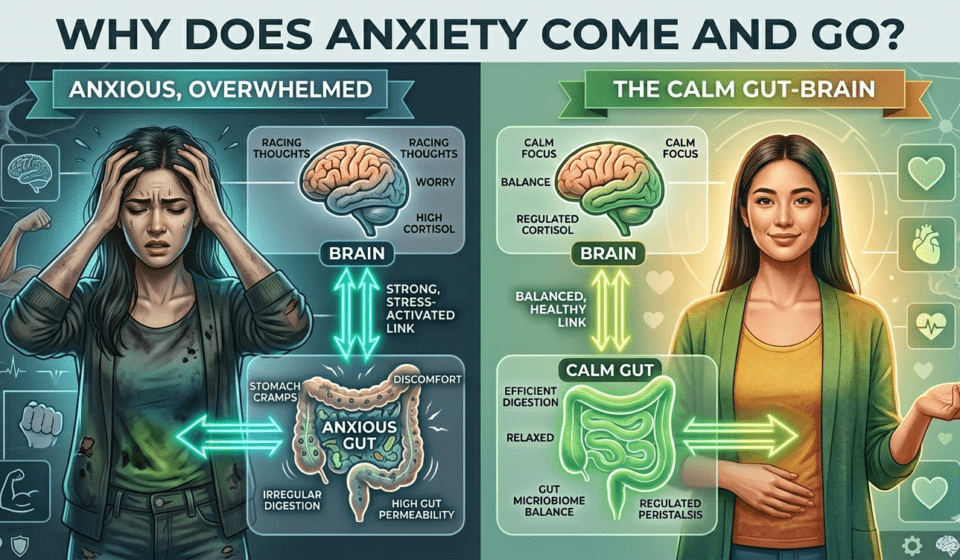
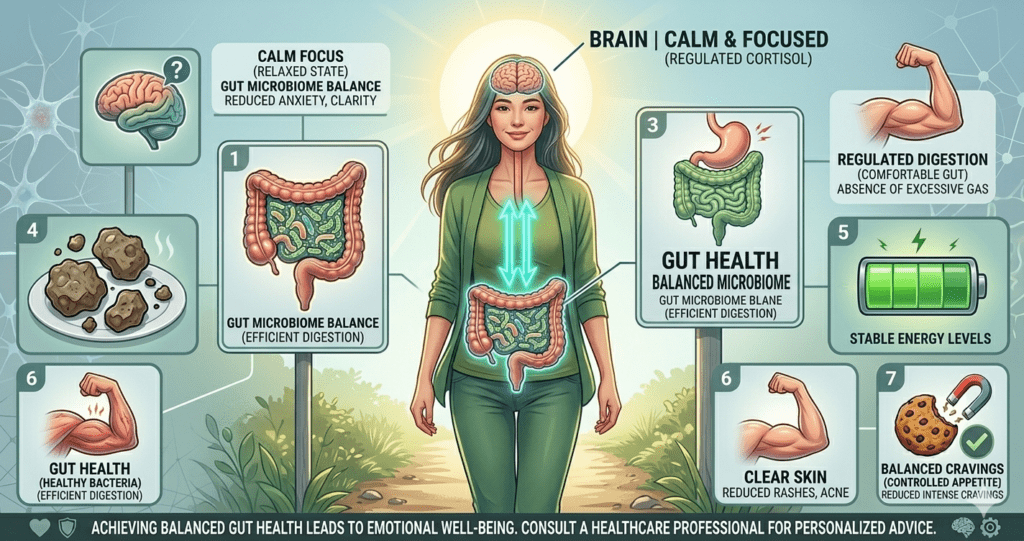
Through the gut-brain axis, your body constantly sends information to your brain. When that system is unstable, your mood becomes unpredictable.
In this guide, you’ll understand:
- Why anxiety comes and goes suddenly
- What’s happening inside your body
- And how to take back control
- Check these foods for gut health to reduce anxiety:
https://mysportinfo.com/foods-for-gut-health-to-reduce-anxiety/
Why Does My Anxiety Come and Go Suddenly? (Real Explanation)
Let’s be clear:
Your brain doesn’t create anxiety randomly.
It responds to:
- Hormonal changes
- Gut signals
- Stress buildup
- Lifestyle patterns
When these fluctuate, your anxiety appears and disappears.
Table of Contents
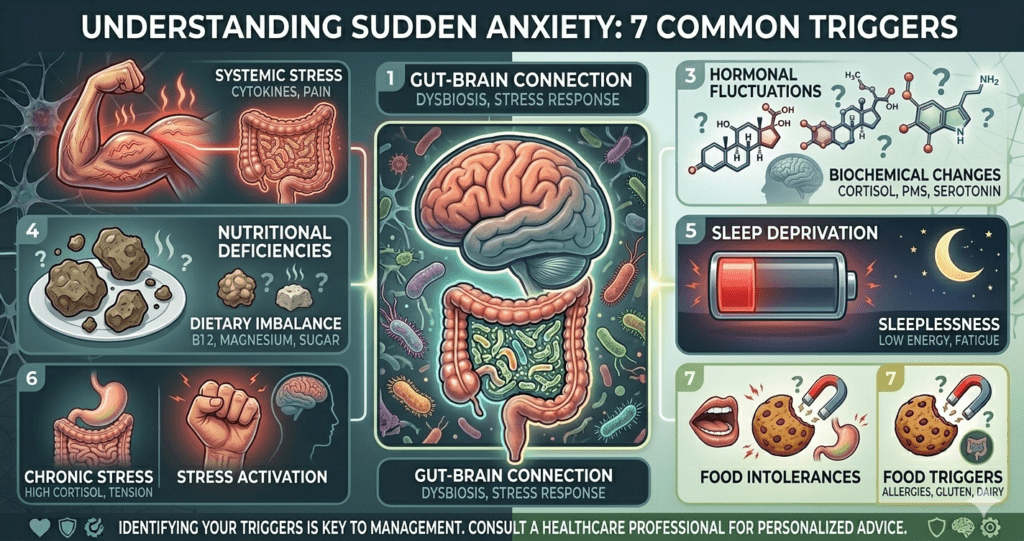
7 Real Reasons Your Anxiety Comes and Goes Suddenly
Hidden Stress Build-Up
You may feel “fine,” but your body is storing stress.
Over time:
- Pressure accumulates
- Nervous system overloads
- Anxiety suddenly spikes
It’s not sudden—it’s delayed.
2. Blood Sugar Fluctuations
When you skip meals or eat too much sugar:
- Energy spikes → crashes
- Brain loses stability
- Anxiety increases
Your body reads low energy as a threat.
3. Poor Gut Health
Your gut plays a bigger role than you think Imbalance in gut bacteria affects mood-regulating chemicals like serotonin.
When this system is unstable, your anxiety can appear without warning.
Read more:
https://mysportinfo.com/7-signs-of-poor-gut-health-and-anxiety/
Understanding how your body reacts to stress is important. Research on the gut-brain axis shows a strong connection between gut health and emotional regulation.
Learn more here:
https://www.healthline.com/nutrition/gut-brain-axis
4. Lack of Quality Sleep
Bad sleep doesn’t just make you tired.
It:
- Reduces emotional control
- Increases stress sensitivity
- Triggers sudden anxiety episodes
Sleep loss = unstable nervous system.
5. Overactive Nervous System
If your body stays in “alert mode”:
- Small triggers feel big
- Calm moments don’t last
- Anxiety comes in waves
Your system isn’t resetting properly.
6. Overthinking and Mental Loops
Sometimes the trigger is internal.
- Repeating thoughts
- “What if” scenarios
- Future worries
Your brain creates its own stress cycles.
7. Lifestyle Triggers You Ignore
Daily habits matter more than you think:
- Too much caffeine
- Lack of movement
- Poor diet
These silently increase anxiety sensitivity.
A healthy diet and gut balance play a key role in managing anxiety symptoms.
More insights:
https://www.medicalnewstoday.com/articles/gut-health-and-anxiety
Fix instantly here:
https://mysportinfo.com/how-to-reduce-anxiety-instantly/
What’s Actually Happening in Your Body
Let’s simplify:
- Internal imbalance → brain receives stress signals
- Stress signals → anxiety response
- Temporary balance → anxiety disappears
That’s why it feels unpredictable.
But it’s not random—it’s patterned.
How to Control Sudden Anxiety Naturally
Now the part most people skip—action.
1. Stabilize Your Gut
Start with:
- Yogurt
- Kefir
Or use probiotics for faster results:
2. Fix Your Daily Routine
- Eat on time
- Sleep consistently
- Reduce sugar + caffeine
Stability reduces anxiety spikes.
Learn how to reduce anxiety instantly:
https://mysportinfo.com/how-to-reduce-anxiety-instantly/
3. Calm Your Nervous System
Simple actions:
- Deep breathing
- Walking
- Sunlight exposure
These reset your system.
Prompt: Calm person walking in sunlight, relaxed environment, natural wellness theme
Mistakes That Make Anxiety Worse
- Ignoring physical health
- Only focusing on mindset
- Expecting instant solutions
- Inconsistent habits
Anxiety improves with systems, not quick fixes.
FAQ – Why Does My Anxiety Come and Go Suddenly
Is sudden anxiety normal?
Yes, but frequent episodes signal imbalance.
Can gut health cause sudden anxiety?
Yes, gut imbalance affects mood and stress signals.
How do I stop sudden anxiety?
Fix root causes—gut, sleep, and stress patterns.
Conclusion
If you’ve been asking “why does my anxiety come and go suddenly” — here’s the truth nobody tells you:
It’s not random. It’s not weakness. It’s not “just who you are.”
It’s your body reacting to real, fixable internal imbalances — and it’s been trying to tell you something this whole time.
You can keep white-knuckling through every wave, waiting for it to pass on its own.
Or you can start fixing the system that controls it — your gut, your cortisol, your nervous system.
Small daily changes → a calmer, more stable mind. Ignoring the signals → the same cycles, over and over.
The anxiety that comes and goes isn’t a life sentence. It’s a pattern. And patterns can be broken.
Start with one change today. Your nervous system is waiting. The choice is yours.
Frequently Asked Questions
Why does anxiety come and go randomly?
Anxiety comes and goes because your nervous system is constantly responding to internal and external triggers. Your body’s stress response — driven by cortisol and adrenaline — can activate even without an obvious reason. Gut health plays a major role too, as your gut microbiome directly communicates with your brain through the vagus nerve. Hormonal fluctuations, poor sleep, and blood sugar changes can all cause anxiety to spike and then fade. This on-and-off pattern is completely normal and does not mean something is seriously wrong with you.
Can gut health cause anxiety to come and go suddenly?
Yes, absolutely. Your gut and brain are connected through the gut-brain axis, meaning digestive changes can directly trigger anxiety episodes. When your gut bacteria are imbalanced, they produce fewer mood-regulating chemicals like serotonin — about 90% of which is made in your gut. Eating certain foods, skipping meals, or digestive issues like bloating can suddenly spike anxiety levels. Healing your gut with probiotics and a clean diet can significantly reduce these random anxiety episodes over time.
Is it normal for anxiety to suddenly disappear?
Yes, it is completely normal. Anxiety is not meant to stay permanently — it is your body’s alarm system, designed to activate and then switch off. Once your nervous system detects that the perceived threat is gone, cortisol levels drop and you feel calm again. However, if your anxiety keeps returning frequently, it is a sign that an underlying trigger — such as poor gut health, chronic stress, or nutrient deficiency — needs to be addressed. Tracking when anxiety comes and goes can help you identify your personal triggers.
What triggers sudden anxiety for no reason?
Several hidden triggers can cause sudden anxiety even when life seems fine. Low magnesium levels, blood sugar crashes, dehydration, poor sleep, and gut inflammation are among the most common. Caffeine and alcohol are also frequent triggers that people often overlook. Sometimes past stress gets stored in the body and resurfaces as anxiety without an obvious cause. Checking your diet, sleep quality, and gut health is the best starting point to identify what is triggering your episodes.