

Your anxiety may not be “all in your head.”
That sentence alone will offend people who only see anxiety as a mental problem. But your body does not care about modern labels. Your nervous system responds to pressure — physical pressure, emotional pressure, inflammatory pressure, sleep deprivation, stress overload, and gut dysfunction.
And this is where most people stay trapped.
They try to heal anxiety while continuing to destroy the system producing it.
Because your gut is not just digesting food.
If you truly want to learn how to heal leaky gut for anxiety, you must stop thinking like someone chasing symptom relief and start thinking like someone rebuilding a damaged internal environment.
It is constantly communicating with:
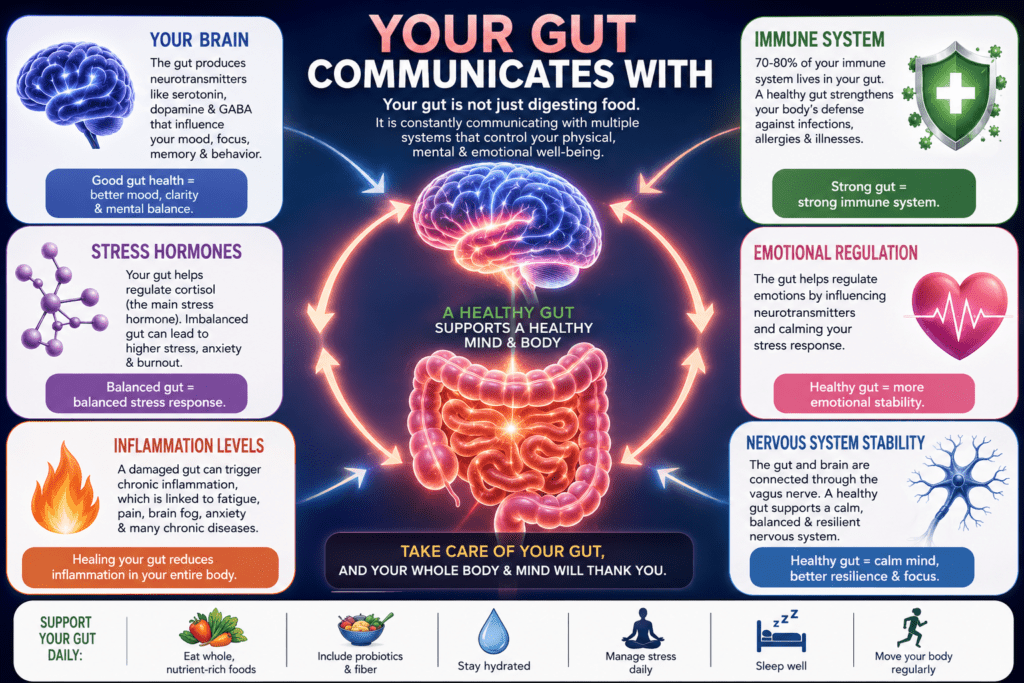
- your brain
- immune system
- stress hormones
- inflammation levels
- emotional regulation
- nervous system stability
When the gut becomes inflamed, anxious, overstimulated, and damaged, the brain often follows.
This is why millions of people feel:
- anxious without reason
- mentally exhausted
- emotionally reactive
- overstimulated at night
- trapped in cycles of panic and fatigue
The modern lifestyle is producing nervous systems that never feel safe.
And your gut is often one of the first casualties.
Table of Contents
Why Most Anxiety Advice Fails
Here is the unbelievable truth.
Most anxiety advice focuses only on calming the mind while ignoring the biology creating the chaos.
People are told:
- meditate
- think positive
- breathe deeply
- stay motivated
But many are simultaneously:
- sleeping 5 hours
- consuming inflammatory food
- living in chronic stress
- overstimulating the nervous system
- scrolling until 2 AM
- surviving on caffeine and emotional suppression
Then they wonder why anxiety keeps returning.
That is not healing.
That is symptom management while the fire keeps burning underneath.
This is exactly why understanding how to heal leaky gut for anxiety matters so much.
What Is Leaky Gut and Why Does It Affect Anxiety?
Leaky gut happens when the intestinal lining becomes damaged and permeable.
Tiny gaps allow harmful substances into the bloodstream:
- toxins
- bacteria
- inflammatory particles
- undigested food proteins
Your immune system reacts aggressively.
Inflammation rises.
And your nervous system interprets that inflammation as stress.
The brain does not separate physical danger from emotional danger very well.
To your body:
Inflammation = threat.
And a threatened nervous system produces:
- anxiety
- panic sensations
- hypervigilance
- sleep problems
- brain fog
- emotional instability
This is why many people searching how to heal leaky gut for anxiety also experience exhaustion and burnout.
Their entire system is overloaded.
External Resource
Research from Harvard Health Publishing explains the powerful gut-brain connection linked to mental health.
7 Brutal Truths About How to Heal Leaky Gut for Anxiety
1. Your Lifestyle May Be Destroying Your Gut Faster Than Food
Most people blame food alone.
That is incomplete thinking.
Yes, processed food matters.
But chronic stress may be damaging your gut even faster.
Stress changes:
- digestion
- stomach acid
- gut bacteria
- inflammation
- cortisol levels
- nervous system regulation
Your body cannot heal while constantly preparing for survival.
And many modern lifestyles keep the body trapped in silent emergency mode.

2. Your Nervous System Does Not Feel Safe
This is deeper than digestion.
Many anxious people are not weak.
They are physiologically overstimulated.
Your nervous system may be stuck in:
- fight-or-flight
- hyper-alertness
- emotional survival mode
When this happens:
- digestion weakens
- gut healing slows
- inflammation increases
- sleep quality collapses
Healing requires safety signals.
Not just supplements.
This is why calming the nervous system matters when learning how to heal leaky gut for anxiety.
Internal Links
3. Your “Healthy” Habits May Still Be Overstimulating You
Another uncomfortable truth:
Many people are addicted to stimulation.
Even “self-improvement” becomes stress.
Constant:
- podcasts
- notifications
- productivity pressure
- late-night scrolling
- endless information
keeps the nervous system activated.
Your gut heals during recovery.
Not during overstimulation.
You cannot heal a stressed body inside a chaotic environment.
4. Sleep Is More Powerful Than Most Supplements
People spend thousands on probiotics while sleeping 4–5 hours.
That contradiction destroys recovery.
Poor sleep increases:
- cortisol
- inflammation
- gut imbalance
- anxiety sensitivity
This creates the cycle:
Bad sleep → anxious brain → inflamed gut → worse anxiety
If you seriously want to understand how to heal leaky gut for anxiety, protect sleep aggressively.
5. Gut Healing Requires Removing Emotional Pressure Too
People talk endlessly about food sensitivities.
Few discuss emotional toxicity.
But the body remembers:
- emotional suppression
- chronic pressure
- toxic environments
- unresolved stress
- constant self-criticism
Your nervous system reacts to emotional danger physically.
That affects digestion directly.
Some people improve gut symptoms only after reducing emotional chaos in their lives.
That reality is rarely discussed because it forces people to confront difficult truths.
6. Healing Is Slower Than Social Media Promises
The internet sells fast recovery.
Real healing is slower.
Your body may take months to:
- reduce inflammation
- rebuild gut lining
- restore bacteria balance
- regulate stress hormones
Impatience becomes another stressor.
Healing requires repetition:
- consistent sleep
- cleaner nutrition
- nervous system regulation
- emotional recovery
- lower stimulation
Not panic-driven perfection.
External Resource
Digestive health insights from Cleveland Clinic
7. You Cannot Heal While Living in Constant Survival Mode
This is the hardest truth.
Many people want recovery while refusing to change the lifestyle creating the damage.
They say:
“I want peace.”
But their habits create:
- chaos
- overstimulation
- exhaustion
- inflammation
- emotional overload
The body adapts to the environment you repeatedly give it.
That means healing requires identity-level change.
Not temporary motivation.
Best Foods That Support Healing
If you want to learn how to heal leaky gut for anxiety, focus on reducing inflammation consistently.
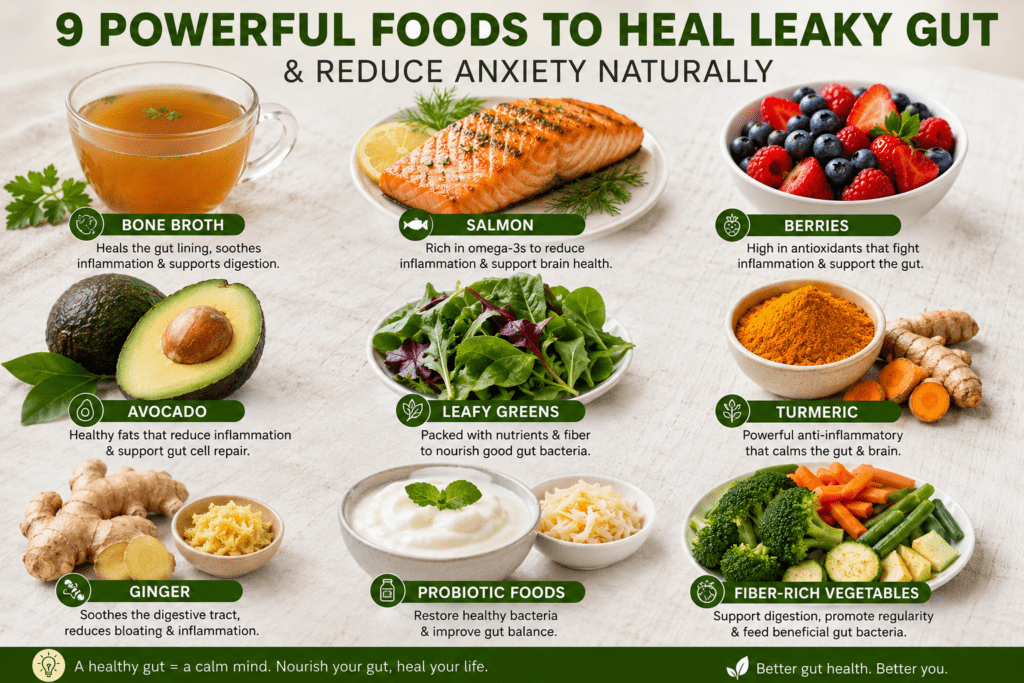
Helpful Foods
- bone broth
- salmon
- berries
- avocado
- leafy greens
- turmeric
- ginger
- probiotic foods
- fiber-rich vegetables
Foods That Often Worsen Symptoms
- ultra-processed foods
- excess sugar
- alcohol
- artificial sweeteners
- excessive caffeine

How to Heal Leaky Gut for Anxiety Naturally
Focus on building:
- safer nervous system patterns
- lower inflammation
- better sleep
- emotional regulation
- consistent recovery habits
This is not about becoming perfect.
It is about becoming less inflamed, less overstimulated, and less trapped in survival mode.
External Resource
Gut-brain research from Johns Hopkins Medicine
Conclusion: How to Heal Leaky Gut for Anxiety
If you truly want to understand how to heal leaky gut for anxiety, stop asking:
“What supplement fixes this?”
Start asking:
“What lifestyle keeps my body trapped in stress?”
That question changes everything.
Because anxiety is often not just a mental issue.
It is a full-system overload:
- inflamed gut
- exhausted nervous system
- chronic stress
- emotional pressure
- poor recovery habits
Most people chase temporary relief.
Few rebuild the environment their body needs to feel safe again.
That is the real healing process.
And it starts with changing the patterns that made your body feel under attack in the first place.
FAQ Section
Can leaky gut really trigger anxiety?
Yes. Gut inflammation and microbiome imbalance may affect neurotransmitters, stress hormones, and nervous system regulation linked to anxiety symptoms.
What is the fastest way to heal leaky gut for anxiety?
Reducing inflammation, improving sleep, lowering stress, eating anti-inflammatory foods, and calming the nervous system consistently may help recovery.
How long does it take to heal leaky gut and anxiety naturally?
Some people improve within weeks, while deeper healing may require several months depending on lifestyle, stress levels, and nervous system health.