


Looking for the best fiber supplements for gut health? The right choice depends on your goal. Some fiber supplements are better suited for constipation and regularity, while others may be easier to tolerate if you experience bloating or digestive sensitivity.
In this guide, we compare seven popular fiber supplements based on their fiber type, potential benefits, digestive tolerance, ease of use, and best use case. You’ll also learn how much fiber you need, how to introduce a supplement gradually, and when a fiber supplement may not be the best choice.
A fiber supplement can help fill a gap in your diet, but it does not replace fiber-rich foods. Beans, lentils, fruits, vegetables, whole grains, nuts, and seeds provide fiber along with other important nutrients.
Important: Individual responses to fiber vary. If you have persistent abdominal pain, unexplained digestive symptoms, difficulty swallowing, or a diagnosed gastrointestinal condition, talk with a healthcare professional before starting a new supplement.
What Is Fiber and Why Does It Matter for Gut Health?
Dietary fiber is a type of carbohydrate that your body does not completely digest. It is found naturally in foods such as vegetables, fruits, beans, lentils, whole grains, nuts, and seeds.
Some fibers dissolve in water and form a gel, while others remain more intact as they move through the digestive tract. Certain fibers can also be fermented by gut bacteria, producing compounds called short-chain fatty acids (SCFAs).
Different types of fiber can have different effects on digestion. For example, psyllium can help improve stool consistency and regularity, while some prebiotic fibers provide fuel for beneficial gut bacteria.
This is why choosing a fiber supplement should depend on your individual goal rather than simply choosing the product with the highest number of grams of fiber.
Fiber is also only one part of a healthy diet. For most people, a variety of fiber-rich foods should form the foundation, with supplements used when additional fiber is needed.
Quick Picks: Best Fiber Supplements at a Glance
| Best for | Fiber supplement |
|---|---|
| Best overall | Psyllium husk |
| Sensitive digestion | PHGG |
| Constipation and regularity | Psyllium husk |
| Gentle daily fiber | Acacia fiber |
| Prebiotic support | Inulin |
| Less-fermentable fiber | Methylcellulose |
| Easy mixing | Wheat dextrin |
Our top overall choice: Psyllium husk because it has strong evidence for improving stool consistency and regularity and is widely available in powder and capsule forms.
However, there is no single best fiber supplement for everyone. A fiber that works well for one person may cause gas or bloating in another, so the best choice depends on your digestive symptoms and goals.
Table of Contents
We Chose the Best Fiber Supplements
We considered several factors when comparing fiber supplements:
- Type of fiber: Different fibers have different properties and digestive effects.
- Evidence: We prioritize fiber types supported by clinical research and reputable health organizations.
- Digestive tolerance: Some fibers are more likely than others to cause gas or bloating.
- Fiber content: We consider how much fiber a typical serving provides.
- Ease of use: Powder, capsules, taste, texture, and mixing can affect how easy a supplement is to use consistently.
- Best use case: We identify whether a product is better suited to regularity, constipation, sensitive digestion, or another specific goal.
- Ingredients and quality information: We look for transparent labeling and available information about product quality.
Our goal is not to identify one supplement that is perfect for everyone, but to help you choose a fiber type that fits your individual needs.7 Best Fiber Supplements for Gut Health
1. 1. Psyllium Husk — Best OverallBest for: Regularity, constipation, and general daily fiber support
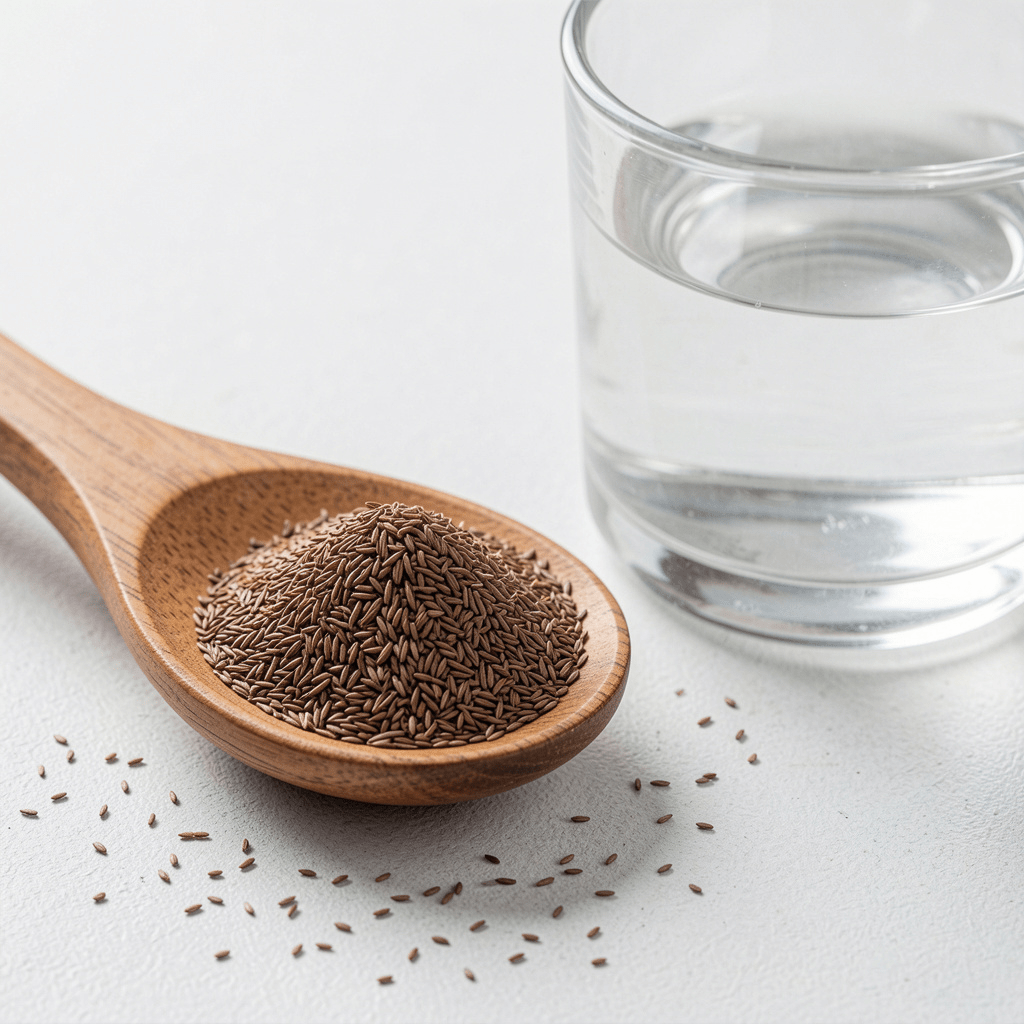
Psyllium husk is a soluble, gel-forming fiber that absorbs water in the digestive tract. This can help soften stool and improve bowel regularity when taken with adequate fluid.
Psyllium has some of the strongest evidence among fiber supplements for improving bowel habits and may also help some people with irritable bowel syndrome (IBS).
One advantage of psyllium is that it can be used as part of a gradual fiber increase. However, starting with too much can cause gas, bloating, or abdominal discomfort.
How to start: Follow the serving instructions on the specific product and increase gradually if needed. Always take psyllium with adequate liquid.
Pros
- Strong evidence for bowel regularity
- Widely available
- Can be used in powder or capsule form
- Useful for increasing daily fiber intake
Cons
- May cause gas or bloating when introduced too quickly
- Requires adequate fluid
- Not suitable for everyone with swallowing or intestinal problems
Bottom line: Psyllium is one of the best starting points if your main goal is improving regularity or increasing fiber intake.
2. Inulin — A Powerful Prebiotic Fiber That Feeds Your Microbiome2. Inulin — Best for Prebiotic Support
Best for: People specifically looking for a prebiotic fiber
Inulin is a type of fermentable fiber found naturally in foods such as chicory root, onions, garlic, and some other plants. As a supplement, it can provide fuel for certain gut bacteria.
Because inulin is highly fermentable, it is not necessarily the best choice for everyone. Some people experience increased gas, bloating, or abdominal discomfort, particularly when they begin with a large amount.
If you want to try inulin, starting with a small amount and increasing gradually may improve tolerance.
Pros
- Strong prebiotic properties
- Naturally found in many plant foods
- Can increase dietary fiber intake
Cons
- May cause gas or bloating
- Can be poorly tolerated by some people with sensitive digestion
- More is not necessarily better
Bottom line: Inulin can be useful for prebiotic support, but it should be introduced gradually, especially if you are prone to bloating.
3. Partially Hydrolyzed Guar Gum (PHGG) — Best Fiber for SIBO and IBS3. PHGG — Best for Sensitive Digestion
Best for: People looking for a soluble fiber that may be easier to tolerate
Partially hydrolyzed guar gum (PHGG) is a soluble fiber with a relatively low viscosity. It is used in some digestive health products and has been studied for its effects on bowel function and digestive symptoms.
Some people find PHGG easier to tolerate than more rapidly fermentable fibers, although individual responses vary.
If you have IBS, SIBO, or another diagnosed digestive condition, don’t assume that one fiber will work for everyone. Discuss supplementation with a healthcare professional if your symptoms are persistent or severe.
Pros
- Soluble fiber
- Easy to mix into drinks
- May be suitable for people who find some other fibers difficult to tolerate
Cons
- Individual tolerance varies
- May still cause digestive symptoms in some people
- Product quality and serving sizes vary
Bottom line: PHGG is worth considering if digestive tolerance is your main concern, but start gradually rather than assuming it will be symptom-free.
4. Acacia Fiber — Best for Gentle Daily Fiber
Best for: People who want to increase fiber gradually
Acacia fiber, also called gum arabic, is a soluble fiber obtained from certain acacia trees. It can be fermented by gut bacteria and is commonly used as a prebiotic fiber.
Its relatively mild texture and gradual fermentation make it an option for people who prefer a gentle approach to increasing fiber. However, digestive responses vary from person to person.
Pros
- Soluble fiber
- Easy to mix into drinks
- Useful for gradually increasing fiber intake
Cons
- May still cause gas or bloating
- Evidence varies depending on the health outcome being studied
Bottom line: Acacia fiber can be a reasonable option if you want to increase fiber gradually and prefer a mild, easy-to-mix supplement.
5. Methylcellulose — Best for a Less-Fermentable Fiber
Best for: People who want a fiber option that is less fermentable
Methylcellulose is a soluble, non-fermentable fiber used in several fiber supplements. Because it is not extensively fermented by gut bacteria, it may produce less gas for some people than highly fermentable fibers.
It can help increase stool bulk and support regular bowel movements.
Pros
- Soluble fiber
- Less fermentable than some prebiotic fibers
- May be useful for people who are sensitive to gas
Cons
- Does not provide the same prebiotic effects as fermentable fibers
- Must be taken with adequate fluid
Bottom line: Methylcellulose is worth considering if your main priority is increasing fiber while limiting fermentation-related gas.
6. Wheat Dextrin — Best for Easy Mixing
Best for: People who want a fiber supplement that mixes easily into drinks and foods
Wheat dextrin is a soluble fiber commonly used in powdered fiber products. It is designed to dissolve easily and can be mixed into beverages or soft foods.
One advantage is convenience: a fiber supplement is more useful when you can take it consistently.
If you have celiac disease, a wheat allergy, or need to avoid gluten, check the specific product’s labeling and contact the manufacturer if necessary rather than assuming that every wheat-derived fiber product is suitable for you.
Pros
- Easy to mix
- Mild texture
- Convenient for daily use
Cons
- Not ideal for everyone
- Product ingredients and labeling vary
Bottom line: Wheat dextrin is a practical option if convenience and easy mixing are your priorities.
7. Resistant Starch — Best for a Prebiotic-Focused Approach
Best for: People interested in resistant starch and gut bacteria
Resistant starch is a type of carbohydrate that resists digestion in the small intestine and reaches the large intestine, where some of it can be fermented by gut bacteria.
Sources include green banana flour, cooked-and-cooled potatoes and rice, legumes, and certain resistant-starch products.
Because resistant starch can be fermented, some people may experience gas or bloating when they increase their intake too quickly. Start with a small amount and increase gradually according to tolerance.
Pros
- Provides fermentable carbohydrate for gut bacteria
- Found naturally in several whole foods
- Can be incorporated into a varied diet
Cons
- May cause gas or bloating
- Individual tolerance varies
- Not necessary for everyone taking a fiber supplement
Bottom line: Resistant starch is an interesting option for people specifically interested in prebiotic fiber, but whole-food sources can also provide it.check out this guide on gut health and depression.
How to Start a Fiber Supplement Safely
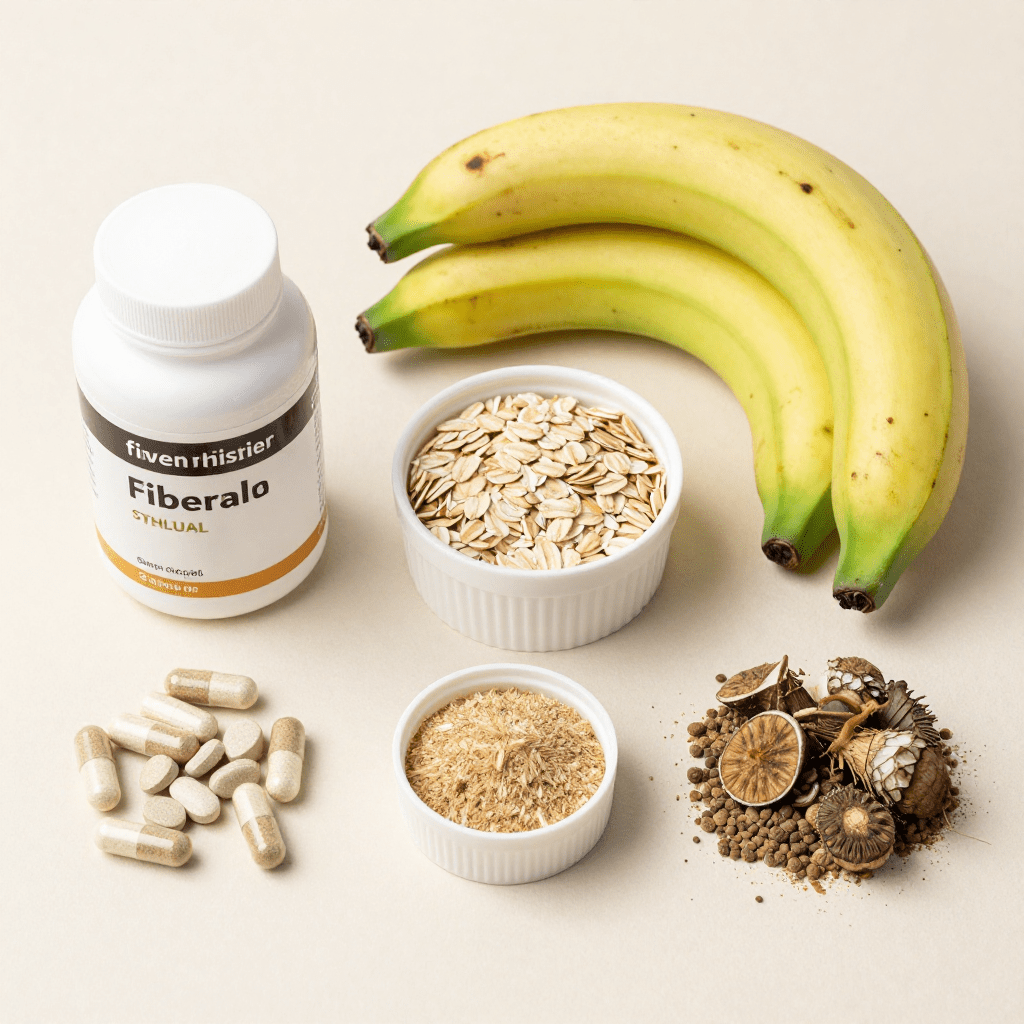
Adding fiber too quickly can cause gas, bloating, cramping, or changes in bowel movements. A gradual approach is usually easier to tolerate.
1. Start with a small amount
Begin with the amount recommended on the product label, or a smaller amount if advised by your healthcare professional.
2. Increase gradually
Give your digestive system time to adjust before increasing the amount.
3. Drink adequate fluids
Many fiber supplements work by absorbing water. Follow the product directions and maintain adequate fluid intake unless you have been told to restrict fluids.
4. Introduce one new fiber at a time
If you start several supplements simultaneously, it becomes difficult to know which one is helping or causing digestive symptoms.
5. Don’t ignore persistent symptoms
If you develop significant abdominal pain, persistent diarrhea, vomiting, blood in the stool, difficulty swallowing, or worsening digestive symptoms, stop self-treating and speak with a healthcare professional.
6. Remember that food still matters
A supplement should complement—not replace—a diet containing vegetables, fruits, beans, lentils, whole grains, nuts, and seeds.
For more on how to heal your gut holistically, read the complete gut-brain connection guide.
Ready to support your gut health?
View our recommended fiber supplement here: https://amzn.to/4brZjdg
Which Fiber Supplement Is Right for You?
The best fiber supplement depends on what you are trying to accomplish.
For constipation or irregular bowel movements: Psyllium is one of the strongest options to consider.
For sensitive digestion: PHGG or acacia may be worth considering.
For prebiotic support: Inulin or resistant starch can provide fermentable fiber, although they may cause more gas in some people.
If you are sensitive to fermentation-related gas: Methylcellulose may be worth discussing with a healthcare professional.
If convenience is your priority: Wheat dextrin is easy to mix into many drinks and foods.
There is no need to take several fiber supplements at once. Choose one that matches your goal, introduce it gradually, and evaluate how your body responds.External Authority Links
- Harvard T.H. Chan School of Public Health — The Nutrition Source: Fiber
- National Institutes of Health — Dietary Fiber Fact Sheet
- PubMed: Gut Microbiota and Dietary Fiber
Final Verdict
There is no single best fiber supplement for everyone.
Psyllium is a strong overall choice for people who want to improve regularity and increase their fiber intake. PHGG and acacia may be worth considering if digestive tolerance is your main concern, while inulin and resistant starch are options for people specifically interested in prebiotic fibers.
The most important step is to start gradually, drink adequate fluids, and pay attention to how your body responds.
Most importantly, don’t rely on supplements alone. A diet containing a variety of fiber-rich plant foods should remain the foundation of a healthy gut.
If you have persistent digestive symptoms or a diagnosed gastrointestinal condition, speak with a qualified healthcare professional before making major changes to your fiber intake.
Take the Next Step
Choosing the right fiber supplement can make it easier to meet your daily fiber needs and support a healthy gut microbiome.
Check today’s price on Amazon: https://amzn.to/4brZjdg
FAQ
Frequently Asked Questions
What is the best fiber supplement for gut health?
There is no single best fiber supplement for everyone. Psyllium is one of the strongest general options for regularity, while PHGG, acacia, methylcellulose, inulin, wheat dextrin, and resistant starch may suit different digestive goals.
Is psyllium better than inulin?
They serve different purposes. Psyllium is commonly used to support regularity and stool consistency, while inulin is a fermentable prebiotic fiber. Inulin can cause gas or bloating in some people, so it may not be the best choice for everyone.
What is the best fiber supplement for constipation?
Psyllium is one of the better-supported fiber options for improving stool regularity and consistency. It should be introduced gradually and taken with adequate fluid.
Can fiber supplements cause bloating?
Yes. Increasing fiber too quickly can cause gas, bloating, cramping, or changes in bowel movements. Starting with a smaller amount and increasing gradually can improve tolerance.
Should I take a fiber supplement every day?
Some people use fiber supplements daily, but the appropriate amount depends on the product, your diet, digestive symptoms, and individual needs. Follow the product instructions and speak with a healthcare professional if you are unsure.
Can fiber supplements help with IBS?
Some types of fiber, particularly psyllium, have evidence for improving certain IBS symptoms. However, different people respond differently to fiber, and some highly fermentable fibers may worsen gas or bloating.
Important: Since this is an Amazon Associates link, include an affiliate disclosure somewhere in the article, for example:
Disclosure: As an Amazon Associate, I earn from qualifying purchases at no additional cost to you.