
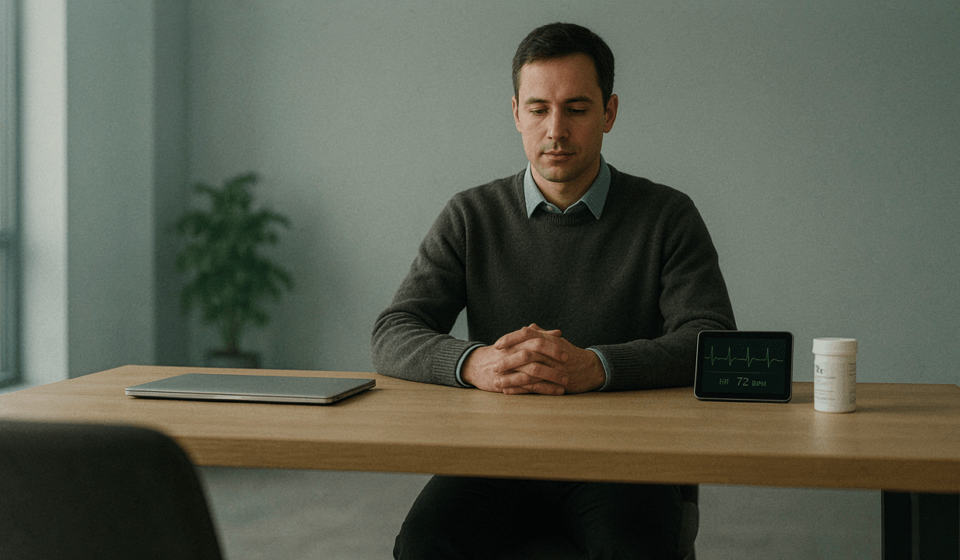

Beta Blockers for Anxiety: If you have ever felt your heart pounding before a presentation, your hands shaking before an important meeting, or your voice becoming unsteady when everyone is watching, you may have wondered whether beta blockers for anxiety could help. The answer is more nuanced than many social-media posts suggest.
Beta blockers are prescription medicines primarily used for cardiovascular conditions, but some are also used to reduce certain physical symptoms associated with anxiety. Propranolol is the beta blocker most commonly discussed in this context. It can reduce effects such as a racing heartbeat, shaking and sweating, but it does not simply switch off anxious thoughts or treat every type of anxiety disorder.
That distinction matters. Beta blockers for anxiety may be useful in selected situations, but they are not a universal anxiety treatment. The goal should be to understand what they can realistically do, what they cannot do, and when professional assessment makes more sense than self-treatment.
Medical note: This article is for education, not personal medical advice. Beta blockers are prescription medicines and should be used only under appropriate medical supervision.
What Are Beta Blockers for Anxiety?
Beta blockers are medicines that block some of the effects of adrenaline and related stress signals on beta receptors. Because adrenaline can increase heart rate and contribute to shaking and sweating, blocking some of these effects can make the body’s physical response feel less intense.
Propranolol is one example. According to the NHS, propranolol can help reduce physical symptoms of anxiety such as sweating and shaking and is available only by prescription.
This explains why beta blockers for anxiety are particularly interesting for situations such as public speaking, performing on stage, interviews or other short-term events that trigger a strong physical stress response.
But here is the important distinction: reducing a racing heart is not the same as treating the underlying cause of anxiety. Beta blockers primarily affect the body’s response to adrenaline rather than eliminating anxious thoughts, worry or fear.
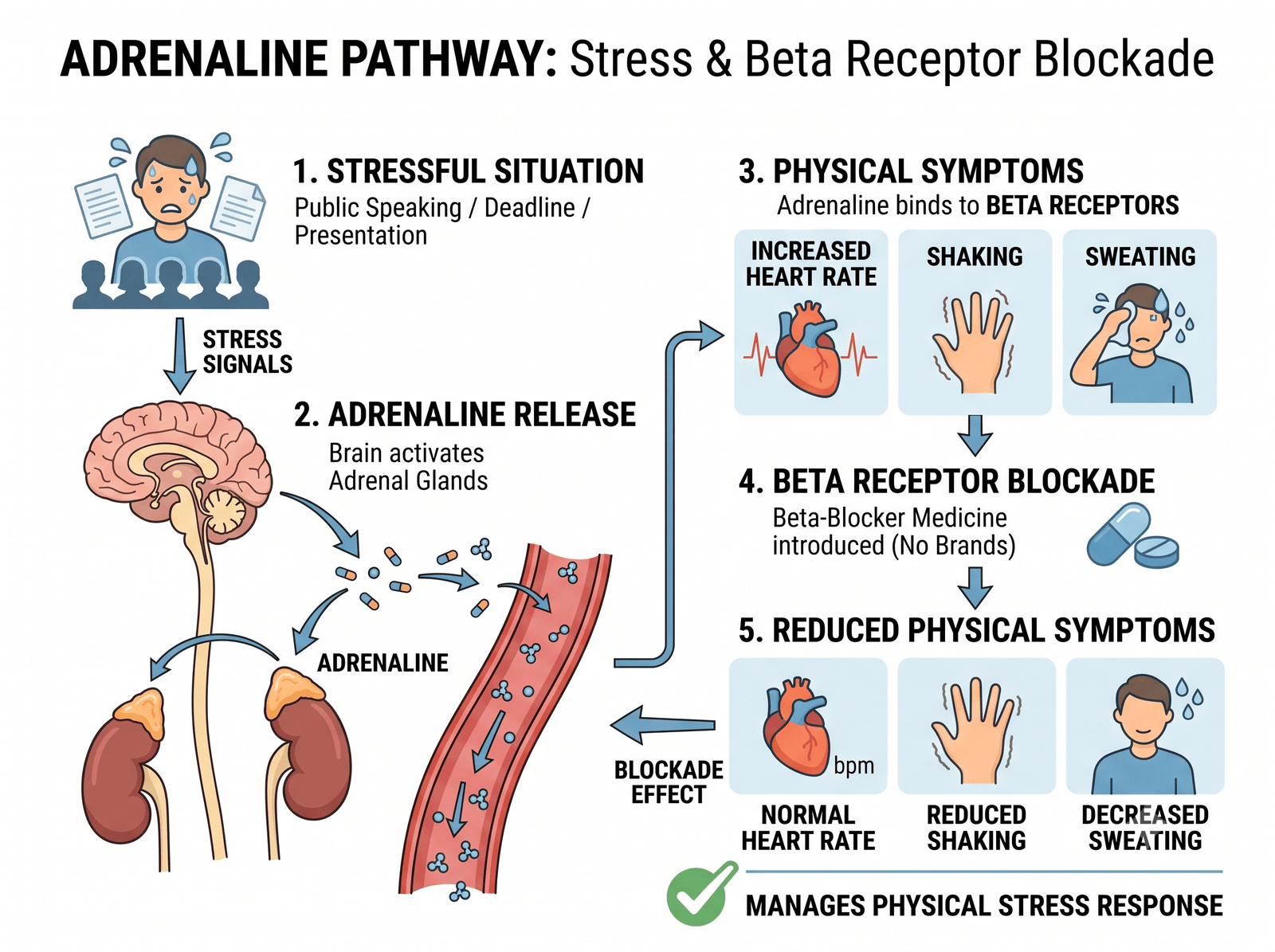
Table of Contents
Beta Blockers for Anxiety: 7 Important Facts
1. Beta blockers mainly target physical anxiety symptoms
One of the biggest misconceptions about beta blockers for anxiety is that they work like a general anti-anxiety medicine.
They don’t necessarily remove the thought that is making you anxious.
Instead, medicines such as propranolol can reduce some physical effects associated with the body’s fight-or-flight response. These may include a rapid heartbeat, trembling and sweating.
Think about a teacher preparing to speak in front of hundreds of people. The person may know the material perfectly but still experience a racing heart and shaky hands. Reducing those physical reactions may make the situation easier to manage.
That is very different from treating persistent worry that continues throughout the day.
2. Propranolol is the beta blocker most often discussed
When people search for beta blockers for anxiety, they are frequently referring to propranolol.
Propranolol belongs to the beta-blocker class and is used for several medical conditions. The NHS also recognizes its use for some physical symptoms of anxiety.
It is prescription-only, and the appropriate medicine and dose depend on the individual.
Do not interpret internet discussions about propranolol as a recommendation to obtain or use it without medical guidance.
3. They may be more useful for performance anxiety
This is where beta blockers for anxiety have their clearest practical appeal.
Imagine an otherwise healthy person who becomes extremely nervous before:
- Public speaking
- A job interview
- A stage performance
- An important presentation
- A major examination
- A stressful professional event
The person’s main problem may be a racing heart, trembling hands, sweating or a shaky voice.
In these situations, a clinician may consider a beta blocker appropriate for some patients.
However, that does not mean beta blockers are the best treatment for generalized anxiety, panic disorder or persistent psychological distress.
4. Beta blockers do not necessarily treat anxious thoughts
This is the uncomfortable truth that many simplified online articles miss.
If your anxiety comes with constant worrying, catastrophic thinking, avoidance, intrusive fears or persistent mental distress, reducing your heart rate does not automatically resolve those problems.
The NHS explains that propranolol mainly addresses physical symptoms of anxiety. Talking therapies such as cognitive behavioral therapy may be used to address the psychological side.
This is why beta blockers for anxiety should be viewed as one possible tool rather than a complete solution. “how to reduce anxiety instantly” .
5. Evidence for anxiety disorders is not as strong as social media suggests
This is where you need to separate popularity from evidence.
Beta blockers have a plausible mechanism for reducing some physical stress responses. But that does not prove they effectively treat every anxiety disorder.
Recent research continues to examine propranolol and other beta blockers in anxiety-related conditions, while systematic evidence remains mixed. A 2026 review examining pharmacological treatments for anxiety disorders highlights the importance of weighing effectiveness, side effects and individual circumstances rather than assuming that one medication works equally well for everyone.
Another recent study evaluating propranolol in anxiety and PTSD reported potentially positive findings, but it was a retrospective study rather than the kind of randomized evidence needed to establish broad treatment effectiveness.
So the responsible conclusion is simple:
Beta blockers may help some people with particular physical symptoms, but the evidence does not justify presenting them as a universal cure for anxiety.
6. Side effects and medical conditions matter
Beta blockers are real medicines, not harmless supplements.
Possible side effects can include dizziness, tiredness, cold hands or feet and sleep-related problems. A 2025 systematic review and meta-analysis also reported an increased risk of dizziness with beta-blocker use, with some signals particularly relevant to propranolol.
Certain people may need extra caution or may not be suitable candidates. Respiratory conditions, cardiovascular problems, blood-pressure issues and diabetes can affect whether a beta blocker is appropriate.

That is why a prescription should follow a proper medical assessment.
7. Medication should not replace the bigger anxiety strategy
This is the most important point.
If anxiety is repeatedly interfering with your work, relationships, sleep, exercise, digestion or daily decisions, simply trying to suppress physical symptoms may not address the bigger problem.
A stronger strategy can involve identifying triggers, improving sleep, regular physical activity, evidence-based psychological treatment, stress-management skills and appropriate medical care.
For some people, medication is part of that strategy. For others, therapy and behavioral changes may be more appropriate. For many, a combination may be considered.
The goal is not to become dependent on one tool.
The goal is to become more capable of handling stress.
Beta Blockers for Anxiety vs. Other Anxiety Treatments
There is no single medication that is automatically best for everyone.
Beta blockers are different from medications that directly target anxiety disorders through central nervous-system mechanisms. They are also different from psychological approaches such as cognitive behavioral therapy.
A useful way to think about the difference is:
| Approach | Main purpose |
|---|---|
| Beta blockers | Reduce some physical stress symptoms |
| CBT | Address thoughts, behaviors and anxiety patterns |
| Lifestyle changes | Improve resilience and reduce common triggers |
| Other prescription medicines | May target diagnosed anxiety disorders |
| Breathing/relaxation techniques | Help regulate acute stress responses |
The correct choice depends on the type, severity and pattern of anxiety.
Can Beta Blockers Make Anxiety Worse?
Not necessarily, but they can cause side effects that some people may interpret as anxiety-related sensations.
For example, dizziness, fatigue or sleep disturbance can be uncomfortable. A 2025 meta-analysis found an association between beta-blockers and dizziness, including a stronger signal in some propranolol comparisons.
This is another reason not to experiment with prescription medication based solely on online advice.
If a medicine makes you feel unwell, the correct response is not automatically to push through it. Discuss the symptoms with the prescribing clinician.
Who Should Talk to a Doctor Before Using Beta Blockers?
Anyone considering beta blockers for anxiety should discuss their medical history with a healthcare professional, particularly if they have:
- Asthma or other respiratory disease
- Low blood pressure
- A slow heart rate
- Certain heart-rhythm problems
- Diabetes
- Other cardiovascular conditions
- A history of medication reactions
- Other prescription or non-prescription medicines
Never borrow someone else’s propranolol or another beta blocker.
A medicine that is appropriate for one person may be inappropriate for another.
What Can You Do Without Medication?
If your anxiety is mild or situation-specific, start by strengthening the basics rather than immediately searching for a pill.
Try:
- Regular exercise: Physical activity can help regulate stress and improve mood.
- Slow breathing: Longer, controlled exhalations can help reduce acute physiological arousal.
- Sleep consistency: Poor sleep can make emotional regulation harder.
- Gradual exposure: Avoidance often strengthens fear; carefully planned exposure can build confidence.
- Cognitive techniques: Question catastrophic predictions instead of automatically believing them.
- Professional support: Persistent anxiety deserves proper assessment.
You can also read your existing guide on vagus nerve exercises for anxiety for practical techniques.
The Gut-Anxiety Connection
Because Mysportinfo focuses heavily on the gut-anxiety relationship, this is an important place to avoid overclaiming.
Anxiety can affect digestion, appetite and gastrointestinal sensations, while digestive symptoms can also become a source of worry. That does not mean every anxiety symptom is caused by poor gut health.
If digestive symptoms are repeatedly accompanying anxiety, investigate both sides rather than assuming that one explains everything.
Useful related resources include:
- Can leaky gut cause anxiety?
- Gut health and social anxiety
- SIBO and anxiety
- Gut dysbiosis and anxiety symptoms
- How to heal your gut to reduce anxiety
When Should You Seek Professional Help?
Do not turn an SEO article into a substitute for diagnosis.
Speak with a healthcare professional if anxiety is persistent, worsening or interfering with normal life.
Seek urgent help if anxiety symptoms occur with severe chest pain, fainting, severe breathing difficulty, new neurological symptoms or another potentially serious medical problem.
And if you are experiencing frequent panic attacks, significant avoidance, severe sleep disruption or persistent anxiety, the better question is not simply:
“Which medication can stop this feeling?”
Ask:
“Why is this happening repeatedly, and what treatment addresses the whole problem?”
That shift in thinking can prevent you from chasing short-term symptom relief while ignoring the underlying issue.
FAQ: Beta Blockers for Anxiety
Are beta blockers good for anxiety?
Beta blockers for anxiety may help reduce physical symptoms such as a racing heart, trembling and sweating, particularly during short-term or performance-related situations. They are not generally considered a universal treatment for every anxiety disorder.
Does propranolol stop anxiety?
Propranolol can reduce some physical effects associated with adrenaline, but it does not necessarily eliminate anxious thoughts or the underlying psychological causes of anxiety. It should only be used under appropriate medical guidance.
Are beta blockers safer than anxiety medication?
It is not accurate to label beta blockers as universally safer than other anxiety treatments. Every medicine has potential benefits, risks, contraindications and side effects. The appropriate treatment depends on the individual’s symptoms, health history and treatment goals.
Final Takeaway
Beta blockers for anxiety are neither a miracle cure nor a useless treatment. Their value depends heavily on what type of anxiety you are experiencing.
They can reduce some physical effects of the body’s fight-or-flight response and may have a role in selected situations such as performance anxiety. But they do not automatically resolve persistent worry, fear, avoidance or the psychological mechanisms behind anxiety.
The smartest approach is to stop looking for a single magic solution.
Understand the symptom. Identify the trigger. Assess the underlying problem. Then choose the appropriate tool with qualified medical guidance.
That is a much more powerful approach to anxiety than simply trying to silence the body’s alarm system.
- NHS – About propranolol
Covers how propranolol works, its uses for anxiety-related physical symptoms, and common side effects.
NHS: About propranolol - NHS – Common questions about propranolol
Useful for explaining how propranolol can reduce physical symptoms such as rapid heartbeat, sweating, and shaking.
NHS: Common questions about propranolol - PubMed – Beta-blockers for anxiety disorders: systematic review and meta-analysis
This is especially valuable for your evidence-based section because the review found limited robust evidence for beta-blockers in anxiety disorders.
PubMed: Beta-blockers for anxiety disorders - PubMed – Beta-blockers and neuropsychiatric adverse effects
Useful for your risks/side-effects section, particularly dizziness and insomnia.
PubMed: Beta-blockers and neuropsychiatric risks
Medical disclaimer: This article is for educational purposes only and does not provide individualized medical advice, diagnosis or treatment. Prescription medicines such as propranolol should be used only under the direction of a qualified healthcare professional.