
How to stop a panic attack fast: Your heart is pounding. You can’t breathe. You feel like something terrible is about to happen. Here’s exactly what to do — right now.
It hits without warning.
One moment you’re fine. The next, your heart is racing, your chest is tight, your hands are trembling — and a terrifying thought loops through your mind: “Something is seriously wrong with me.”
That’s a panic attack. And if you’ve ever had like this, you know how completely it can take over your body and mind.
Here’s the truth that most people don’t know in that moment: a panic attack cannot hurt you. It feels like a heart attack. It feels like you’re dying. But you’re not. Your nervous system is misfiring — and with the right techniques, you can interrupt that signal and bring yourself back to calm in minutes.
In this guide, you’ll learn the 7 most effective, science-backed techniques to stop a panic attack fast — whether you’re in the middle of one right now or trying to prepare for the next time it strike.
Quick Stats
- 1 in 3 people will experience at least one panic attack in their lifetime
- The average panic attack peaks within 10 minutes
- 73% of people who use breathing techniques during a panic attack report faster recovery
- Panic disorder affects 6 million adults in the United States alone
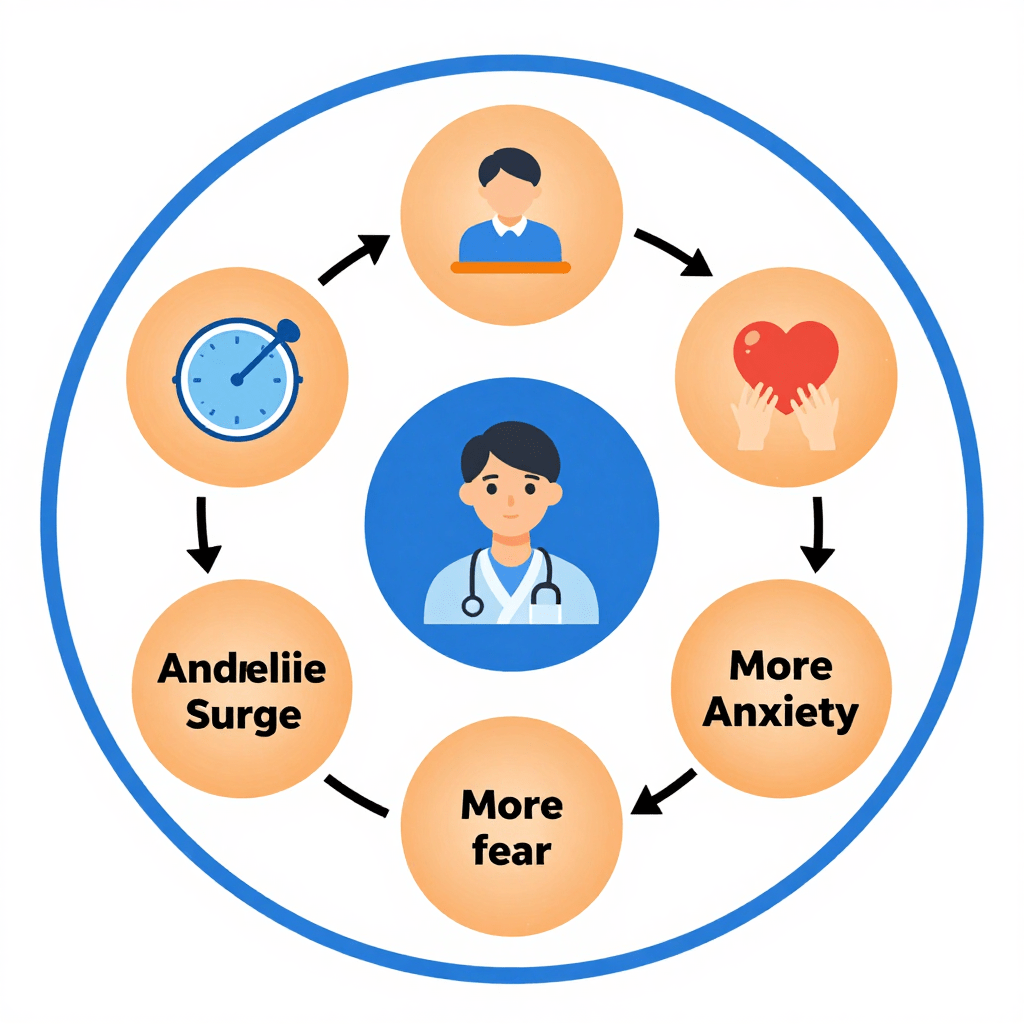
Table of Contents
What Is a Panic Attack — Really?
A panic attack is a sudden surge of intense fear or discomfort that triggers a cascade of physical symptoms — even when there’s no real danger present.
It’s not a sign of weakness. It’s not “all in your head.” It’s your nervous system doing exactly what it was designed to do — just at the completely wrong time.
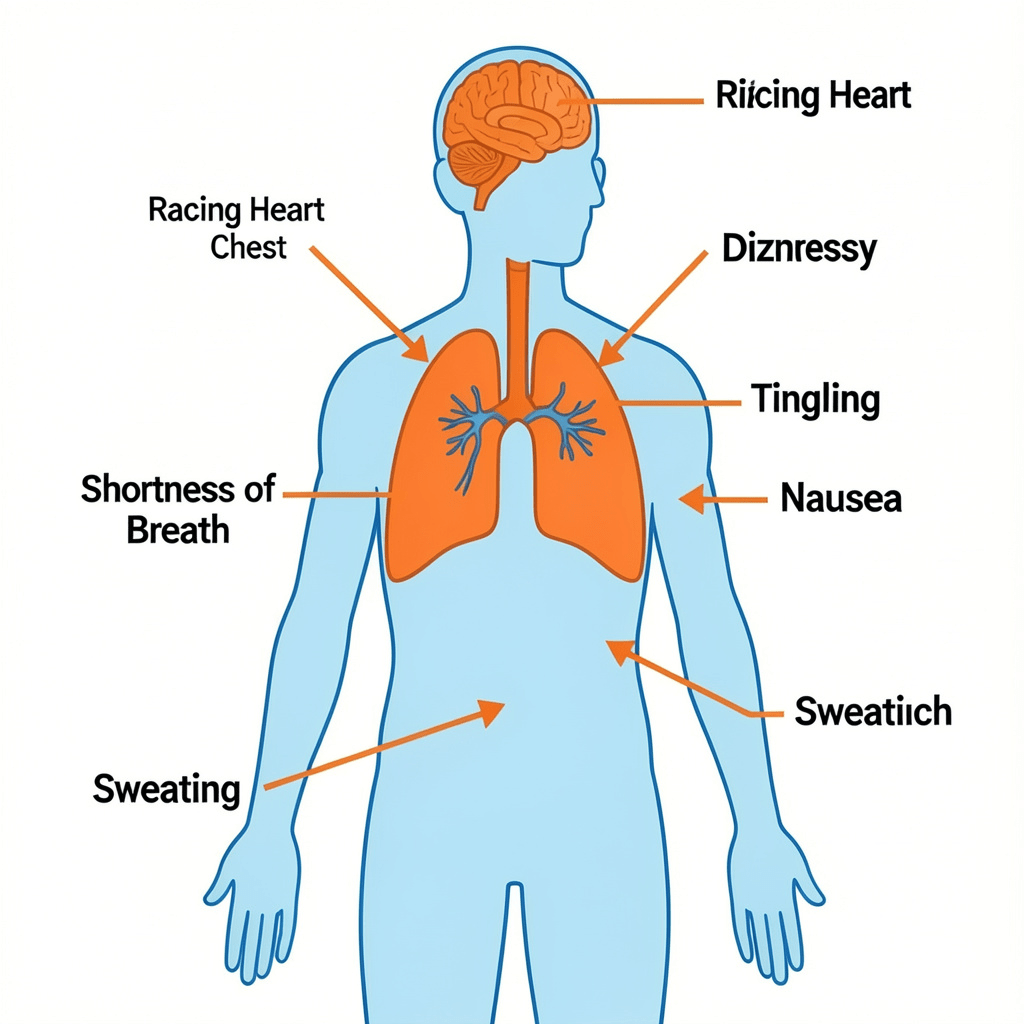
Common symptoms include:
- Racing or pounding heart (palpitations)
- Shortness of breath or feeling of being smothered
- Chest pain or tightness
- Dizziness or lightheadedness
- Nausea or stomach churning
- Tingling or numbness in hands and feet
- Sweating or chills
- Feeling detached from yourself (depersonalization)
- An overwhelming sense of dread or doom
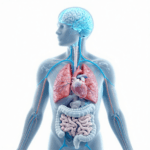
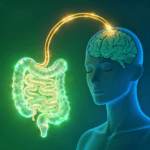
Sound familiar? If you’ve also noticed that some of your panic attacks happen after eating or when your gut feels off, you’re not imagining it. Research increasingly shows that the gut-brain connection plays a major role in anxiety and panic. If this resonates with you, read our deep dive on panic attacks after eating for more on how your digestive system may be triggering your nervous system.
Why Your Body Does This
Understanding the “why” makes the techniques far more effective.
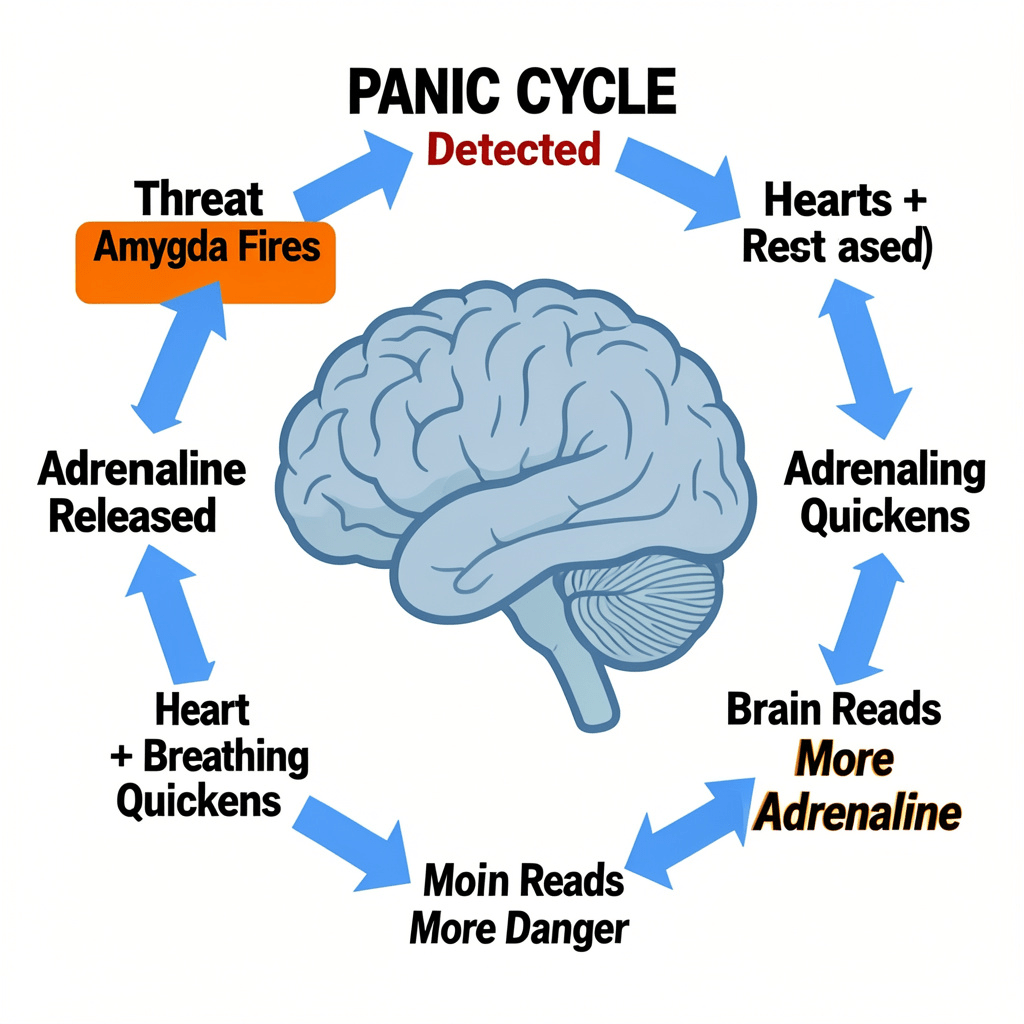
When a panic attack begins, your amygdala — the brain’s alarm system — fires a threat signal. Your body immediately floods with cortisol and adrenaline. Your heart rate spikes. Your breathing quickens. Blood rushes away from your digestive organs and into your muscles. Your body is preparing to fight a lion that isn’t there.
This is the fight-or-flight response in overdrive.
The problem? Once this response starts, it feeds itself. Your fast, shallow breathing lowers CO₂ levels in your blood, which causes tingling, dizziness, and chest tightness — which your brain reads as more evidence that something is wrong — which triggers more adrenaline — and the cycle spirals.
The key to stopping a panic attack fast is interrupting this feedback loop.
Every technique below targets a different point in that loop.
7 Proven Techniques to Stop a Panic Attack Fast
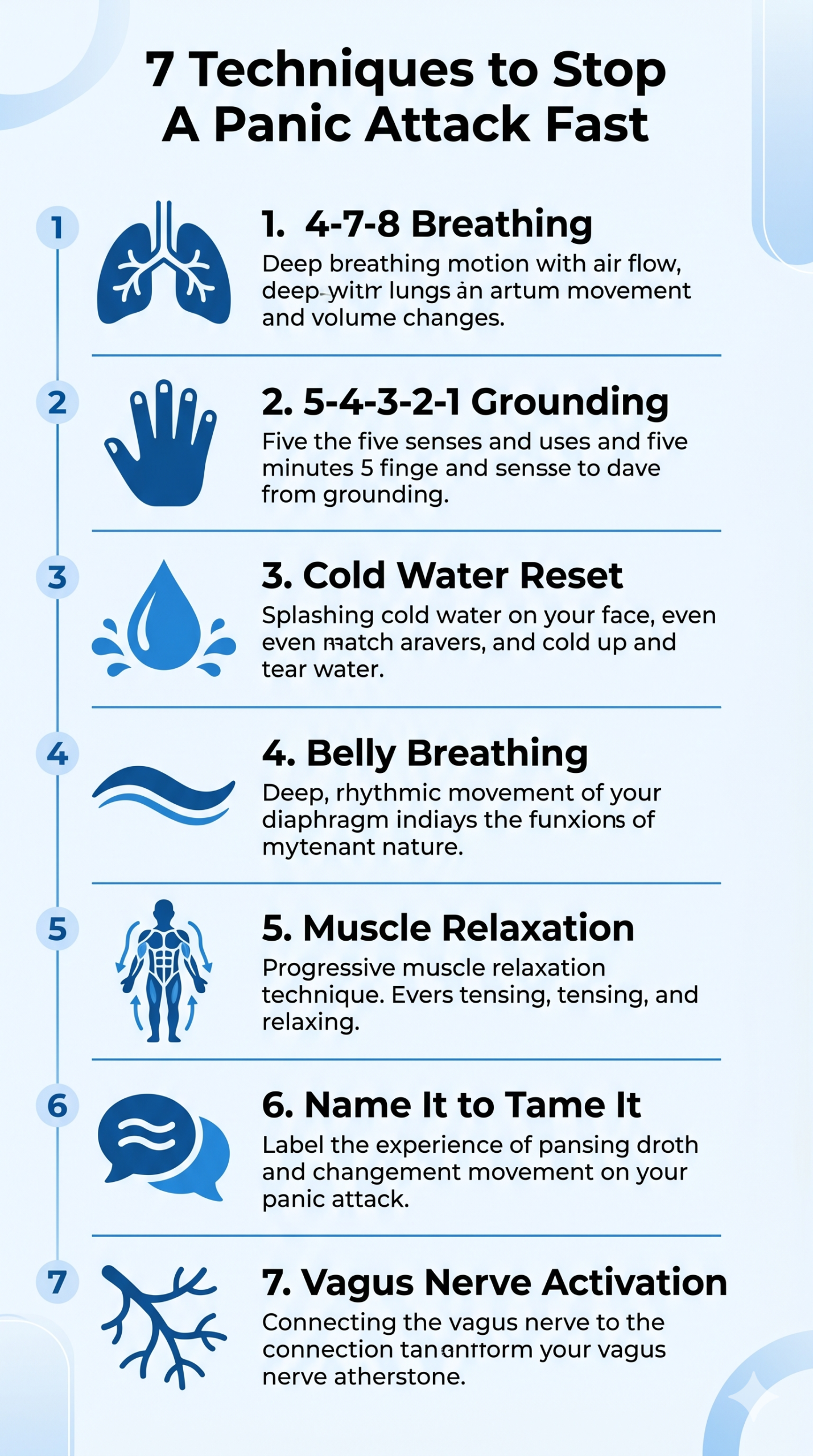
Technique 1: The 4-7-8 Breathing Method
Best for: Slowing heart rate quickly | Time: 2–3 minutes
This technique, popularized by Dr. Andrew Weil, is one of the most powerful tools for activating your parasympathetic nervous system — your body’s natural “rest and digest” mode.
How to do it:
- Exhale completely through your mouth
- Close your mouth and inhale quietly through your nose for 4 counts
- Hold your breath for 7 counts
- Exhale completely through your mouth for 8 counts (make a whoosh sound)
- Repeat this cycle 4 times
Why it works: The extended exhale stimulates the vagus nerve, which tells your brain and heart to slow down. The long hold increases CO₂ slightly, reversing the hyperventilation cycle.
The vagus nerve is at the center of many anxiety responses. If you want to go deeper on this, our article on vagus nerve exercises for anxiety covers a full toolkit of techniques.
Technique 2: The 5-4-3-2-1 Grounding Technique
Best for: Racing thoughts and dissociation | Time: 2–4 minutes
When panic pulls your mind into a spiral of “what if” thinking, grounding exercises yank it back into the present moment. This sensory technique is one of the most widely used tools in cognitive behavioral therapy.
How to do it:
Name out loud (or in your head):
- 5 things you can SEE (the wall, your hands, a plant, the sky, a chair)
- 4 things you can TOUCH (feel the texture of your shirt, the floor under your feet)
- 3 things you can HEAR (traffic outside, the hum of an appliance, your own breath)
- 2 things you can SMELL (or things you like to smell)
- 1 thing you can TASTE
⚡ Why it works: Engaging your senses activates the prefrontal cortex — the thinking part of your brain — which can override the emotional alarm signals coming from the amygdala.
Technique 3: Cold Water Reset
Best for: Intense panic, racing heart | Time: 30–60 seconds
This one sounds too simple — but the science behind it is solid.
How to do it:
- Splash cold water on your face (especially your forehead and temples)
- Hold your wrists under cold running water for 30–60 seconds
- For a stronger effect: hold your breath and submerge your face in a bowl of cold water for 10–15 seconds
Why it works: Cold water activates the dive reflex — a built-in survival mechanism that immediately slows your heart rate and diverts blood to your vital organs. It’s like hitting a biological reset button.
This is particularly effective if your panic attack includes a racing heart or feelings of overheating.
Technique 4: Diaphragmatic (Belly) Breathing
Best for: Chest tightness and shortness of breath | Time: 5 minutes
Most people breathe shallowly into their chest during a panic attack — which makes everything worse. Belly breathing shifts that pattern immediately.
How to do it:
- Place one hand on your chest and one on your belly
- Breathe in slowly through your nose for 4 counts — focus on making your belly rise, not your chest
- Exhale slowly through pursed lips for 6 counts
- Repeat until your breathing feels natural and steady
Why it works: Diaphragmatic breathing restores proper CO₂/oxygen balance in the blood, which directly reverses the dizziness, tingling, and chest tightness caused by hyperventilation.
Technique 5: Progressive Muscle Relaxation
Best for: Physical tension and body symptoms | Time: 5–10 minutes
Panic attacks flood your muscles with tension. PMR works by deliberately tensing and releasing muscle groups, signaling your nervous system that the threat has passed.
How to do it:
- Start with your feet — tense the muscles as hard as you can for 5 seconds, then release
- Move up to your calves, thighs, stomach, hands, arms, shoulders, and face
- With each release, breathe out slowly and say to yourself: “I am calm”
- Notice the contrast between tension and relaxation
Why it works: Physical muscle release sends direct feedback to the brain’s limbic system, telling it the threat is over and it’s safe to stand down.
Technique 6: The “Name It to Tame It” Method
Best for: Fear of the panic itself | Time: Immediate
This technique comes directly from neuroscientist Dr. Dan Siegel’s research on emotional regulation — and it’s surprisingly powerful.
How to do it:
Instead of fighting the panic, simply label what you’re experiencing:
“I notice my heart is racing.”
“I notice I feel afraid.”
“I notice a tightness in my chest.”
“This is a panic attack. It is temporary. It cannot hurt me.”
Why it works: Putting language to an emotion activates the prefrontal cortex and reduces activity in the amygdala. You’re literally talking your alarm system down. Research published in Psychological Science found that affect labeling significantly reduces emotional reactivity.
This technique pairs well with understanding why anxiety comes and goes. If you find your panic seems to appear and disappear unpredictably, our article on why anxiety comes and goes suddenly may help you identify your hidden triggers.
Technique 7: Vagus Nerve Activation
Best for: Full-body panic, heart pounding | Time: 2–5 minutes
The vagus nerve is the longest nerve in your body — running from your brainstem all the way to your gut. When activated, it triggers a full-body calm response.
Simple vagus nerve activation techniques:
- Humming or singing — the vibration in your throat stimulates vagal tone directly
- Gargling with cold water for 30 seconds — activates throat muscles connected to the vagus nerve
- Slow exhale with pursed lips — increases vagal tone with every breath
- Gentle pressure on your eyelids — stimulates the oculocardiac reflex, which slows heart rate
Why it works: The vagus nerve is the main highway of the parasympathetic nervous system. Stimulating it directly sends a “calm down” signal to your heart, lungs, and gut simultaneously.
Want a complete guide to vagus nerve techniques? Our full article on vagus nerve exercises for anxiety walks you through a daily routine you can build.
What NOT to Do During a Panic Attack
Just as important as what to do — here’s what to avoid:
Don’t fight or resist it. Trying to “make it stop” immediately increases adrenaline. Acceptance — paradoxically — speeds recovery.
Don’t hyperventilate into a paper bag (outdated advice that can reduce oxygen levels dangerously).
Don’t Google your symptoms mid-attack. You will convince yourself you’re having a heart attack or stroke.
Don’t catastrophize. “This is the worst one ever” makes it the worst one ever.
Don’t immediately eat or drink caffeine — this can spike blood sugar and cortisol, prolonging symptoms. If food triggers your panic attacks, read our article on anxiety after eating and gut triggers.
How to Prevent the Next Panic Attack
Stopping a panic attack once it starts is only half the battle. The real goal is reducing their frequency and intensity over time.
Daily habits that build panic resilience:
1. Support your gut health Your gut produces about 95% of your body’s serotonin. An imbalanced gut microbiome can directly fuel anxiety and panic. Start by reading our guide on gut health and anxiety to understand the connection — and our article on the best probiotics for gut health and anxiety if you want to take action.
2. Reduce stimulants Caffeine, alcohol, and high-sugar foods can all trigger panic attacks by stimulating the sympathetic nervous system or causing blood sugar crashes. Our guide on foods for gut health to reduce anxiety shows exactly what to eat (and avoid) for a calmer nervous system.
3. Prioritize sleep Anxiety is dramatically worse after poor sleep. If you notice panic attacks at night or before bed, our article on why anxiety feels worse at night explains the science — and how to fix it.
4. Consider magnesium Magnesium deficiency is linked to anxiety, poor sleep, and an overactive nervous system. Read: Does magnesium help with anxiety and sleep problems?
5. Daily breathing practice Even 5 minutes of daily diaphragmatic breathing “trains” your vagus nerve and builds resilience over time. Those who practice consistently report panic attacks become less frequent and less severe within weeks.
6. Natural approaches at home For a comprehensive toolkit, our article on how to reduce anxiety naturally at home has 10 practical strategies you can start today.
When to Seek Help
The techniques in this guide are powerful — but they’re not a substitute for professional care if panic attacks are severely impacting your life.
Talk to a doctor or therapist if:
- You’re having panic attacks frequently (more than once a week)
- You’ve started avoiding places or situations for fear of having one (agoraphobia)
- Your quality of life, work, or relationships are suffering
- You’re using alcohol or other substances to cope
- You feel hopeless or depressed alongside the panic
Effective professional treatments include:
- Cognitive Behavioral Therapy (CBT) — the gold standard for panic disorder
- Exposure therapy — gradually facing feared situations with professional support
- Medication — SSRIs, SNRIs, or short-term benzodiazepines under medical supervision
Seeking help is not a weakness. It’s the smartest, bravest thing you can do.
For trusted information on panic and anxiety disorders, visit:
The Bottom Line
Panic attacks are terrifying in the moment — but they are survivable, manageable, and in most cases, preventable.
The next time one hits, don’t fight it. Name it. Breathe through it. Ground yourself in it. Use the seven techniques above and remember: the storm always passes.
And in the days between attacks, invest in the foundations — your gut health, your sleep, your daily breathing practice. Anxiety doesn’t build in a day, and it doesn’t dissolve in a day either. But with consistent, science-backed habits, your nervous system can learn to feel safe again.
You can get through this.
Frequently Asked Questions
Q: How do you stop a panic attack immediately?
The fastest way to stop a panic attack is to combine cold water on your face (to activate the dive reflex) with slow, extended exhale breathing (4 counts in, 8 counts out). This combination hits the nervous system from two directions simultaneously and can significantly reduce symptoms within 60–90 seconds.
Q: What triggers panic attacks most often?
Common triggers include chronic stress buildup, poor sleep, caffeine, blood sugar drops, hormonal changes, gut imbalance, and environmental cues tied to past fearful experiences. Many people have hidden triggers they’re not aware of — read our guide on why you feel anxious for no reason to help identify yours.
Q: Can panic attacks be caused by gut problems?
Yes. The gut-brain axis is a two-way communication highway. An imbalanced gut microbiome reduces serotonin production and increases systemic inflammation — both of which can directly trigger anxiety and panic attacks. See our complete guide on whether poor gut health can cause panic attacks.
Q: How long does a panic attack last?
Most panic attacks peak within 10 minutes and fully resolve within 20–30 minutes. They feel much longer because time perception distorts under extreme stress.
Q: Is it safe to use these techniques without medication?
Yes — the techniques in this guide are safe, natural, and evidence-based. They work best for mild to moderate panic. If your panic attacks are frequent or severely disabling, speak with a healthcare professional about combining these approaches with professional treatment.
Q: Does breathing really stop a panic attack?
Absolutely. Controlled breathing is one of the most well-researched interventions for acute panic because it directly restores CO₂/oxygen balance and activates the parasympathetic nervous system. It is not a placebo — the physiological mechanism is well established.
Q: Can IBS or bloating cause panic attacks?
Research shows a strong connection. Gut symptoms like bloating and cramping can stimulate the vagus nerve in a way that triggers anxiety signals. Read: Can IBS cause anxiety? and Does bloating cause anxiety?
Disclaimer: This article is for informational purposes only and does not constitute medical advice. If you are experiencing severe, frequent, or worsening panic attacks, please consult a qualified healthcare professional.
Related Articles: