

Gut health and depression are two things most people have never put in the same sentence.
Depression is treated as a brain problem. A chemical imbalance. A mental health condition that lives above the neck and gets treated with medication aimed at the brain.
But here is what the research is now making impossible to ignore:
Your gut may be producing, amplifying, and sustaining your depression — every single day — without you or your doctor ever looking down there.
I have worked with people who spent years in therapy, tried multiple antidepressants, and still could not shake that persistent heaviness, that flatness, that inability to feel genuine joy. And in many of those cases, the turning point came not from a new medication — but from fixing what was silently breaking down in their gut.
This is not anti-medicine. This is not alternative wellness. This is biology — and the science behind gut health and depression is now among the most compelling in all of neuroscience.
In this guide, you will understand exactly what connects your gut to your mood, the 7 biological pathways through which your gut drives depression, the symptoms to watch for, and the step-by-step protocol to start healing both simultaneously.
Quick Facts
- 280 million people worldwide suffer from depression — the leading cause of disability globally
- Your gut produces 90% of your body’s serotonin — the primary mood-regulating neurotransmitter
- People with irritable bowel syndrome are up to 3 times more likely to develop depression
- Gut microbiome diversity is measurably lower in people with major depressive disorder
- Gut health and depression share the same root drivers: inflammation, dysbiosis, cortisol, and serotonin depletion
Table of Contents
What Is the Gut-Depression Connection?
Before we go deeper into gut health and depression, you need to understand one fundamental truth that most conventional psychiatry has historically overlooked:
Depression is not exclusively a brain disease. In many people, it is a full-body inflammatory condition — and the gut is where that inflammation originates.
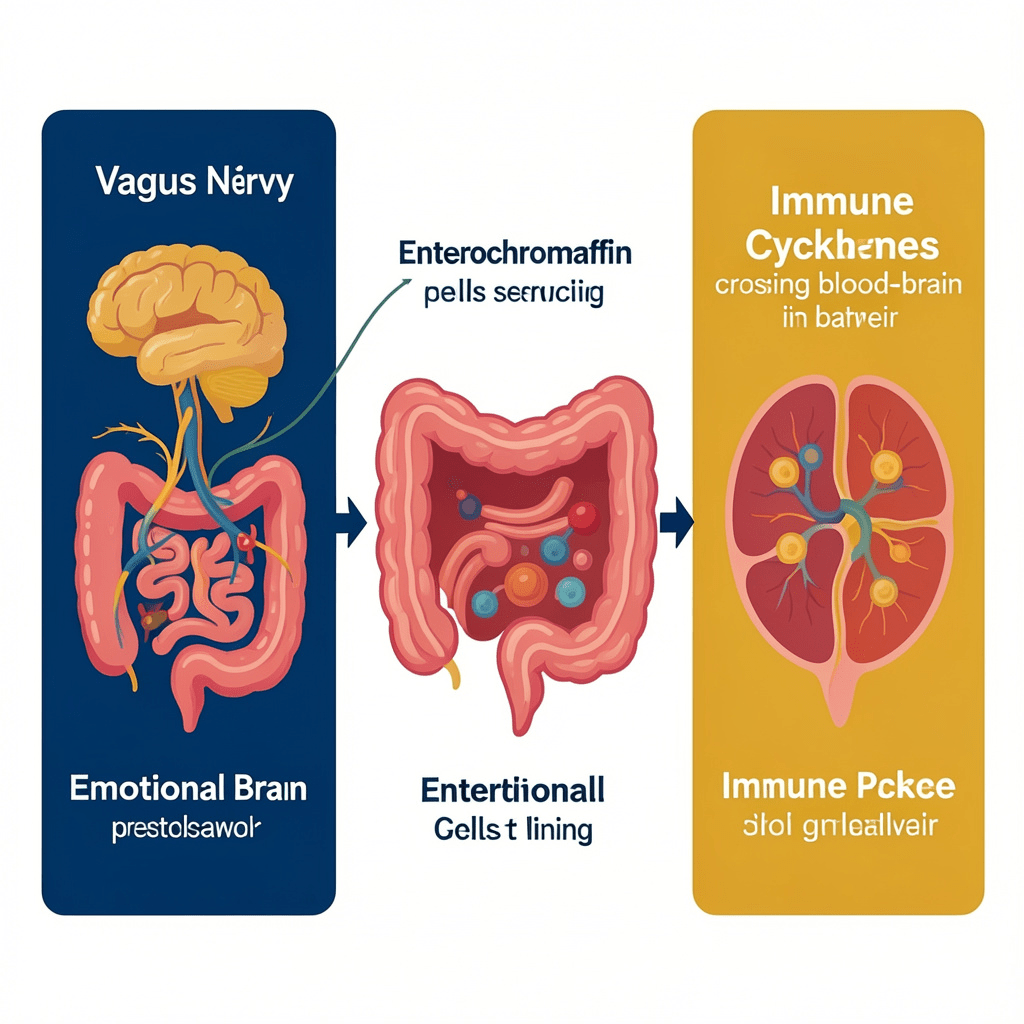
Your gut and brain are connected through a biological communication system called the gut-brain axis — a three-pathway network that operates 24 hours a day:
Pathway 1: The Vagus Nerve The vagus nerve is the longest nerve in your body, running from your brainstem directly into your gut. It transmits signals in both directions — but critically, roughly 90% of those signals travel from the gut UP to the brain. When your gut is inflamed, imbalanced, or distressed, it sends continuous low-level distress signals directly into your emotional brain — the limbic system — contributing to persistent low mood, emotional numbness, and hopelessness.
Pathway 2: The Neurotransmitter Production Line Your gut produces approximately 90% of your body’s serotonin and significant amounts of dopamine — the two neurotransmitters most directly linked to depression. This production happens inside gut lining cells called enterochromaffin cells, and it depends entirely on a healthy, diverse gut microbiome. When that microbiome is disrupted, the neurotransmitter production line shuts down — and your brain is starved of the chemicals it needs to sustain positive mood.
Pathway 3: The Immune-Inflammation Highway Your gut houses 70% of your immune system. When gut health breaks down — through dysbiosis, leaky gut, or poor diet — the immune system produces pro-inflammatory cytokines that enter the bloodstream, cross the blood-brain barrier, and trigger neuroinflammation. Neuroinflammation is now one of the most studied and most compelling biological drivers of major depressive disorder.
Understanding these three pathways is the foundation of understanding gut health and depression — and why treating the brain alone addresses only a fraction of the problem.
Related: Gut Health and Anxiety: The Complete Guide
7 Ways Gut Health Drives Depression
Way 1: Your Gut Is the Factory for Your Mood Chemicals
Let me give you the most important number in the gut health and depression conversation:
90%.
That is the percentage of your body’s serotonin that is produced in your gut — not your brain.
Serotonin is the neurotransmitter most directly associated with mood stability, emotional resilience, feelings of contentment, and the ability to experience positive emotion. When you take an antidepressant that works on serotonin — an SSRI — you are trying to increase serotonin activity in the brain. But if the fundamental problem is that your gut is not producing enough serotonin in the first place, you are addressing the downstream symptom while the upstream factory continues to fail.
Gut dysbiosis — an imbalance in your gut bacteria — is the primary reason serotonin production collapses. Specific bacterial strains, particularly Lactobacillus and Bifidobacterium, play a direct role in regulating serotonin synthesis in gut lining cells. When these bacteria are depleted through poor diet, stress, antibiotics, or alcohol, serotonin production drops measurably.
This is why gut health and depression are inseparable at the most fundamental biological level — your gut is where the mood chemicals are made.
Related: Best Supplements for Anxiety and Gut Health
Way 2: Gut Inflammation Triggers Brain Inflammation
Here is the mechanism that changes how you think about depression permanently.
When your gut lining is inflamed or permeable — through leaky gut, dysbiosis, or chronic stress — your immune system releases pro-inflammatory proteins called cytokines. These molecules are small enough to cross the blood-brain barrier. Once inside the brain, they activate the brain’s own immune cells — microglia — producing a state called neuroinflammation.
Neuroinflammation does not produce the dramatic symptoms of a physical illness. It produces something far more insidious: a persistent, grinding low mood. Emotional flatness. Loss of motivation. Inability to feel pleasure. Cognitive slowing. Social withdrawal. Fatigue that sleep does not fix.
These are not just symptoms of depression. They are the direct neurological consequences of a brain under inflammatory attack — an attack that originates in the gut.
This is why many people with gut health and depression issues find that antidepressants produce only partial relief. Antidepressants do not reduce neuroinflammation. They do not repair leaky gut. They do not restore the gut microbiome. They manage the chemical imbalance without addressing the inflammatory fire underneath it.
Related: Can Poor Gut Health Cause Panic Attacks and Anxiety?
Way 3: Your Gut Microbiome Directly Regulates Dopamine
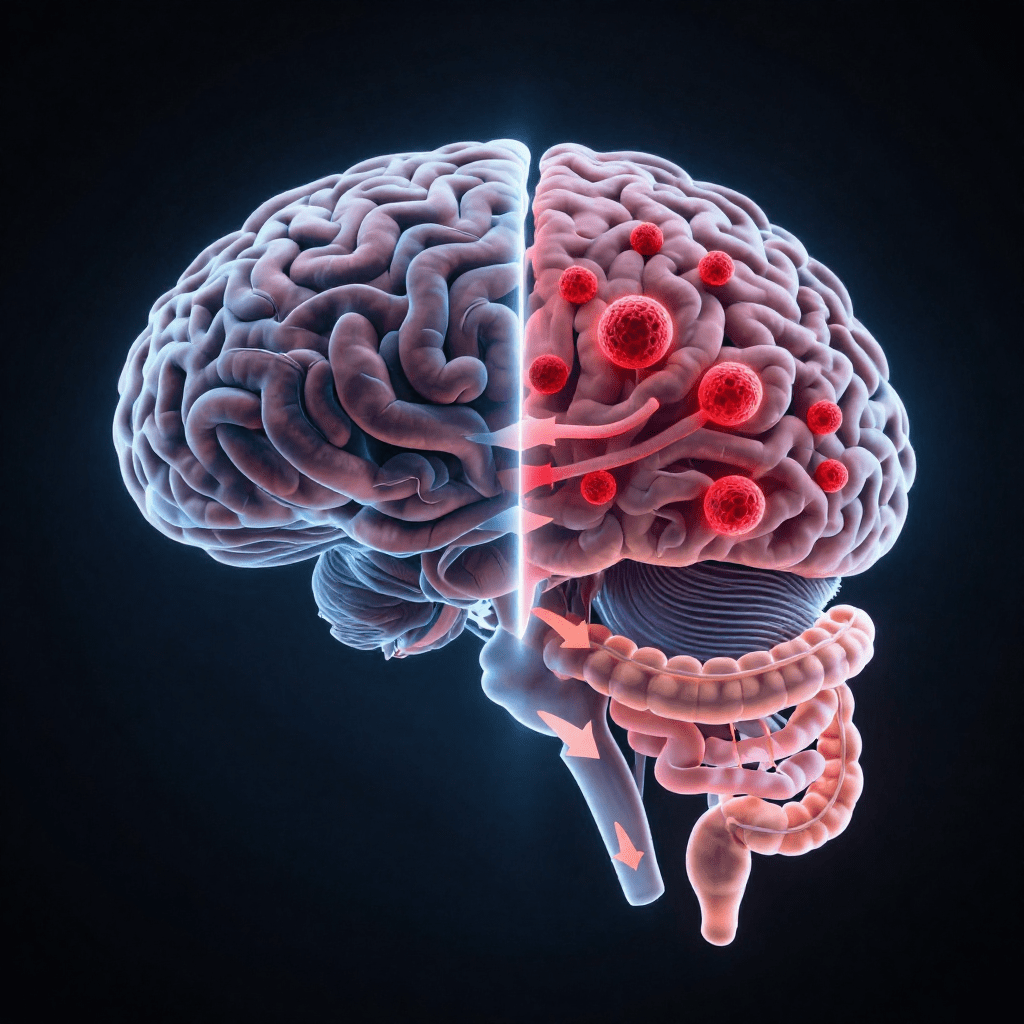
Serotonin gets most of the attention in depression conversations. But dopamine — the neurotransmitter responsible for motivation, reward, pleasure, and the drive to pursue things that matter — is equally important. And your gut plays a direct role in dopamine regulation too.
Gut bacteria influence dopamine production through multiple mechanisms: they regulate the availability of dopamine precursors like L-tyrosine, they control inflammation that degrades dopamine pathways, and certain bacterial strains directly produce dopamine in the gut.
When gut dysbiosis is severe, dopamine signalling deteriorates. The result is not just sadness — it is anhedonia: the inability to feel pleasure or motivation from activities that used to bring joy. Anhedonia is one of the most treatment-resistant symptoms of depression, and emerging research increasingly points to gut microbiome disruption as a key driver.
If you experience depression that feels more like emotional numbness and loss of motivation than active sadness — gut dopamine disruption through microbiome imbalance may be a significant factor in your experience.
Related: Signs Your Gut Is Destroying Your Mental Health
Way 4: Chronic Cortisol Rewires Your Brain for Depression
Your gut and your cortisol system are in constant conversation — and in people with gut health and depression issues, that conversation has gone badly wrong.
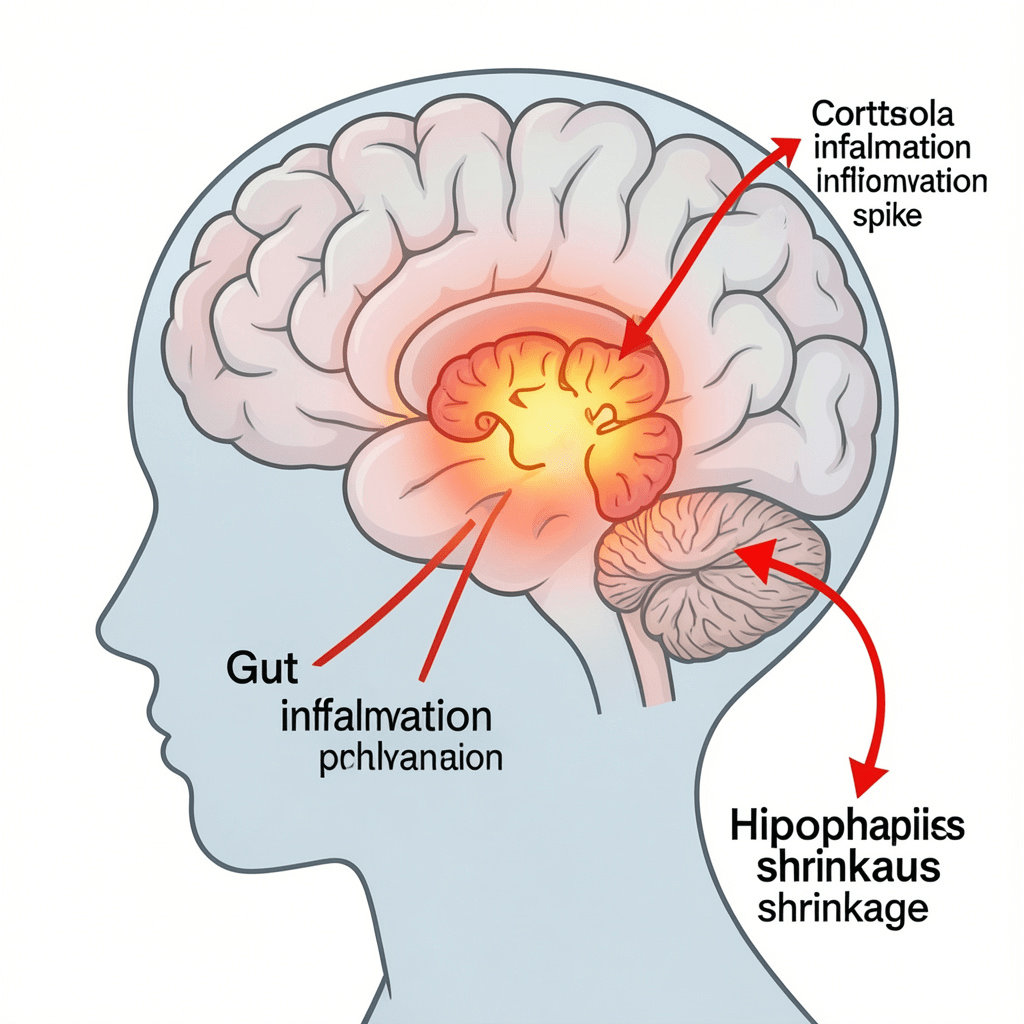
When your gut is inflamed and dysbiotic, it sends continuous low-level distress signals to your HPA axis — the hypothalamic-pituitary-adrenal axis — your body’s master stress regulation system. The HPA axis responds by producing cortisol. The gut inflammation persists. More cortisol is released. Chronically.
Chronically elevated cortisol does something devastating to the brain over time: it shrinks the hippocampus — the brain region responsible for emotional memory regulation, learning, and the ability to put negative experiences in perspective. A smaller hippocampus means negative emotions feel more permanent, positive experiences register less strongly, and the brain’s natural ability to recover from setbacks is progressively impaired.
This cortisol-hippocampus damage pathway is one of the most well-documented biological mechanisms in depression research. And it begins — in many people — not with a traumatic life event, but with a gut that has been inflamed for too long.
Related: Cortisol and Gut Health: 7 Shocking Ways Stress Destroys Your Gut
Way 5: The Gut-Depression Cycle Is Self-Reinforcing
This is the mechanism that explains why depression is so difficult to break out of — and why understanding gut health and depression together is the only way to interrupt it.
Depression damages your gut. And a damaged gut worsens your depression.
When you are depressed, your cortisol is elevated — and cortisol directly increases intestinal permeability, reduces beneficial gut bacteria, and triggers gut inflammation. Depression also typically leads to the lifestyle factors that devastate gut health: poor diet, disrupted sleep, reduced physical activity, alcohol use, and social withdrawal.
Meanwhile, the worsening gut health produces more inflammation, more serotonin depletion, more dopamine disruption, and more neuroinflammation — which deepens the depression further. The worse you feel, the harder it is to do the things that would help your gut. The worse your gut gets, the harder it is to feel better.
This is not a metaphor. This is a measurable biological loop — and it is exactly why depression without gut intervention so often becomes chronic and treatment-resistant.
Breaking this loop requires addressing both the mind and the gut simultaneously. Not sequentially.
Related: How to Heal Your Gut to Reduce Anxiety
Way 6: Gut Bacteria Imbalance Disrupts Your Sleep — and Sleep Drives Depression
The relationship between gut health, sleep, and depression is a three-way cycle that most people have never had explained to them.
Your gut microbiome directly regulates your circadian rhythm — the body’s internal 24-hour clock — through its production of serotonin, which is also the precursor to melatonin, your sleep hormone. A disrupted microbiome means disrupted melatonin production. Disrupted melatonin means poor sleep quality. And poor sleep is one of the most powerful drivers and maintainers of depression known to science.
Here is where it compounds: sleep deprivation increases gut permeability, worsens dysbiosis, and elevates cortisol — all of which intensify gut-driven depression. Poor gut health then further disrupts sleep the following night. And the cycle deepens.
For many people with gut health and depression issues, the entry point into this cycle is not a life event or a brain chemistry problem. It is a gut microbiome disruption that progressively destabilised their sleep architecture — months or even years before the depression became impossible to ignore.
Related: Does Magnesium Help With Anxiety and Sleep Problems?
Way 7: Your Gut Bacteria Send Mood Signals Directly to Your Brain
This final mechanism is the most remarkable — and the one that most powerfully illustrates why gut health and depression cannot be fully understood separately.
Your gut bacteria are not passive passengers. They are active participants in your emotional life. Research now shows that gut bacteria produce and release neuroactive compounds — including short-chain fatty acids (SCFAs), tryptophan metabolites, and gamma-aminobutyric acid (GABA) — that directly influence brain function, mood regulation, and emotional reactivity.
In people with a diverse, healthy microbiome, these bacterial mood signals contribute to emotional stability, stress resilience, and cognitive clarity. In people with severe dysbiosis — the kind consistently found in people with major depressive disorder — these signals become inflammatory and destabilising.
Most strikingly: faecal microbiota transplantation (FMT) studies — where gut bacteria from depressed individuals are transferred into germ-free animals — have produced depressive-like behaviour in those animals within weeks. The bacteria alone were enough to produce depression. This is not peripheral evidence. This is proof that the microbiome is a primary actor in depression — not merely a secondary casualty.
Related: 7 Signs of Poor Gut Health and Anxiety
Related: Best Probiotics for Gut Health and Anxiety
Signs Your Depression May Be Gut-Driven
Not all depression has a significant gut component. But these patterns suggest yours might:
Physical Gut Signs:
- Chronic bloating, gas, or digestive discomfort that has appeared alongside your depression
- Food sensitivities that seem to have worsened during depressive episodes
- IBS diagnosis or frequent irregular digestion
- Skin problems — eczema, rosacea, or persistent acne — flaring during low mood periods
- Persistent fatigue that is unrelated to how much you sleep
- History of frequent antibiotic use — especially in the years before depression developed
Mental and Emotional Patterns:
- Depression characterised primarily by emotional flatness and anhedonia rather than active sadness
- Depression that worsens after eating certain foods — particularly ultra-processed food, sugar, or alcohol
- Low mood that is noticeably worse in the morning and improves somewhat through the day
- Brain fog, poor concentration, and memory issues alongside low mood
- Depression that has responded only partially to antidepressants — especially SSRIs
- Mood that is noticeably better during periods when you eat well and worse when you eat poorly
The critical pattern: When your gut symptoms and depressive symptoms consistently track together — worsening and improving in response to the same dietary and lifestyle factors — gut health and depression are almost certainly operating as one connected system in your body.
Related: Why Do I Feel Anxious for No Reason?
How to Improve Gut Health to Reduce Depression — 7 Steps
Understanding gut health and depression is only useful if you act on it. Here is the complete protocol — built not around quick fixes, but around the real biological changes your gut and brain both need.
Step 1: Remove the Gut-Depression Amplifiers
You cannot rebuild a gut while continuing to tear it down. These are the factors most directly amplifying your gut-driven depression — and they need to go first:
- Ultra-processed food and added sugar — feeds inflammatory gut bacteria, destroys microbiome diversity, spikes blood sugar in patterns that worsen mood instability
- Alcohol — directly depletes Lactobacillus and Bifidobacterium within hours, increases intestinal permeability, and produces next-day neuroinflammation that deepens depression
- Chronic sleep deprivation — elevates cortisol overnight, disrupts gut repair processes, and worsens both gut dysbiosis and depression simultaneously
- Social isolation — chronic loneliness elevates inflammatory markers that worsen gut permeability and neuroinflammation. Depression drives isolation; isolation deepens depression. This loop must be interrupted deliberately.
Step 2: Feed Your Gut Microbiome the Diversity It Needs
The single most powerful long-term dietary strategy for gut health and depression is microbiome diversity. Research consistently shows that people with the most diverse gut microbiomes have the lowest rates of depression.
The most effective strategy: aim for 30 different plant foods per week.
Not 30 servings of the same vegetables. 30 different plants — vegetables, fruits, legumes, nuts, seeds, herbs, and whole grains. Each different plant feeds different bacterial species. More species = more serotonin, more dopamine precursors, more SCFAs, more mood stability.
This single habit, sustained over 8–12 weeks, produces measurable changes in microbiome composition and mood.
Step 3: Add Fermented Foods Daily
Fermented foods deliver live beneficial bacteria directly into your gut — alongside a complex mixture of bioactive compounds that support gut lining integrity and reduce inflammation.
Most effective for gut health and depression:
- Kefir — one of the most potent fermented foods available; contains up to 61 bacterial strains https://amzn.to/49Qp8Dl(check for deaitls)
- Live culture yogurt — accessible, affordable, proven to increase Lactobacillus populations
- Kimchi and sauerkraut — fermented vegetables that deliver both probiotics and prebiotic fibre simultaneously
- Miso — rich in diverse bacterial cultures; adds variety without requiring large portions
Start with one serving daily and build from there. Consistency over weeks produces far better results than large amounts consumed sporadically.
Related: Foods for Gut Health to Reduce Anxiety
Step 4: Take a Targeted Probiotic for Mood
Not all probiotics are created equal for gut health and depression. The strains with the strongest research specifically for mood and depression are:
- Lactobacillus helveticus R0052 — clinically shown to reduce cortisol and improve mood scores
- Bifidobacterium longum R0175 — reduces psychological distress and improves emotional regulation through vagal pathways
- Lactobacillus rhamnosus — reduces cortisol and GABA receptor changes associated with depression in clinical models
Look for products that contain these specific strain codes on the label. Generic “multi-strain probiotic blends” without named strains have significantly weaker evidence for depression specifically.
Allow 4–8 weeks of daily use before assessing effectiveness.
Related: How Long for Probiotics to Work for Anxiety? Related: Best Probiotics for Gut Health and Anxiety
Step 5: Activate Your Vagus Nerve to Break the Depression-Gut Loop
Because the vagus nerve is the primary physical connection in the gut health and depression relationship, directly stimulating it creates simultaneous improvements in both gut function and mood — making it one of the highest-leverage daily practices available.
Most effective techniques:
- Extended exhale breathing — inhale for 4 counts, exhale slowly for 7–8 counts. Do this for 5 minutes daily. Not occasionally. Daily. Vagal tone is built through repetition, not single sessions.
- Cold water face immersion — splashing cold water on your face activates the vagus nerve through the diving reflex within seconds
- Humming, singing, or gargling — vibrates the vagus nerve directly through the throat. Uncomfortable to suggest. Genuinely effective.
- Daily walking — 20–30 minutes of gentle outdoor walking builds vagal tone and simultaneously increases microbiome diversity through exercise-driven gut motility
Related: Vagus Nerve Exercises for Anxiety
Step 6: Use Targeted Supplements to Accelerate Recovery
Gut healing takes weeks. Depression needs support in the meantime. These supplements address the gut health and depression cycle from multiple angles:
- Magnesium glycinate (200–400mg nightly) — reduces overnight cortisol, supports gut repair during sleep, activates GABA for nervous system calm
- Omega-3 fatty acids — EPA and DHA (1,000–2,000mg daily) — reduce both gut inflammation and neuroinflammation; omega-3s have among the strongest evidence of any supplement for depression specifically
- Vitamin D3 (2,000–4,000 IU daily) — deficiency is directly linked to both gut dysbiosis and depression; most adults in northern latitudes and office-based lifestyles are deficient
- L-glutamine (5g daily on empty stomach) — primary fuel for gut lining cells; directly repairs intestinal permeability that drives inflammatory depression
Related: Best Supplements for Anxiety and Gut Health Related: Does Magnesium Help With Anxiety and Sleep Problems?
Step 7: Protect Sleep as a Non-Negotiable
Sleep is not a lifestyle preference. For gut health and depression, it is a biological requirement.
During sleep, your gut lining repairs itself. Your microbiome rebalances. Cortisol drops. The brain clears neuroinflammatory waste products through the glymphatic system. Serotonin and dopamine systems reset. Every single one of these processes is essential for breaking the gut-depression cycle — and every single one requires adequate, quality sleep to occur.
If you are sleeping fewer than 7 hours consistently while trying to improve your gut health and depression, you are attempting to fill a bucket with a hole in the bottom. The gut repair your daytime habits are building is being dismantled every night.
Prioritise sleep with the same seriousness you give to diet and supplements — because without it, neither will fully work.
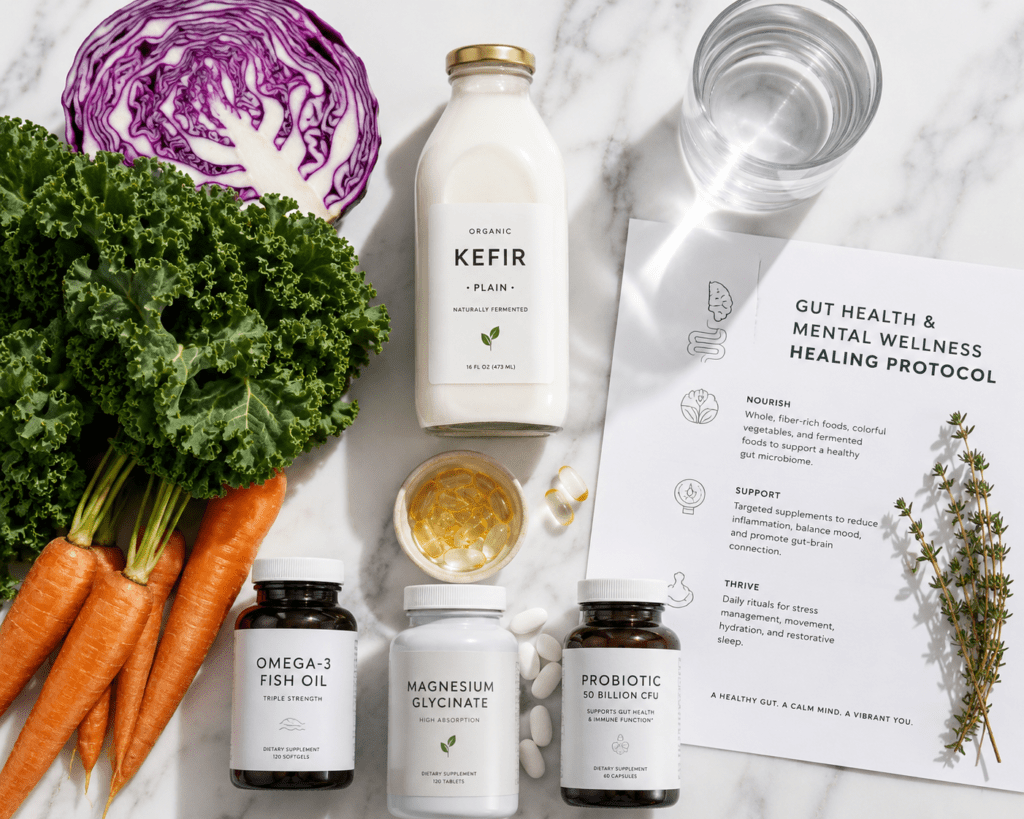
Best Foods for Gut Health and Depression Relief
Your daily diet is the most powerful and most sustainable intervention for gut health and depression. Here is what to prioritise:
Eat More:
- Fatty fish (salmon, mackerel, sardines) — richest food source of EPA and DHA omega-3s; multiple clinical studies show fish consumption directly associated with lower depression rates
- Fermented foods daily — kefir, yogurt, kimchi, sauerkraut; live cultures directly replenish the mood-regulating bacteria depression depletes
- Dark leafy greens — spinach, kale, Swiss chard; rich in folate, which is required for serotonin and dopamine synthesis; folate deficiency is found in up to 30% of depressed patients
- Berries — blueberries, raspberries, blackberries; high in polyphenols that feed beneficial Lactobacillus and reduce oxidative stress linked to neuroinflammation
- Walnuts — the highest plant-based source of omega-3s; also contain melatonin and polyphenols supporting gut barrier integrity
- Dark chocolate (70%+) — contains polyphenols that directly increase Bifidobacterium and Lactobacillus; produces measurable mood elevation through gut-brain signalling — not just through taste
Reduce or Remove:
- Ultra-processed food and fast food — destroys microbiome diversity within days of regular consumption
- Added sugar — feeds inflammatory bacteria, destabilises blood sugar, and produces mood crashes that amplify depressive episodes
- Alcohol — produces next-day neuroinflammation and directly kills the bacteria most responsible for serotonin and GABA production
- Artificial sweeteners — disrupt microbiome composition without the blood sugar effects of sugar; not a safe alternative for gut health
- Excessive caffeine — elevates cortisol, increases gut motility dysregulation, and disrupts sleep architecture
Best Supplements for Gut Health and Depression
| Supplement | Dose | Primary Benefit for Depression | Timeframe |
|---|---|---|---|
| Omega-3 (EPA+DHA) | 1,000–2,000mg daily | Reduces neuroinflammation and gut inflammation | 4–6 weeks |
| Probiotic (L. helveticus + B. longum) | 1 capsule daily | Restores serotonin/cortisol regulation | 4–8 weeks |
| Magnesium Glycinate | 200–400mg nightly | Reduces cortisol, repairs gut overnight, supports GABA | 2–4 weeks |
| Vitamin D3 | 2,000–4,000 IU daily | Addresses gut dysbiosis and mood regulation deficiency | 6–8 weeks |
| L-Glutamine | 5g daily on empty stomach | Repairs leaky gut driving neuroinflammation | 4–6 weeks |
| Ashwagandha | 300–600mg daily | Lowers chronic cortisol — the hippocampus protector | 8–12 weeks |
Related: Best Supplements for Anxiety and Gut Health
When to See a Doctor
The gut health and depression protocol outlined in this guide is powerful — but it is not a replacement for professional care when depression is severe.
See a doctor immediately if you experience:
- Thoughts of self-harm or suicide — please reach out to a medical professional or crisis line without delay
- Depression so severe it prevents basic daily functioning — getting out of bed, eating, maintaining hygiene
- Sudden worsening of depressive symptoms without an identifiable lifestyle cause
- Depression combined with unexplained weight loss, blood in stool, or severe abdominal pain
- Depressive symptoms that show no improvement after 12 weeks of consistent gut intervention
Consider a functional medicine or integrative psychiatry consultation if:
- You have tried multiple antidepressants with partial or no response
- Your depression consistently worsens alongside gut symptoms
- You want testing for intestinal permeability, microbiome composition, inflammatory markers, and cortisol patterns
Gut health interventions work best as a complement to professional mental health care — not a substitute for it. The most effective approach combines both.
See: NHS — Clinical Depression See: Mayo Clinic — Depression
Final Thought
If you have been fighting depression and nobody has asked you about your gut — you have been working with an incomplete map.
Gut health and depression are not separate battles. They are the same war — fought simultaneously in your intestinal lining, your microbiome, your vagus nerve, your cortisol system, and your brain’s inflammatory pathways.
The serotonin your brain needs to feel well is being made — or not made — in your gut right now. The inflammation driving your neurological heaviness may be originating in your intestinal barrier. The cortisol reshaping your brain’s ability to recover is being sustained by a gut that has been under siege for years.
This is not hopeless. It is fixable.
A more diverse microbiome is achievable within weeks of dietary change. Gut inflammation responds to targeted nutrition and supplementation within 4–6 weeks. The vagus nerve can be retrained. The gut lining can repair. And when it does — when the serotonin production recovers, the inflammation quietens, and the cortisol normalises — many people experience improvements in their depression that no previous treatment had delivered.
Your gut shaped how you feel today. It can reshape how you feel tomorrow.
Start with one change. One fermented food. One probiotic. One night of protected sleep. One 20-minute walk.
The gut that drives your depression is the same gut that can begin your recovery — if you give it the conditions it needs.
Next Read: Can Poor Gut Health Cause Panic Attacks and Anxiety?
FAQ
Can gut health really affect depression? Yes — directly and measurably. Your gut produces approximately 90% of your body’s serotonin and significant amounts of dopamine — the neurotransmitters most directly linked to depression. Gut dysbiosis disrupts this production. Gut inflammation produces pro-inflammatory cytokines that cross the blood-brain barrier and trigger neuroinflammation — one of the most studied biological drivers of major depressive disorder. Gut bacteria also regulate cortisol through the HPA axis, and chronically elevated cortisol shrinks the hippocampus — the brain region most critical for emotional recovery. Gut health and depression are biologically inseparable.
What are the signs that gut problems are driving my depression? The clearest sign is when your depression and gut symptoms consistently track together — worsening after the same foods, improving with the same dietary changes, and fluctuating in response to the same lifestyle factors. Depression characterised primarily by emotional flatness, anhedonia, and brain fog rather than active sadness is particularly associated with gut inflammation. Depression that has responded only partially to SSRIs is another strong signal — because SSRIs address brain serotonin but do not restore gut serotonin production, repair leaky gut, or reduce neuroinflammation.
How long does it take for gut healing to improve depression? Most people notice meaningful improvements in energy, sleep quality, and general mood within 4–6 weeks of consistent gut healing practices — particularly when removing inflammatory foods, adding fermented foods daily, and starting a targeted probiotic. Significant reductions in depressive symptoms typically follow 8–12 weeks after gut symptoms begin improving, reflecting the time needed for microbiome diversification, neuroinflammation reduction, and normalisation of cortisol and serotonin production. Full sustained improvement generally takes 3–6 months of consistent effort.
Do probiotics help with depression? Yes — specific probiotic strains have shown clinically meaningful effects on depression markers in multiple studies. Lactobacillus helveticus R0052 and Bifidobacterium longum R0175 are the most researched strains for mood specifically, with studies showing reduced cortisol, improved mood scores, and lower psychological distress compared to placebo. Probiotics work most effectively for depression as part of a broader gut health protocol — combined with dietary changes, omega-3s, and sleep improvement — rather than as a standalone intervention.
Is there a connection between IBS and depression? Yes — one of the most consistently documented in gastroenterology research. People with IBS are up to three times more likely to develop depression than people without gut conditions. Both share the same root mechanisms: gut dysbiosis, intestinal inflammation, serotonin disruption, and HPA axis dysregulation operating through the gut-brain axis. Many IBS sufferers find that treating their gut health produces improvements in both their digestive symptoms and their mood simultaneously — because both conditions share the same biological drivers.
What foods are best for gut health and depression? The most evidence-backed dietary choices for gut health and depression are: fatty fish (salmon, mackerel, sardines) for omega-3s that reduce neuroinflammation; daily fermented foods (kefir, yogurt, kimchi, sauerkraut) to replenish mood-regulating gut bacteria; dark leafy greens for folate required in serotonin synthesis; berries for polyphenols that feed Lactobacillus populations; and walnuts for plant-based omega-3s and melatonin support. Equally important is removing the foods that destroy the gut-mood relationship: alcohol, added sugar, ultra-processed food, and artificial sweeteners.
Internal Links Summary
- Gut Health and Anxiety: The Complete Guide
- Can Poor Gut Health Cause Panic Attacks and Anxiety?
- Signs Your Gut Is Destroying Your Mental Health
- Best Supplements for Anxiety and Gut Health
- Cortisol and Gut Health
- How to Heal Your Gut to Reduce Anxiety
- Does Magnesium Help With Anxiety and Sleep Problems?
- Foods for Gut Health to Reduce Anxiety
- Best Probiotics for Gut Health and Anxiety
- How Long for Probiotics to Work for Anxiety?
- Vagus Nerve Exercises for Anxiety
- 7 Signs of Poor Gut Health and Anxiety
- Why Do I Feel Anxious for No Reason?
- External Authority Links
- Harvard Health — The Gut-Brain Connection
- NHS — Clinical Depression
- Mayo Clinic — Depression