


Does ashwagandha help with anxiety and stress, it’s really matters, you’ve been struggling with anxiety and stress, you’ve probably heard about ashwagandha. It’s everywhere right now — in supplements, smoothies, and wellness circles. But does ashwagandha really help with anxiety and stress, or is it just another overhyped herb? After years of working with people fighting gut-driven anxiety and chronic stress, I can tell you this: ashwagandha is one of the few natural supplements backed by real clinical evidence.
In this guide, I’ll walk you through exactly how it works, what the research actually says, the right dose, and who should be cautious. No fluff. Just facts.
Table of Contents
What Is Ashwagandha and Why Does It Work for Anxiety and Stress?
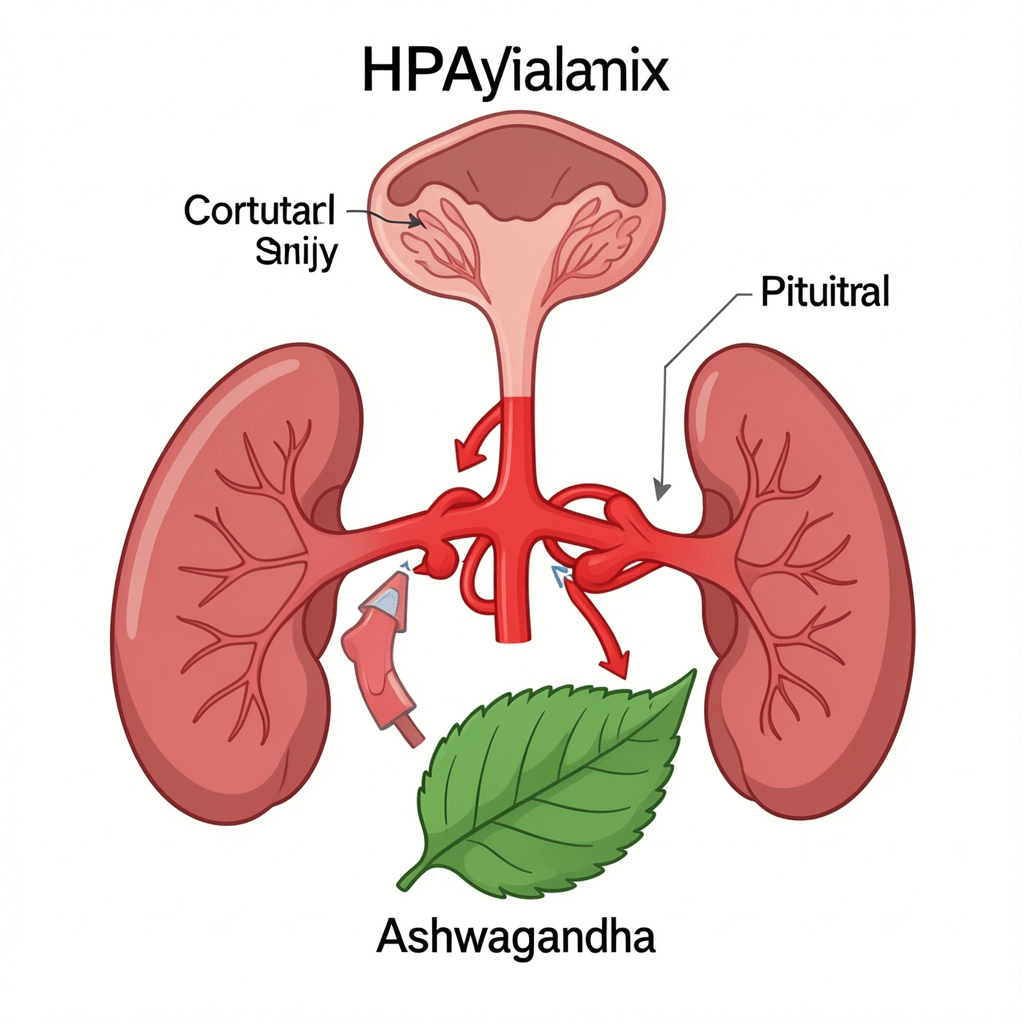
Ashwagandha — scientifically known as Withania somnifera — is an ancient Ayurvedic herb used for over 6,000 years. It’s classified as an adaptogen, meaning it helps your body resist and adapt to physical and emotional stress. The magic lies in its active compounds called withanolides, which directly regulate your HPA axis — the system that controls cortisol, your primary stress hormone. When your HPA axis is overactive, cortisol stays dangerously high, destroying your gut lining, disrupting sleep, and feeding anxiety in a vicious cycle.
Ashwagandha interrupts this cycle at the root. That’s why when people ask does ashwagandha help with anxiety and stress, the answer isn’t just yes — it’s yes with science behind it.
7 Powerful Ways Ashwagandha Helps With Anxiety and Stress
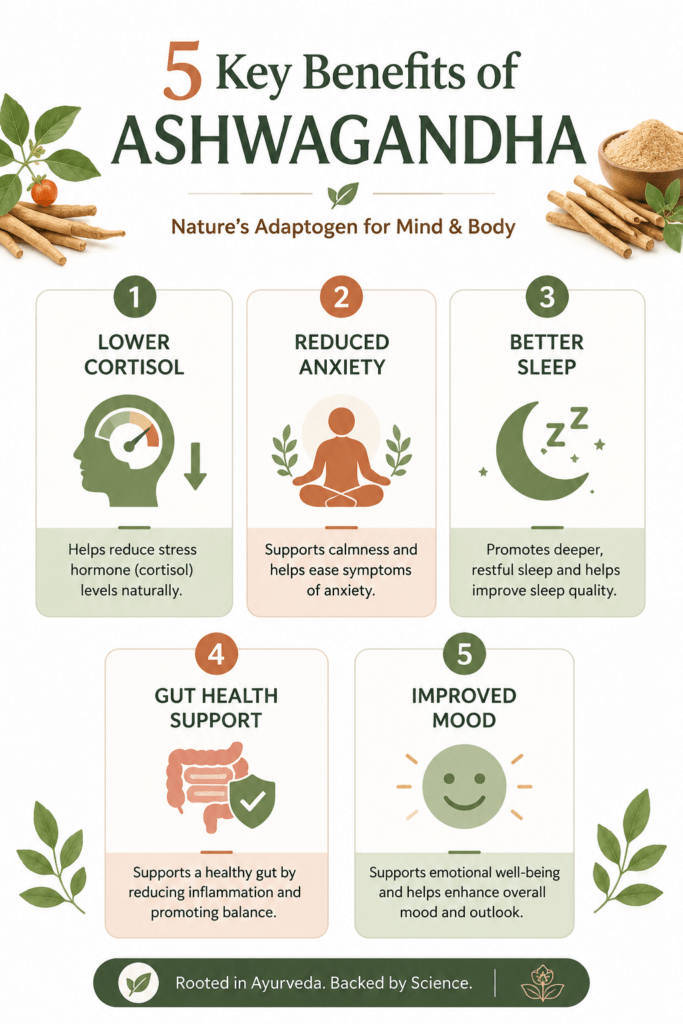
1. It Dramatically Lowers Cortisol Levels
This is the big one. Cortisol is your stress hormone, and when it stays elevated — from work pressure, relationship tension, poor sleep, or gut problems — your anxiety spirals. Multiple clinical trials confirm that ashwagandha supplementation significantly reduces cortisol levels in adults. In one randomized, double-blind, placebo-controlled study published in Medicine, participants taking standardized ashwagandha root extract showed measurable reductions in cortisol and reported significantly lower stress and anxiety scores compared to placebo. Lower cortisol means a calmer nervous system, better sleep, and a gut that can finally heal. If you want to understand the cortisol-gut connection deeper, read our guide on cortisol and gut health.
2. It Reduces Anxiety Scores by Up to 70%
Let that number sink in. A review of multiple double-blind, placebo-controlled trials found that ashwagandha can reduce anxiety scores by up to 70% in people with anxiety disorders or high stress levels. The World Federation of Societies of Biological Psychiatry (WFSBP) and Canadian Network for Mood and Anxiety Treatments (CANMAT) have even provisionally recommended ashwagandha root extract at 300–600 mg daily for generalized anxiety disorder. That’s not a wellness blogger making claims — that’s international medical bodies recognizing that ashwagandha helps with anxiety and stress in a clinically meaningful way.
3. It Supports Your Gut-Brain Axis
Here’s something most articles miss: ashwagandha doesn’t just calm your brain — it also protects your gut. Chronic stress damages the gut lining, disrupts your microbiome, and triggers inflammation that feeds anxiety right back to your brain. Ashwagandha helps break this cycle by reducing gut inflammation, supporting the intestinal barrier, and calming the enteric nervous system — the 600 million nerve cells lining your gut. When you heal your gut, your anxiety often drops alongside it. This is exactly why ashwagandha is so effective for people whose anxiety shows up as stomach issues. See also: Signs Your Gut Is Destroying Your Mental Health.
4. It Improves Sleep Without Making You Drowsy
Anxiety and poor sleep are inseparable. When you don’t sleep, stress hormones spike the next day. When stress spikes, sleep gets worse. Ashwagandha interrupts this cycle — not by sedating you, but by calming the nervous system so your brain can naturally transition into sleep. Clinical trials show people taking ashwagandha fell asleep faster, slept longer, and woke up less frequently at night. The best results came at 600 mg daily for at least 8 weeks. Improved sleep alone dramatically reduces next-day anxiety. And a well-rested gut functions better too — digestion, microbiome balance, and bowel regularity all improve with quality sleep.
5. It Modulates GABA and Serotonin Pathways
Withanolides in ashwagandha interact with GABA receptors in the brain — the same receptors targeted by anti-anxiety medications like benzodiazepines, but without the addiction risk or side effects. GABA is your brain’s primary calming neurotransmitter. When GABA activity is low, anxiety runs high. Ashwagandha also supports serotonin production, and since 90% of your serotonin is made in the gut, this directly links ashwagandha’s benefits to gut health as well. If your anxiety is driven by gut dysbiosis or low serotonin, ashwagandha works on both fronts simultaneously.
6. It Works Even Better With Probiotics
Ashwagandha and probiotics are a powerful combination that most people overlook. While ashwagandha calms your stress response from the top down (brain → gut), probiotics rebuild the gut microbiome from the bottom up (gut → brain). Together, they attack anxiety from both directions. If you’re already asking does ashwagandha help with anxiety and stress, the answer gets even stronger when you pair it with a quality probiotic. Check our guide: Best Probiotics for Gut Health and Anxiety.
7. Lower Doses for Longer Work Better Than High Short-Term Doses
This surprises most people. Research shows that doses of 500 mg or less per day taken for more than 8 weeks produce greater anxiety and stress reduction than higher short-term doses. Ashwagandha is not a one-day fix. It’s a slow, deep recalibration of your nervous system and stress hormones. People who take it for 2 weeks and say “it didn’t work” simply didn’t give it enough time. Patience and consistency are everything with this herb.
How to Take Ashwagandha for Anxiety and Stress: The Right Way
Now that you know ashwagandha helps with anxiety and stress, here’s exactly how to use it correctly:
Dose: 300–600 mg of standardized root extract daily (look for KSM-66 or Sensoril — these are the most researched forms)
Timing: Take it at night with food — it doesn’t cause drowsiness but supports sleep quality and reduces next-day cortisol
Duration: Commit to at least 8 weeks before judging results — most people feel meaningful change around weeks 4–6
Stack it: Pair with magnesium glycinate for enhanced cortisol reduction and sleep support
Avoid if: You are pregnant, breastfeeding, or on thyroid, blood pressure, or immunosuppressant medications — consult your doctor first
External Resources:
- NIH Office of Dietary Supplements – Ashwagandha Fact Sheet
- Mayo Clinic – Ashwagandha for Stress and Anxiety
- Examine.com – Ashwagandha Research Overview
Also read: Best Supplements for Anxiety and Gut Health and How to Heal Your Gut to Reduce Anxiety
Conclusion
So, does ashwagandha help with anxiety and stress? Without question — yes. The evidence is clear, the mechanism is understood, and thousands of people experience real relief when they use it correctly. It lowers cortisol, calms the nervous system, supports gut health, and improves sleep all at once. But it’s not magic, and it’s not instant. Treat it like a long-term investment in your nervous system.
Start at 300–600 mg daily, pair it with gut-healing habits, stay consistent for 8 weeks, and you’ll likely wonder why you didn’t start sooner. Your gut and your mind are talking to each other constantly — ashwagandha helps both of them finally speak a language of calm. For a full picture of how to fix gut-driven anxiety, read our Complete Guide to Gut Health and Anxiety.
Frequently Asked Questions
Does ashwagandha help with anxiety and stress immediately?
No — ashwagandha is not a fast-acting sedative. Most people begin noticing reduced stress and better sleep within 2–4 weeks, with the strongest anxiety-reducing effects appearing after 6–8 weeks of consistent daily use. If you need immediate anxiety relief, combine it with deep breathing or vagus nerve exercises while the herb builds up in your system.
How much ashwagandha should I take for anxiety and stress?
Clinical research supports 300–600 mg of standardized ashwagandha root extract daily. Look for products standardized to at least 5% withanolides. KSM-66 and Sensoril are the two most studied and trusted forms. Doses above 1,000 mg daily are not recommended long-term.
Can ashwagandha make anxiety worse?
In rare cases, some people experience increased restlessness or stomach upset when starting ashwagandha, particularly at higher doses. Starting at 300 mg and gradually increasing reduces this risk. People with autoimmune conditions, thyroid disorders, or those on certain medications should consult a doctor before use.