


Gut health and brain fog — two things you’ve probably never connected.
You wake up. Your mind feels thick. Slow. Like you’re thinking through wet concrete.
You forget things. You lose your train of thought mid-sentence. Simple decisions feel exhausting. You drink more coffee. It doesn’t help.
You’ve blamed sleep. You’ve blamed stress. You’ve blamed getting older.
But here’s what nobody has told you yet:
Your gut may be the reason your brain can’t fire properly — and until you fix it, no amount of sleep, caffeine, or willpower will clear your head.
As someone who has studied the gut-brain connection extensively, I’ve watched people spend years trying to fix brain fog from the neck up — while the real problem was happening from the neck down.
Gut health and brain fog are not two separate problems. They are one problem with two symptoms.
In this guide, you’ll understand the 7 biological mechanisms through which your gut is directly clouding your thinking — and the exact protocol to fix it.
Quick Facts
- Your gut and brain are connected through 500 million neurons — your gut has its own nervous system
- 90% of your serotonin is produced in your gut — and serotonin directly regulates cognitive clarity
- People with gut dysbiosis are significantly more likely to report chronic brain fog
- Leaky gut allows inflammatory toxins into the bloodstream that directly impair brain function
- Fixing gut health and brain fog together produces faster cognitive recovery than addressing either alone
Why the Gut Health and Brain Fog Connection Matters More Than You Think
Most people treat brain fog the same way they treat tiredness.
More sleep. More coffee. More pushing through.That’s the wrong approach — and here’s why:
Brain fog is not a sleep problem. It is not a motivation problem. In many people, it is a biological inflammation problem — and the source of that inflammation is the gut.
Your gut produces the neurotransmitters your brain needs to think clearly. It regulates the inflammatory signals that determine how efficiently your neurons fire. It controls the blood-brain barrier that protects your brain from toxins.
When your gut breaks down — your brain feels it immediately.
This is why the gut health and brain fog relationship is one of the most important — and most ignored — connections in modern wellness science.
Table of Contents
🔍 7 Brutal Ways Your Gut Is Clouding Your Mind
This is where you stop guessing why your brain feels slow — and start understanding the biology behind it.
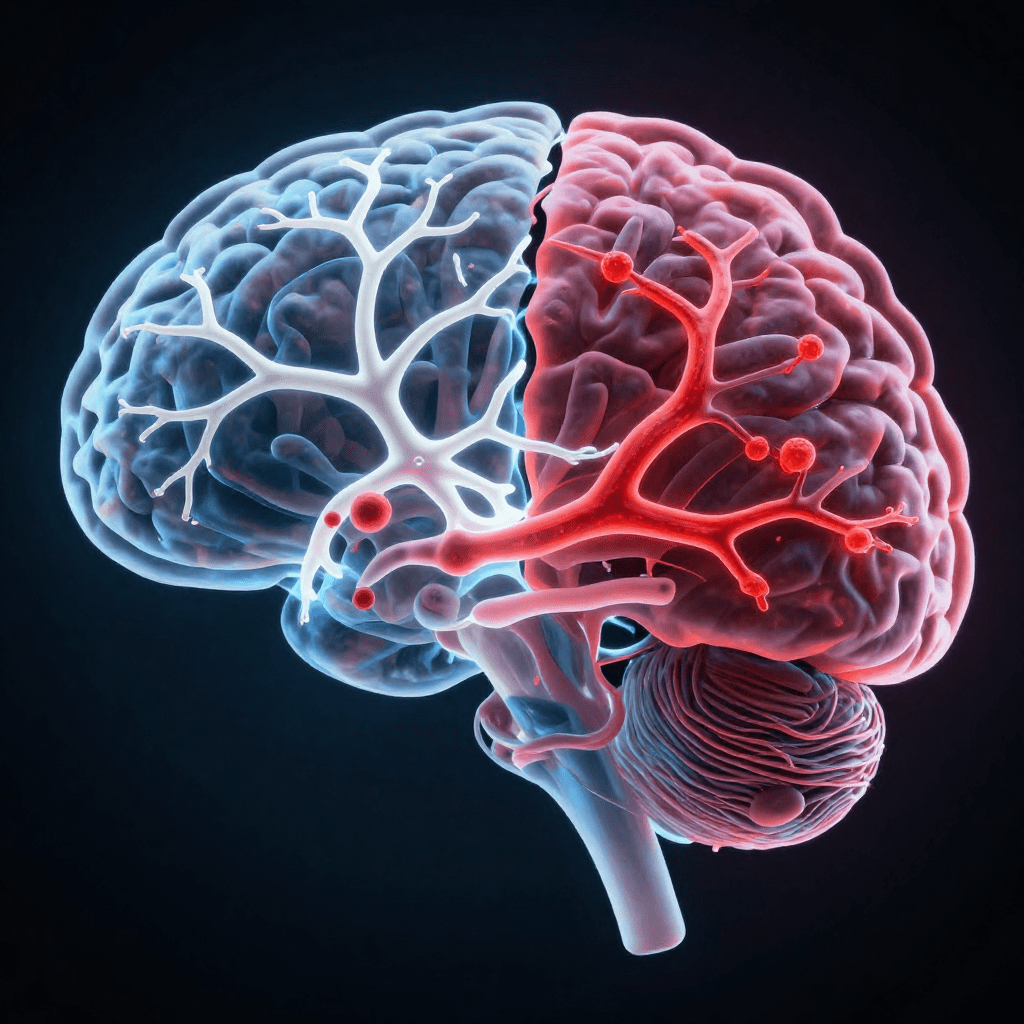
1. Gut Inflammation Is Setting Your Brain on Fire
The most direct pathway between gut health and brain fog is inflammation — and it is more literal than most people realise.
When your gut microbiome becomes imbalanced — through poor diet, stress, antibiotics, or alcohol — your intestinal barrier weakens. Bacterial toxins called lipopolysaccharides (LPS) slip through into your bloodstream.
Your immune system responds with a full inflammatory reaction. Pro-inflammatory cytokines flood your system. These molecules are small enough to cross the blood-brain barrier — and once inside, they activate the brain’s immune cells called microglia.
Activated microglia produce neuroinflammation — a state of brain-wide inflammation that directly impairs:
- Neuronal communication speed
- Memory consolidation
- Decision-making clarity
- Focus and concentration
What does neuroinflammation feel like?
Exactly like brain fog. Thick. Slow. Frustrating. Unrelated to how much you slept or how hard you’re trying.
This is not vague wellness theory. This is measurable biology — and it starts in your gut.
Related: Can Poor Gut Health Cause Panic Attacks and Anxiety?
2. Your Gut Is Starving Your Brain of Serotonin
Here is the number that changes everything in the gut health and brain fog conversation:
90%.
That is how much of your body’s serotonin is produced in your gut — not your brain.
Most people think of serotonin purely as a mood chemical. But serotonin does far more than regulate how happy you feel. It directly controls:
- Cognitive processing speed — how fast your brain connects information
- Working memory — your ability to hold and use information in real time
- Mental clarity — the sharpness or fogginess of your thinking
- Attention and focus — your capacity to stay on a task without drifting
When gut dysbiosis depletes the bacteria responsible for serotonin production, your brain loses one of its most critical cognitive resources.
The result is not sadness. It is cognitive slowness — that heavy, unfocused, can’t-think-straight feeling that defines brain fog.
This is why fixing gut serotonin production is one of the most powerful — and most overlooked — strategies for clearing chronic brain fog.
Related: Signs Your Gut Is Destroying Your Mental Health
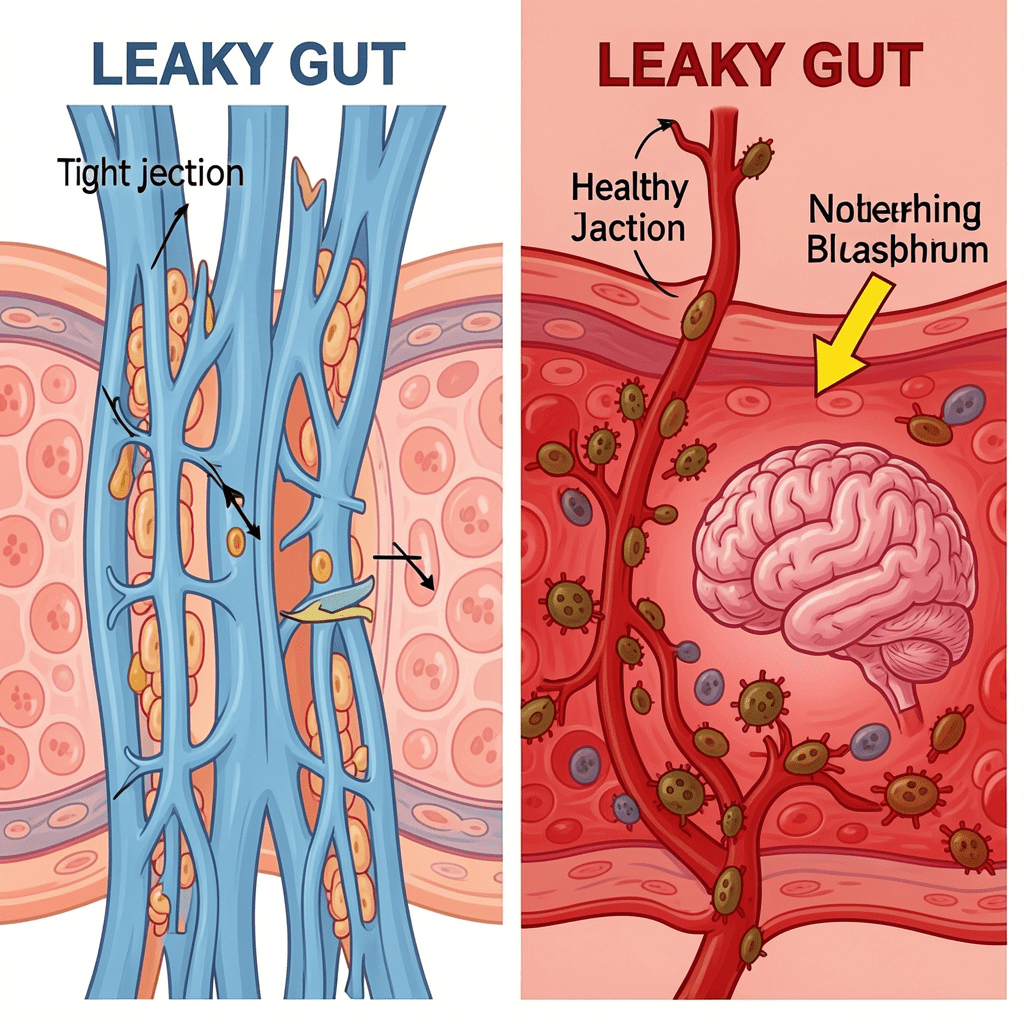
3. Leaky Gut Brain Fog — The Permeability Problem
Can poor gut health cause brain fog? Absolutely — and leaky gut is the mechanism that most directly answers that question.
Your gut wall is designed to be a selective barrier. Nutrients pass through. Toxins stay out. But when this barrier breaks down — when tight junctions between gut cells widen — the result is intestinal hyperpermeability, commonly called leaky gut.
Through a leaky gut, undigested food particles, bacteria fragments, and inflammatory compounds enter your bloodstream that should never be there. Your immune system fires constantly trying to manage this influx. The resulting chronic inflammation is systemic — meaning it affects every organ, including your brain.
Leaky gut brain fog symptoms are distinct and recognisable:
- Brain fog that is consistently worse after eating — especially after gluten, dairy, or processed food
- Cognitive impairment that worsens during high-stress periods when gut permeability increases
- Brain fog accompanied by bloating, food sensitivities, and fatigue — all happening simultaneously
- Mental cloudiness that improves — even temporarily — when you eat clean for several days
If your brain fog follows this pattern, leaky gut is almost certainly involved.
Related: How to Heal Leaky Gut for Anxiety
]
4. Gut Bacteria Imbalance Disrupts Your Brain’s Neurotransmitter Supply
Your brain fog is not just about what’s going wrong in your brain. It’s about what’s going wrong in your bacterial ecosystem — miles away from your skull.
Gut bacteria and brain fog are connected through the direct production of neuroactive compounds. Specific bacterial strains in your gut produce:
- GABA precursors — GABA is your brain’s primary inhibitory neurotransmitter; without it, your brain cannot shift out of overstimulated, foggy overdrive
- Short-chain fatty acids (SCFAs) — butyrate, acetate, and propionate that directly fuel brain cells and reduce neuroinflammation
- Tryptophan metabolites — precursors to serotonin that regulate cognitive processing
- Dopamine precursors — dopamine drives focus, motivation, and cognitive drive; gut bacteria directly influence its availability
When dysbiosis depletes these bacterial populations, your brain loses its primary external supply of cognitive-support compounds.
This is why gut bacteria and brain fog are not loosely associated — they are directly, mechanistically linked through the neurotransmitter supply chain.
Related: 7 Signs of Poor Gut Health and Anxiety
5. Brain Fog After Eating — Your Gut’s Post-Meal Immune Response
Ever notice your brain feeling heaviest, slowest, or foggiest after a meal?
This is one of the most searched — and least understood — aspects of gut health and brain fog: brain fog after eating.
Here is what is actually happening:
When you have a compromised gut — dysbiosis, leaky gut, or food sensitivities — eating triggers an immune response rather than simply a digestive one. Your body treats food particles that have crossed a compromised gut wall as foreign invaders.
The immune reaction that follows releases inflammatory cytokines. These cytokines reach your brain within 20–40 minutes of eating. The result: a predictable wave of cognitive cloudiness, mental heaviness, and inability to focus that arrives like clockwork after certain meals.
The foods most likely to trigger post-meal brain fog through gut inflammation:
- Gluten — especially in people with compromised gut barriers
- Processed sugar — feeds inflammatory gut bacteria within hours
- Dairy — casein protein triggers immune responses in sensitive individuals
- Alcohol — directly increases intestinal permeability within one drinking session
- Ultra-processed food — destroys microbiome diversity within days of regular consumption
If your brain fog is consistently worst after meals — your gut’s immune response is the mechanism. Fix the gut barrier, fix the post-meal fog. Related: Anxiety After Eating: 5 Gut Triggers
6. Chronic Cortisol From Gut Dysfunction Degrades Cognitive Performance
Here is the gut health and brain fog mechanism that explains why your brain fog gets measurably worse during stressful periods — and why stress and gut problems always seem to arrive together.
When your gut is inflamed and dysbiotic, it sends continuous low-level distress signals through the vagus nerve to your hypothalamus. Your HPA axis — the stress control centre — responds by elevating cortisol. Chronically.
Cortisol was designed for short-term emergencies. When elevated chronically, it does something devastating to your brain’s cognitive infrastructure:
- Hippocampal shrinkage — the hippocampus is critical for memory formation and cognitive processing; chronic cortisol physically reduces its volume over time
- Prefrontal cortex impairment — your prefrontal cortex handles focus, planning, and decision-making; cortisol reduces blood flow and activity here
- Glutamate toxicity — chronically elevated cortisol increases excitatory glutamate activity, producing the overstimulated-yet-foggy paradox many people with gut health and brain fog describe: wired but can’t think
The brutal truth: your gut dysfunction is keeping your cortisol elevated, and your elevated cortisol is physically degrading the brain structures you need for clear thinking.
This is not a mindset problem. This is a measurable neuroendocrine consequence of a gut that has been under inflammatory siege.
Related: Cortisol and Gut Health
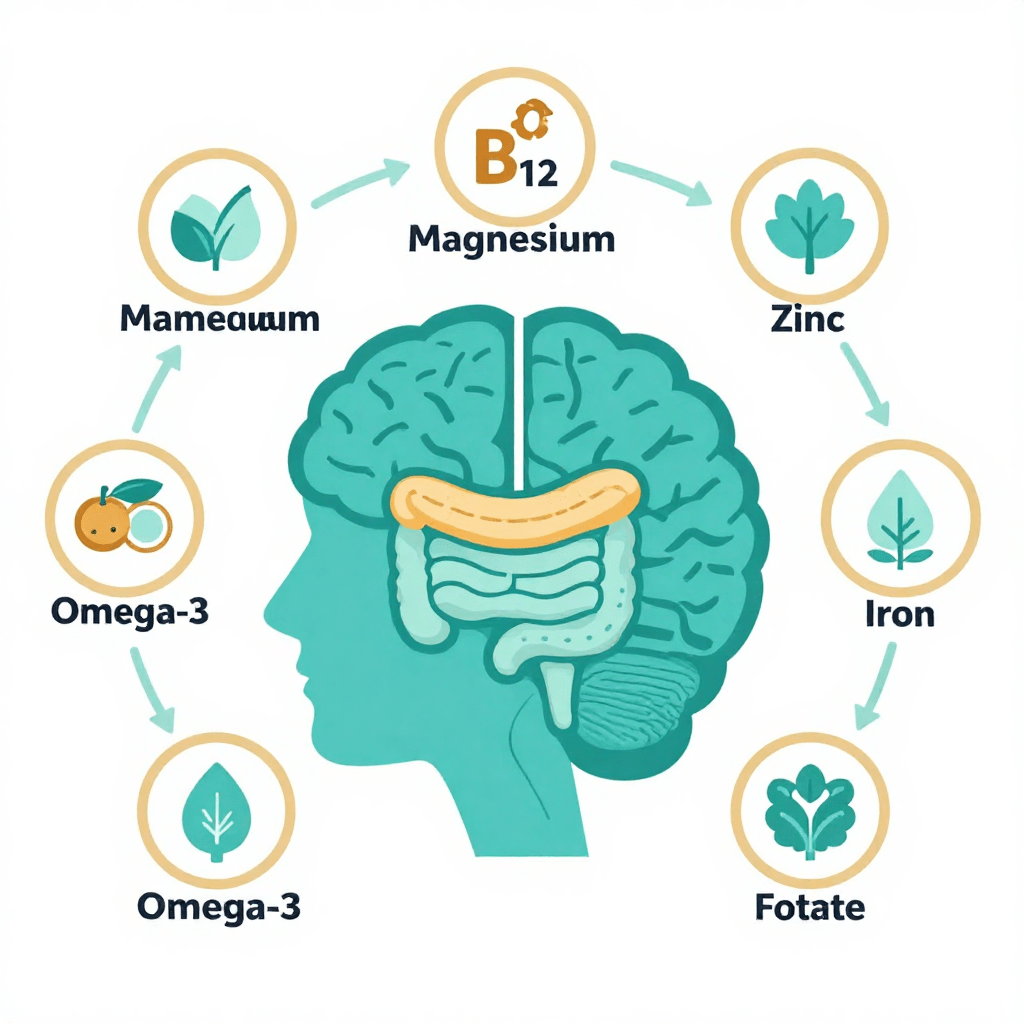
7. Poor Nutrient Absorption Leaves Your Brain Running on Empty
This is perhaps the most straightforward — and most consistently overlooked — mechanism in gut health and brain fog.
Your brain is the most metabolically demanding organ in your body. It requires constant, reliable delivery of:
- B vitamins (B12, B6, folate) — essential for myelin production, neurotransmitter synthesis, and cognitive processing speed
- Magnesium — required for over 300 enzymatic reactions including those governing memory and focus
- Zinc — critical for neuroplasticity and cognitive development
- Iron — required for oxygen delivery to brain tissue; deficiency causes measurable cognitive impairment
- Omega-3 fatty acids — structural components of brain cell membranes; deficiency directly reduces cognitive performance
When your gut lining is compromised — through leaky gut, inflammation, or dysbiosis — nutrient absorption collapses. You can eat a perfect diet and still be functionally deficient if your gut cannot absorb what you consume.
Brain fog caused by nutritional deficiency from gut malabsorption feels different from inflammatory brain fog — it is a flat, empty, low-energy mental state rather than a thick, inflamed one. Many people experience both simultaneously.
The fix is not just more supplements. It is repairing the gut so your brain can finally access the nutrients it has been starving for.
Related: Best Supplements for Anxiety and Gut Health
Can Poor Gut Health Cause Brain Fog? The Science
Let’s simplify exactly what is happening biologically:
- Gut dysbiosis → inflammatory bacteria overgrow → LPS toxins produced
- LPS enters bloodstream → immune system fires → cytokines released
- Cytokines cross blood-brain barrier → microglia activated → neuroinflammation
- Neuroinflammation → slowed neural firing → impaired memory and focus → brain fog
Simultaneously:
- Leaky gut → undigested particles in bloodstream → chronic immune activation → persistent brain inflammation
- Dysbiosis → serotonin and GABA production drops → cognitive processing slows
- HPA axis activation → cortisol elevates chronically → hippocampus degrades → memory impairment deepens
- Gut lining damage → nutrient malabsorption → brain runs on nutritional deficit
This is not one pathway. It is four simultaneous biological attacks on your cognitive clarity — all originating from a compromised gut.
The answer to “can poor gut health cause brain fog” is not just yes. It is: your gut may be the primary driver of your brain fog.
Related: Gut Health and Anxiety: The Complete Guide
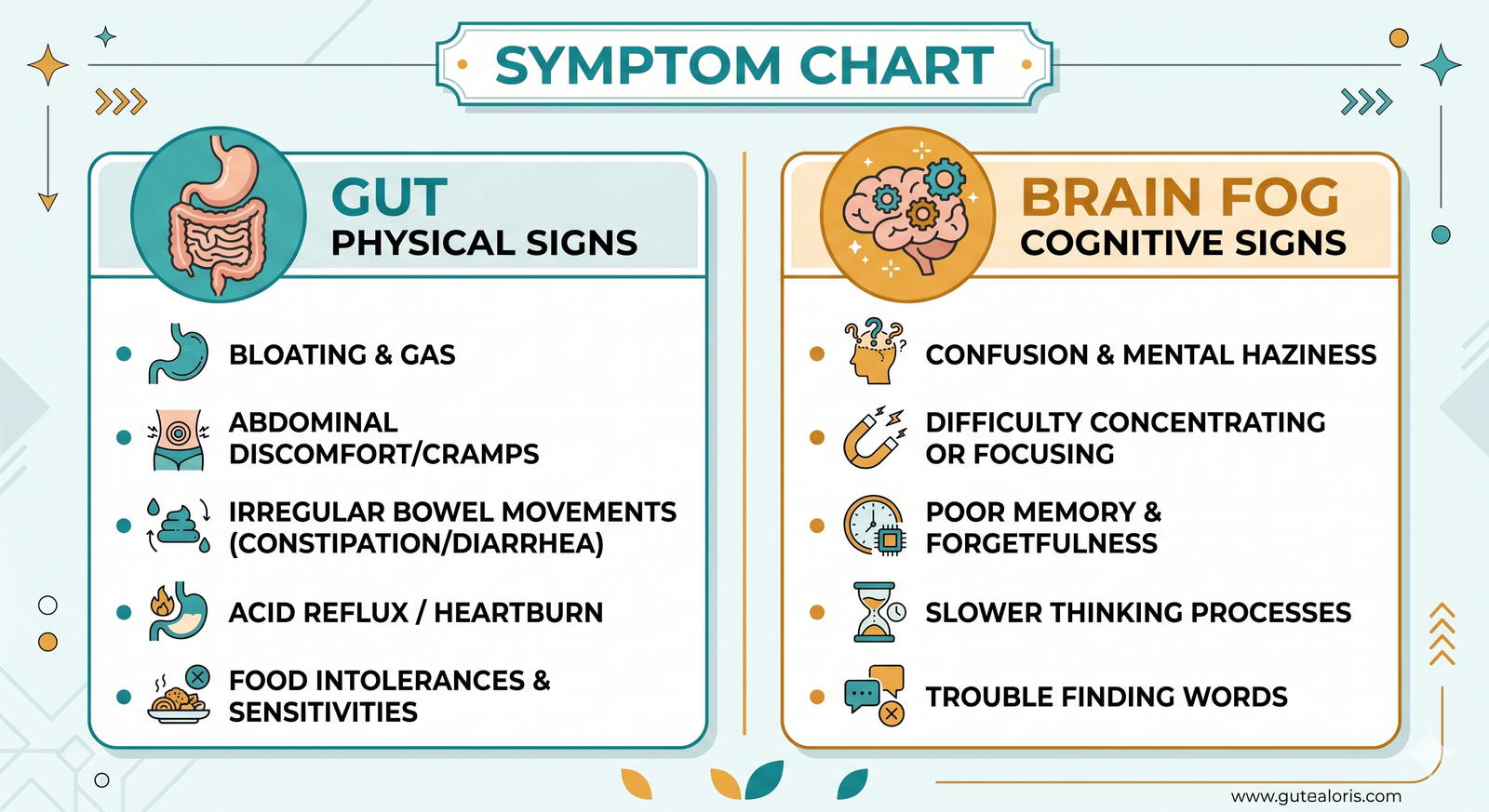
Leaky Gut and Brain Fog Symptoms — How to Recognise Them
Not all brain fog has a gut component. But these specific patterns strongly suggest yours does:
Physical Signs (Gut):
- Bloating, gas, or digestive discomfort that runs alongside your brain fog episodes
- Food sensitivities that have worsened over time — particularly to gluten, dairy, or processed food
- Fatigue that is disproportionate to how much you’ve slept
- Skin issues — acne, rosacea, or eczema — flaring during periods of severe brain fog
- Irregular digestion — constipation or loose stools without a dietary cause
Cognitive and Mental Signs:
- Brain fog that is consistently worst after certain meals
- Mental cloudiness that improves when you fast or eat very simply for a day
- Brain fog that worsens during high-stress periods — when cortisol elevates and gut permeability increases
- Difficulty finding words, slowed speech, or inability to form clear sentences
- Memory gaps — forgetting what you were doing mid-task, losing objects constantly
- A persistent feeling of cognitive distance — like you are watching your life through frosted glass
The pattern that confirms gut involvement: your brain fog and gut symptoms consistently worsen and improve together, in response to the same foods and lifestyle factors.
How to Fix Brain Fog by Healing Your Gut — 7 Steps
Now we move from understanding the problem to eliminating it. This is the part that matters most.
Step 1: Remove the Brain Fog Triggers First
You cannot clear your head while continuing to inflame your gut. These are the non-negotiables to remove:
- Ultra-processed food and added sugar — destroys microbiome diversity within days, feeds inflammatory bacteria, produces the LPS surge that drives neuroinflammation
- Alcohol — increases intestinal permeability within hours, kills beneficial Lactobacillus and Bifidobacterium, produces direct next-day neuroinflammation
- Gluten and dairy (temporarily) — if you suspect food sensitivities, remove both for 3 weeks and observe your cognitive clarity; the improvement is often dramatic
- Artificial sweeteners — disrupt microbiome composition without the blood sugar effects of sugar; not a safe gut alternative
- Chronic sleep under 7 hours — dismantles the overnight gut repair process, elevates morning cortisol, and rebuilds the neuroinflammation you are trying to clear
Step 2: Rebuild Your Microbiome With Fermented Foods Daily
The fastest way to restore the gut bacteria responsible for serotonin, GABA, and SCFAs — the cognitive support compounds your brain needs — is through daily fermented food consumption.
Start simple:
- Kefir — up to 61 bacterial strains; most potent readily available fermented food
- Live culture yogurt — accessible, effective, directly increases Lactobacillus populations
- Kimchi or sauerkraut — fermented vegetables providing both probiotics and prebiotic fibre simultaneously
- Kombucha — fermented tea with diverse bacterial cultures and anti-inflammatory polyphenols
One serving daily, every day. Consistency over 30 days produces measurable microbiome shifts. Sporadic consumption does not.Related: Foods for Gut Health to Reduce Anxiety
Step 3: Take Probiotics for Brain Fog Specifically
Not all probiotics address gut health and brain fog equally. The strains with the strongest evidence for cognitive and neurological improvement are:
- Lactobacillus helveticus R0052 — reduces cortisol and improves cognitive performance markers
- Bifidobacterium longum R0175 — reduces neuroinflammation markers and improves mental clarity through vagal pathways
- Lactobacillus rhamnosus JB-1 — directly modulates GABA receptors through the vagus nerve; studied specifically for cognitive and anxiety improvements
- Bifidobacterium breve — produces SCFAs that directly fuel brain cells and reduce neuroinflammation
Look for these specific strain codes on the label — not just the genus name. A product listing only “Lactobacillus” without a strain code has significantly weaker evidence for brain fog specifically. Related: Best Probiotics for Gut Health and Anxiety Related: How Long for Probiotics to Work for Anxiety?
Step 4: Repair the Gut Lining to Stop the LPS Flood
Clearing gut health and brain fog long-term requires repairing the gut barrier that is allowing inflammatory toxins into your bloodstream. The most targeted nutrients for this:
- L-Glutamine (5g daily on empty stomach) — primary fuel for gut lining enterocytes; directly repairs tight junctions that have broken down
- Zinc carnosine — clinically demonstrated to stabilise intestinal permeability and reduce LPS translocation
- Collagen peptides — provide glycine and proline, structural building blocks for gut lining tissue repair
- Omega-3 fatty acids (EPA+DHA, 1,000–2,000mg daily) — reduce gut inflammation and neuroinflammation simultaneously; one of the most evidence-backed supplements for brain fog specifically
Related: Best Supplements for Anxiety and Gut Health
Step 5: Activate Your Vagus Nerve to Restore Brain-Gut Communication
The vagus nerve is the primary communication cable of the gut health and brain fog relationship. Stimulating it daily improves both gut function and cognitive clarity simultaneously.
Most effective daily practices:
- Extended exhale breathing — inhale 4 counts, exhale 7–8 counts, 5 minutes daily. This is vagal tone training, not relaxation. Do it daily without exception.
- Cold water face immersion — cold water on the face activates the vagus nerve through the diving reflex; immediately shifts nervous system state and reduces neuroinflammation markers
- Humming, singing, or gargling — vibrates the vagus nerve directly; uncomfortable to suggest, genuinely effective
- Daily walking 20–30 minutes — builds parasympathetic tone and simultaneously increases microbiome diversity through exercise-driven gut motility changes
Related: Vagus Nerve Exercises for Anxiety
Step 6: Use Magnesium to Clear the Cortisol Fog
Magnesium is the single most effective supplement for the cortisol-driven dimension of gut health and brain fog — and most people with chronic brain fog are deficient in it.
Magnesium glycinate (200–400mg nightly) does three things simultaneously:
- Reduces overnight cortisol levels — directly addressing the hippocampal degradation driving memory fog
- Activates GABA receptors — restoring the brain’s natural inhibitory balance that cortisol has been suppressing
- Supports gut lining repair during sleep — when the intestinal barrier does most of its overnight regeneration
Take it 30 minutes before bed. The cognitive clarity improvement after consistent use (2–3 weeks) is one of the most consistently reported results.Related: Does Magnesium Help With Anxiety and Sleep Problems?
Step 7: Eat 30 Different Plants Per Week
This is the single most powerful long-term dietary strategy for microbiome diversity — and microbiome diversity is the foundation of sustained gut health and brain fog recovery.
Research consistently shows that the most cognitively resilient people have the most diverse gut microbiomes. And microbiome diversity is directly driven by dietary plant variety.
Not 30 servings of the same vegetables. 30 different plants — vegetables, fruits, legumes, nuts, seeds, herbs, spices, and whole grains. Each different plant feeds different bacterial species. More species = more serotonin, more GABA, more SCFAs, more cognitive fuel.
This single habit, sustained over 8–12 weeks, produces measurable changes in microbiome composition, cognitive performance, and brain fog frequency.
Best Foods to Clear Gut-Driven Brain Fog
Eat More:
- Fatty fish (salmon, sardines, mackerel) — highest food source of EPA and DHA; omega-3s directly reduce the neuroinflammation driving brain fog
- Blueberries — polyphenols cross the blood-brain barrier and directly reduce neuroinflammation; shown to improve memory and processing speed in studies
- Walnuts — plant-based omega-3s, polyphenols, and melatonin; directly feed beneficial Lactobacillus populations that produce cognitive support compounds
- Dark leafy greens (spinach, kale) — folate and B vitamins essential for myelin production and neurotransmitter synthesis; deficiency directly causes cognitive slowing
- Fermented foods daily — kefir, yogurt, kimchi; restore the bacterial populations producing serotonin, GABA, and SCFAs your brain depends on
- Dark chocolate (70%+) — flavanols improve brain blood flow and directly increase Bifidobacterium; produces measurable cognitive improvement through gut-brain signalling
Remove or Dramatically Reduce:
- Ultra-processed food — destroys microbiome diversity and produces the LPS surge driving neuroinflammation
- Added sugar — feeds inflammatory bacteria, produces blood sugar spikes that create the post-crash cognitive fog many people mistake for chronic brain fog
- Alcohol — the most direct gut barrier destroyer available; its next-day brain fog is neuroinflammation, not just dehydration
- Vegetable/seed oils high in omega-6 — produce inflammatory precursors that compete with the anti-inflammatory omega-3s your brain needs
Mistakes That Keep You Mentally Foggy
Even after understanding gut health and brain fog, most people stay stuck because of these:
Treating brain fog with caffeine — caffeine masks the fog temporarily while the underlying gut inflammation continues unchecked; it does not fix the root cause and worsens gut permeability over time
Taking the wrong probiotics — generic multi-strain blends without specific strain codes have weak evidence for brain fog; the strain matters as much as the dose
Expecting fast results — gut lining repair takes 4–6 weeks minimum; microbiome rebalancing takes 8–12 weeks; cognitive clarity improvements follow, not lead, the gut improvements
Removing supplements without removing trigger foods — supplements cannot outrun a daily diet that is actively destroying your gut bacteria
Treating brain fog as a sleep problem only — sleep improvement helps but will not clear gut-driven neuroinflammation on its own
Inconsistency — one week of clean eating does not rebuild a microbiome. Thirty days of consistency begins to. Ninety days transforms it.
External Resources
- Harvard Health — The Gut-Brain Connection
- Johns Hopkins — Brain-Gut Connection
- PubMed — Gut Microbiota and Cognitive Function
When to See a Doctor
Gut health and brain fog is highly manageable through dietary and lifestyle intervention for most people. But seek medical assessment if:
- Brain fog is severe enough to impair your ability to work, drive, or make decisions
- Brain fog appeared suddenly rather than gradually — sudden onset cognitive impairment requires immediate evaluation
- Brain fog comes with neurological symptoms — headaches, vision changes, numbness, or coordination problems
- No improvement after 8–10 weeks of consistent gut healing intervention
- Brain fog is accompanied by unexplained weight loss, fever, or blood in stool
Conditions including coeliac disease, Crohn’s disease, SIBO (small intestinal bacterial overgrowth), and thyroid disorders all produce brain fog through gut mechanisms and require formal diagnosis.
A functional medicine doctor can run targeted testing including intestinal permeability assessment, comprehensive stool analysis, and inflammatory markers that standard GP visits typically do not include.
Related: Can IBS Cause Anxiety?
Conclusion
If brain fog has been your constant companion — and nothing you’ve tried has fully cleared it — here is what I want you to take from this:
Gut health and brain fog are not two separate problems. They are one system — and fixing the gut is fixing the brain.
The inflammation clouding your thinking may be originating in your intestinal barrier. The serotonin your neurons need to fire clearly is being produced — or not produced — in your gut right now. The cortisol fogging your memory is being sustained by a gut that has been sending distress signals to your HPA axis for months or years.
None of this is permanent. None of it is inevitable.
A more diverse microbiome is achievable within weeks of consistent dietary change. Gut barrier repair responds to targeted nutrition within 4–6 weeks. Neuroinflammation reduces as the gut inflammation quietens. And as it does — the fog begins to lift.
Not all at once. Gradually. Then noticeably. Then dramatically.
Start with one step today.
Remove the biggest gut trigger in your diet. Add one fermented food daily. Take a targeted probiotic. Walk for 20 minutes.
Small changes. Consistent execution. A brain that finally fires the way it was designed to.
The gut that is clouding your mind right now is the same gut that can clear it — if you give it what it needs.
NEXT READ: 7 Signs of Poor Gut Health and Anxiety
FAQ
Can poor gut health cause brain fog? Yes — directly and through multiple simultaneous biological pathways. Gut dysbiosis produces LPS bacterial toxins that cross the blood-brain barrier and trigger neuroinflammation. Gut bacteria imbalance collapses serotonin, GABA, and SCFA production that the brain depends on for cognitive clarity. Leaky gut creates chronic systemic inflammation that directly impairs neural firing speed and memory consolidation. And gut dysfunction chronically elevates cortisol, which physically degrades the hippocampus and prefrontal cortex — the brain regions most critical for focus and memory. Gut health and brain fog are inseparable at the biological level.
What are leaky gut brain fog symptoms? The most distinctive pattern of leaky gut brain fog is cognitive cloudiness that consistently worsens after certain meals — particularly those containing gluten, dairy, alcohol, or ultra-processed food. Other leaky gut brain fog symptoms include mental heaviness that improves when eating simply or fasting, brain fog that intensifies during high-stress periods, cognitive impairment accompanied by simultaneous bloating and food sensitivities, and a persistent feeling of cognitive distance — thinking through frosted glass — that is unrelated to sleep quality.
How long does it take to clear brain fog by healing the gut? Most people notice meaningful improvements in mental clarity within 4–6 weeks of removing gut trigger foods and beginning targeted gut repair. Significant, sustained cognitive improvement typically follows 8–12 weeks of consistent intervention — reflecting the time needed for microbiome rebalancing, gut lining repair, and neuroinflammation reduction. The timeline is not linear — many people experience a notable clarity improvement at 3–4 weeks, followed by gradual deepening over the following months. Full recovery from chronic gut-driven brain fog generally takes 3–6 months of consistent effort.
What are the best probiotics for brain fog? The strains with the strongest clinical evidence for gut health and brain fog specifically are Lactobacillus helveticus R0052, Bifidobacterium longum R0175, Lactobacillus rhamnosus JB-1, and Bifidobacterium breve. These strains address brain fog through multiple pathways: reducing cortisol, increasing GABA signalling, producing SCFAs that fuel brain cells, and reducing neuroinflammatory markers. Always look for the specific strain code on the product label — generic probiotic blends without named strains have significantly weaker evidence for cognitive improvement.
Why is my brain fog worse after eating? Brain fog after eating is one of the clearest signs of gut-driven cognitive impairment. When your gut barrier is compromised, eating triggers an immune response — your body treats food particles that have crossed a leaky gut wall as foreign invaders. The resulting cytokine release reaches your brain within 20–40 minutes of eating, producing a predictable wave of cognitive cloudiness. The foods most likely to trigger this response are gluten, dairy, processed sugar, alcohol, and ultra-processed food. Healing the gut barrier progressively eliminates this post-meal cognitive impairment.
Does magnesium help with gut health and brain fog? Yes — significantly, and through multiple mechanisms simultaneously. Magnesium glycinate reduces overnight cortisol, which directly addresses the hippocampal degradation responsible for memory and focus impairment. It activates GABA receptors, restoring the brain’s natural inhibitory balance that cortisol chronically suppresses. It also supports gut lining repair during sleep. Most people with chronic gut health and brain fog are measurably magnesium deficient — making 200–400mg of magnesium glycinate nightly one of the highest-leverage single interventions available for both conditions.
Internal Links Summary
- Can Poor Gut Health Cause Panic Attacks and Anxiety?
- Signs Your Gut Is Destroying Your Mental Health
- How to Heal Leaky Gut for Anxiety
- 7 Signs of Poor Gut Health and Anxiety
- Anxiety After Eating: 5 Gut Triggers
- Cortisol and Gut Health
- Best Supplements for Anxiety and Gut Health
- Foods for Gut Health to Reduce Anxiety
- Best Probiotics for Gut Health and Anxiety
- How Long for Probiotics to Work for Anxiety?
- Vagus Nerve Exercises for Anxiety
- Does Magnesium Help With Anxiety and Sleep Problems?
- Gut Health and Anxiety: The Complete Guide
- Can IBS Cause Anxiety?
Complete Image Summary (7 Total)
| # | Section | Prompt Summary | Alt Text |
|---|---|---|---|
| 1 | Hero | Person at desk, head in hands, mental fatigue, natural light, photorealistic | Person experiencing brain fog from poor gut health sitting at desk with head in hands |
| 2 | Way 1 — Neuroinflammation | Split brain: healthy vs. inflamed neural pathways, microglia activation, LPS arrow from gut | Split brain diagram showing healthy versus neuroinflamed brain caused by gut toxins creating brain fog |
| 3 | Way 3 — Leaky Gut | Healthy tight junctions vs. leaky gut gaps with particles entering bloodstream toward brain | Diagram comparing healthy gut wall versus leaky gut with toxins causing brain fog |
| 4 | Way 5 — Brain Fog After Eating | Timeline: meal → cytokines → brain fog peak, food trigger icons, orange and teal | Timeline infographic showing how brain fog after eating develops through gut immune response |
| 5 | Way 7 — Nutrient Absorption | Brain with 6 nutrient icons, blocked by damaged gut wall, teal and amber | Infographic showing brain nutrients blocked by gut damage causing brain fog |
| 6 | Symptoms Section | Two-column chart: Gut Physical Signs / Brain Fog Cognitive Signs, teal and amber | Two-column symptom chart showing gut signs and brain fog symptoms indicating gut-driven fog |
| 7 | Healing Protocol | Flat lay: L-glutamine, probiotics, kefir, vegetables, omega-3, magnesium, white surface | Flat lay of gut health and brain fog healing supplements and foods |