


Can leaky gut cause anxiety? If you have been struggling with unexplained worry, panic, and mental unease — your gut lining may be the real culprit nobody has checked yet.
Most doctors look at your brain when you report anxiety. They prescribe medication. They suggest therapy. They ignore the one organ that may be driving everything — your gut.
A damaged, permeable gut lining — known as leaky gut syndrome — allows toxic particles to escape into your bloodstream and travel directly to your brain. The result is inflammation, disrupted neurotransmitters, and relentless anxiety that no amount of positive thinking will fix.
In this guide you will discover exactly how leaky gut causes anxiety, the 7 shocking mechanisms behind it, and what you can do to heal both your gut and your mental health starting today.
11M+ estimated people worldwide suffer from leaky gut symptoms — most are never correctly diagnosed
70% of your entire immune system lives inside your gut — when it leaks, your whole body pays the price
90% of serotonin — your brain’s primary calming chemical — is produced inside your gut lining
What Is Leaky Gut and Why Does It Cause Anxiety?
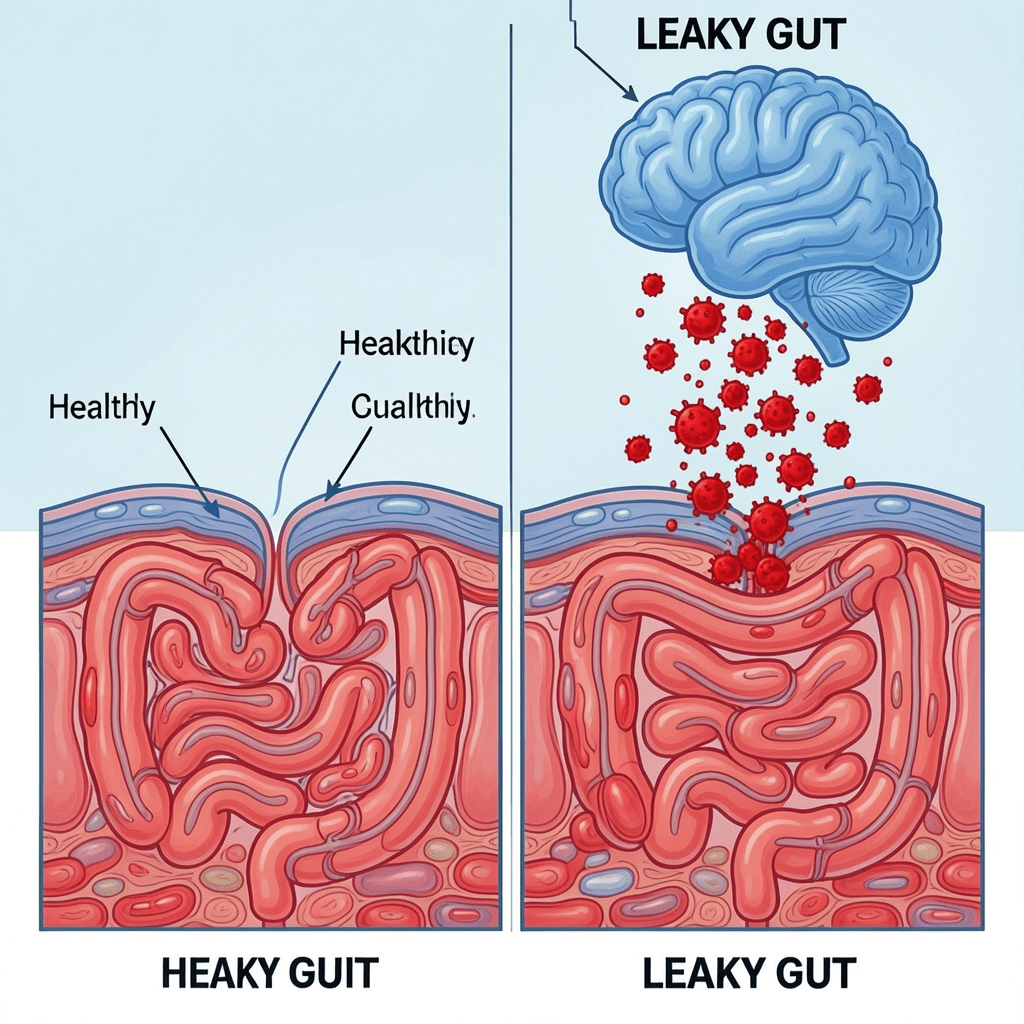
Leaky gut syndrome — medically called intestinal hyperpermeability — occurs when the tight junctions in your gut lining become damaged and loose.
Normally your gut lining acts as a strict filter. It lets nutrients in and keeps toxins, bacteria, and undigested food particles out.
When this lining becomes permeable, those particles escape into your bloodstream. Your immune system immediately identifies them as invaders and launches an inflammatory attack.
That inflammation does not stay in your gut. It travels through your bloodstream, crosses your blood-brain barrier, and ignites neuroinflammation — inflammation inside your brain itself.
Neuroinflammation is now directly linked to anxiety disorders, depression, and panic attacks according to research published on PubMed.
Can leaky gut cause anxiety? The answer is a definitive yes — and the science behind it is impossible to ignore.
Table of Contents
7 Shocking Ways Leaky Gut Causes Anxiety
1. Can Leaky Gut Cause Anxiety Through Neuroinflammation?
Neuroinflammation — How a Leaky Gut Sets Your Brain on Fire
When your gut lining leaks, bacterial toxins called lipopolysaccharides (LPS) flood your bloodstream. These LPS particles cross your blood-brain barrier and trigger widespread brain inflammation. Your brain’s immune cells — called microglia — activate your fear and anxiety response immediately and aggressively.
This is not a theory. This is a documented biological pathway confirmed by multiple peer-reviewed studies.
People with intestinal hyperpermeability consistently show elevated LPS levels in their blood. Those elevated LPS levels correlate directly with higher anxiety scores, depression severity, and panic disorder diagnosis.
Healing your gut lining removes the source of these inflammatory particles — and directly reduces the neuroinflammation driving your anxiety from within.
Watch For This If your anxiety feels physical — brain fog, racing heart, constant low-level dread with no emotional trigger — neuroinflammation from leaky gut is a primary suspect. This type of anxiety does not respond well to therapy alone because it has a biological root cause.
2. Leaky Gut Destroys Serotonin Production and Fuels Anxiety
Serotonin Collapse — The Silent Chemical Crisis Behind Leaky Gut Anxiety
Your gut lining contains specialised cells called enterochromaffin cells. These cells produce approximately 90% of your body’s entire serotonin supply.
When your gut lining is damaged and leaking, these cells are directly compromised.
Serotonin production drops. Your brain’s supply of this critical calming neurotransmitter falls with it.
Low serotonin does not just affect your mood. It creates persistent anxiety, hypersensitivity to stress, poor sleep quality, and heightened fear responses — all simultaneously.
Most anxiety medications work by manipulating serotonin levels in your brain. But if your leaky gut is destroying serotonin production at the source, medication treats the symptom while the real cause continues unchecked.
Pro Tip Healing your gut lining with L-glutamine, zinc carnosine, and collagen restores enterochromaffin cell function and gradually rebuilds your natural serotonin production. Read our full guide on best supplements for anxiety and gut health for the exact supplements and doses that work best.
3. Intestinal Permeability Triggers Chronic Immune Activation
Immune Overload — How Leaky Gut Keeps Your Nervous System Permanently on High Alert
Your immune system is designed for short bursts of activity — attack a threat, neutralise it, stand down.
Leaky gut changes this completely.
When your gut continuously leaks foreign particles into your bloodstream, your immune system never gets to stand down. It stays permanently activated — producing inflammatory cytokines around the clock.
These cytokines act directly on your brain. They suppress GABA — your brain’s primary calming neurotransmitter. They activate your HPA axis — your stress hormone system. They keep your nervous system locked in a state of constant high alert.
This is why leaky gut anxiety feels exhausting. Your brain is fighting a never-ending internal war — and anxiety is the collateral damage.
Read our complete guide on can IBS cause anxiety to understand how gut inflammation drives this same immune-anxiety cycle in IBS patients.
4. Leaky Gut Wipes Out Your Gut Microbiome and Amplifies Anxiety
Microbiome Collapse — When Your Gut’s Anxiety Defence System Breaks Down
A healthy, diverse gut microbiome is your first line of defence against anxiety.
Beneficial bacteria like Lactobacillus and Bifidobacterium produce GABA, serotonin, and short-chain fatty acids that directly calm your nervous system.
Leaky gut destroys this bacterial ecosystem. The damage to your gut lining creates an environment where harmful bacteria thrive and beneficial bacteria die off rapidly.
As your microbiome collapses, your internal anxiety defence system collapses with it.
You lose GABA production. You lose serotonin production. You lose the short-chain fatty acids that protect your blood-brain barrier.
The result is a gut that actively generates anxiety — 24 hours a day — through every meal you eat and every hour you sleep.
Research published in Nature Reviews Gastroenterology confirms that gut microbiome disruption directly alters brain chemistry and anxiety behaviour through multiple pathways simultaneously.
5. Food Particles Escaping Through Leaky Gut Trigger Brain-Directed Panic
Food Particle Invasion — How Every Meal Becomes an Anxiety Trigger
When your gut lining is healthy, undigested food stays where it belongs — inside your digestive tract until fully broken down.
When leaky gut is present, partially digested food particles escape into your bloodstream before this process is complete.
Your immune system has never encountered these particles in the bloodstream before. It treats them as foreign invaders and fires an immediate inflammatory response.
For many people, this happens within 30 to 90 minutes of eating. The inflammatory cascade reaches the brain rapidly — triggering anxiety, brain fog, racing heart, and sudden dread that appears to have no cause.
This is exactly why so many leaky gut sufferers experience anxiety after eating, panic attacks after meals, and unexplained mental crashes following specific foods.
Read our article on panic attacks after eating to understand how food-triggered gut leakage directly drives post-meal panic responses.
6. Leaky Gut Disrupts Your Vagus Nerve and Blocks Calm Signals
Vagus Nerve Dysfunction — When Your Body’s Calming Highway Gets Roadblocked
Your vagus nerve is your body’s most powerful anxiety-fighting tool.
It carries calming signals from your gut to your brain — telling your nervous system that everything is safe and under control.
Leaky gut inflames the gut tissue surrounding the vagus nerve. This inflammation disrupts vagal signalling and reduces what scientists call vagal tone.
When vagal tone drops, your parasympathetic nervous system — your rest and digest response — weakens. Your sympathetic nervous system — your fight or flight response — takes over by default.
The result is constant background anxiety, poor stress tolerance, and a nervous system that cannot properly switch off even during moments of genuine safety and calm.
Read our full guide on vagus nerve exercises for anxiety to discover how strengthening vagal tone helps counteract the anxiety caused by leaky gut.
Watch For This If your anxiety is worst in the morning and improves slightly by evening — this is a classic pattern of low vagal tone driven by gut inflammation. Morning is when cortisol peaks and vagal tone is at its lowest after a night of gut repair activity.
7. Nutrient Malabsorption From Leaky Gut Starves Your Brain of Anxiety Relief
Nutrient Depletion — How Leaky Gut Strips Your Brain of Its Natural Calm
Your brain needs specific nutrients to regulate anxiety effectively. Magnesium calms your nervous system. Zinc supports neurotransmitter balance. B vitamins produce GABA and serotonin. Omega-3 fatty acids reduce neuroinflammation.
A damaged gut lining cannot absorb these nutrients properly regardless of how healthy your diet is.
You can eat perfectly and still be severely deficient in every anxiety-regulating nutrient — simply because your leaky gut cannot extract them from your food.
This nutritional depletion creates a brain that is structurally unable to manage anxiety without support — not because of your mindset, but because of your gut’s inability to deliver what your nervous system desperately needs.
Supplementing directly with highly bioavailable forms of these nutrients bypasses the damaged gut lining and delivers anxiety relief faster while your gut heals simultaneously.
Pro Tip Magnesium glycinate is the most bioavailable form of magnesium for anxious individuals — it absorbs well even through a compromised gut lining. Read our guide on does magnesium help with anxiety and sleep for the exact dosage protocol that works fastest.
How to Heal Leaky Gut and Stop Anxiety Naturally
Healing intestinal permeability and stopping the anxiety it causes requires a consistent and layered approach — not a single supplement or a one-week diet change.
Remove the triggers first. Gluten, dairy, refined sugar, alcohol, NSAIDs, and chronic stress are the primary causes of leaky gut damage. Eliminating these removes the ongoing injury to your gut lining and allows healing to begin.
Rebuild the gut lining directly. L-glutamine is the most researched amino acid for repairing intestinal tight junctions. Take 5 grams daily on an empty stomach. Zinc carnosine and collagen peptides provide the structural building blocks your gut lining needs to seal the gaps driving your anxiety.
Restore your microbiome. A high quality probiotic containing Lactobacillus rhamnosus GG and Bifidobacterium longum restores the beneficial bacteria that produce calming neurotransmitters and protect your gut lining from further damage. Add fermented foods like kefir, sauerkraut, and kimchi daily for additional microbiome support.
Support your vagus nerve daily. Five minutes of deep diaphragmatic breathing before every meal activates vagal tone, reduces gut inflammation, and primes your nervous system for calm digestion instead of anxiety-driven panic.
Feed your brain the nutrients it needs. Magnesium glycinate, omega-3 fish oil, and a B-complex supplement directly support anxiety regulation while your gut heals. These bypass the damaged absorption mechanisms and deliver results faster.
Most people notice their leaky gut anxiety reducing meaningfully within 4 to 6 weeks of consistently applying all five of these strategies together. Full gut lining restoration takes 3 to 6 months — but anxiety improvement begins much sooner than that.
Read our complete guide on gut health and anxiety for the full healing protocol combining all of these strategies into one actionable plan
Conclusion
Can leaky gut cause anxiety? Without question — and these 7 shocking truths prove exactly how deep this connection goes.
From neuroinflammation and serotonin collapse to microbiome destruction, vagus nerve disruption, and nutrient depletion — a leaky gut attacks your mental health through every biological pathway available simultaneously.
The encouraging truth is this — your gut lining can heal. And when it heals, your anxiety follows.
Stop treating the symptoms. Start healing the source. Your gut is waiting — and so is the mental calm you deserve.
FAQ
Can Leaky Gut Cause Anxiety and Panic Attacks?
Yes — leaky gut can cause both chronic anxiety and acute panic attacks through multiple gut-brain pathways. When LPS particles from a leaky gut enter the bloodstream and reach the brain, they trigger neuroinflammation that activates fear and panic responses. Simultaneously, the serotonin collapse caused by damaged enterochromaffin cells removes your brain’s primary buffer against panic. Many leaky gut sufferers experience their worst panic episodes after eating — when gut permeability is most active and inflammatory particle release is highest. Healing your gut lining is one of the most effective long-term strategies for reducing both anxiety severity and panic attack frequency naturally.
How Long Does It Take for Leaky Gut Anxiety to Improve?
Most people begin noticing meaningful anxiety reduction within 4 to 6 weeks of actively healing their leaky gut with L-glutamine, probiotics, and an anti-inflammatory diet. The neuroinflammation that drives anxiety begins reducing within 2 to 3 weeks of removing gut-damaging triggers like gluten, sugar, and alcohol. Full gut lining restoration and maximum anxiety relief typically takes 3 to 6 months of consistent effort. Consistency matters far more than perfection — even partial gut healing produces significant anxiety improvement at every stage of the recovery process.
What Are the Most Common Signs That Leaky Gut Is Causing Your Anxiety?
The clearest signs that leaky gut is causing your anxiety include anxiety that worsens after eating specific foods, post-meal panic attacks or mental crashes, chronic brain fog combined with digestive symptoms, anxiety that does not respond to therapy or stress management techniques, and physical anxiety symptoms like racing heart and chest tightness without emotional triggers. If your anxiety came on gradually alongside digestive problems, food sensitivities, or bloating — leaky gut is a very likely root cause. Read our article on does bloating cause anxiety to understand how bloating and leaky gut overlap in driving anxiety symptoms.
Full Link Summary
Internal Links
- https://mysportinfo.com/gut-health-and-anxiety-complete-guide/
- https://mysportinfo.com/can-ibs-cause-anxiety-2/
- https://mysportinfo.com/best-supplements-for-anxiety-and-gut-health/
- https://mysportinfo.com/vagus-nerve-exercises-for-anxiety/
- https://mysportinfo.com/panic-attacks-after-eating/
- https://mysportinfo.com/does-bloating-cause-anxiety-2/
- https://mysportinfo.com/does-magnesium-help-with-anxiety-and-sleep-problems/
External Links