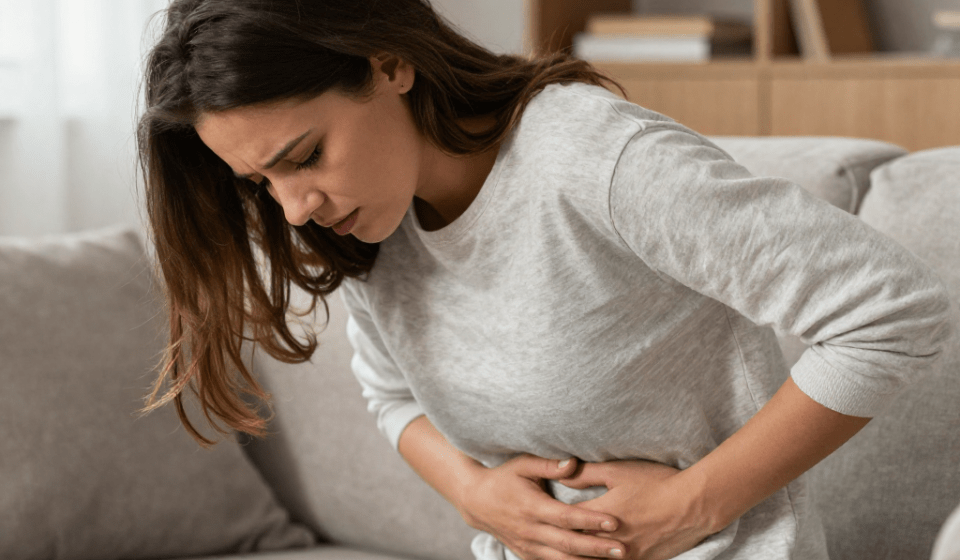

You’re not sick. There’s no virus. No bad food. Nothing physically wrong.
But your stomach is churning. You feel like you might vomit. Every wave of anxiety brings that horrible, familiar nausea — and nobody can explain why.
Here’s the truth: nausea from anxiety is one of the most real, most physical symptoms you can experience. It’s not “in your head.” It’s in your gut — literally.
And once you understand exactly why it happens, you can finally do something about it.
In this guide, you’ll discover the 7 real gut reasons anxiety makes you feel sick — and the proven strategies to stop it before it stops you.
Quick Facts
- Nausea is the 5th most common physical symptom of anxiety
- Your gut contains 500 million neurons — it has its own nervous system
- Up to 40% of people with anxiety experience regular nausea episodes
- The gut-brain connection runs both ways — your gut can trigger anxiety, and anxiety can trigger gut sickness
Table of Contents
Why Does Anxiety Cause Nausea? The Real Science
Most people think of anxiety as a mental problem. But your body doesn’t separate “mental” from “physical.”
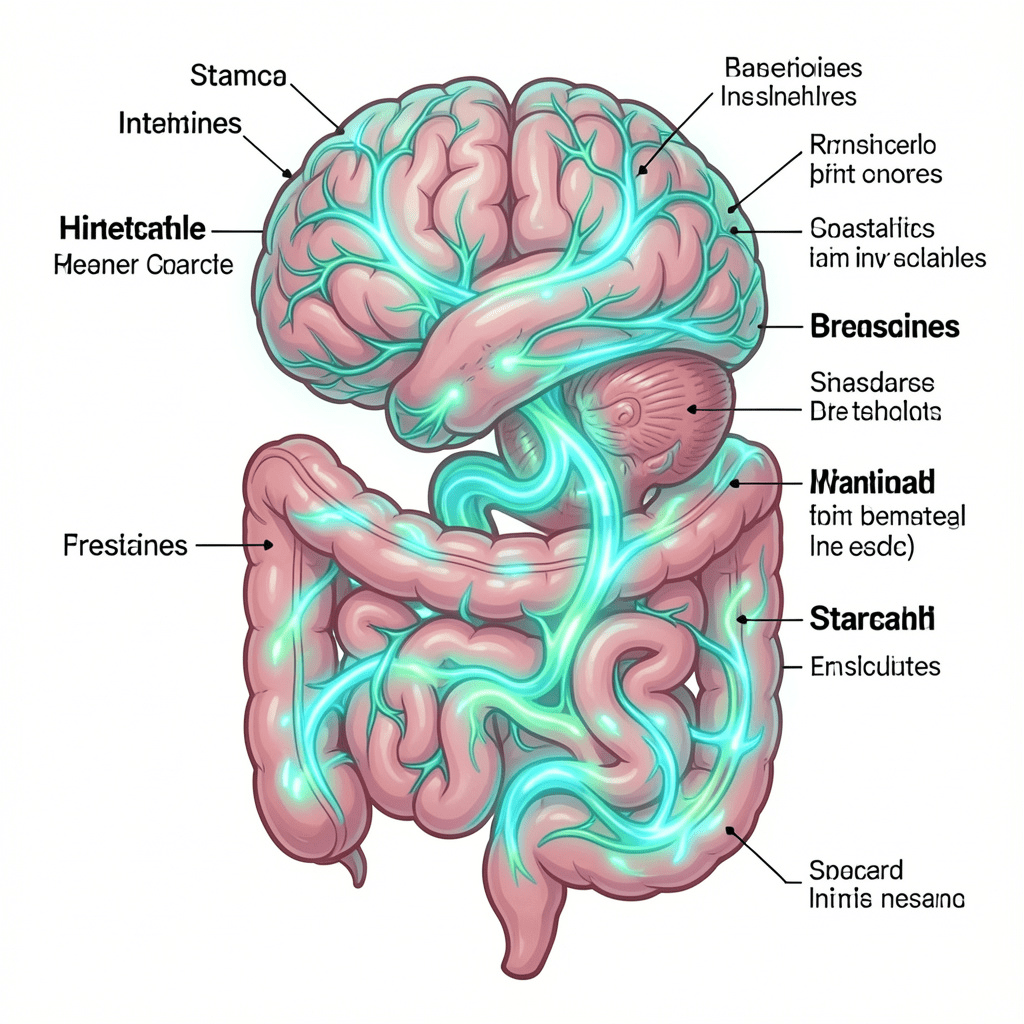
When anxiety hits, your brain immediately activates your fight-or-flight response — flooding your body with cortisol and adrenaline. These stress hormones don’t just affect your mind. They travel straight to your gut through the gut-brain axis — a two-way communication superhighway connecting your brain and your digestive system.
Your gut reacts instantly. Digestion slows or stops. Stomach acid spikes. Gut muscles tighten. Blood flow shifts away from your digestive organs. The result? That horrible churning, sick, unstable feeling we call nausea from anxiety.
This isn’t weakness. This is your nervous system doing exactly what it was designed to do in a threat situation — except the “threat” is a panic attack, not a lion.
Related: Gut Health and Anxiety: The Complete Guide
7 Gut Reasons Anxiety Makes You Feel Sick
🔹 Reason 1: Your Fight-or-Flight Response Shuts Down Digestion
The moment anxiety fires, your body makes a life-or-death calculation: do we need to digest food right now, or do we need to survive?
The answer is always: survive.
Your sympathetic nervous system immediately diverts blood flow away from your digestive organs and redirects it to your muscles and heart. Digestion essentially stops mid-process. Whatever food is sitting in your stomach has nowhere to go. The result is that heavy, sick, churning feeling — nausea from anxiety in its most basic, primal form.
This is why anxiety nausea often hits hardest when you’ve just eaten — your digestion was in full swing and then suddenly got cut off.
Related: Panic Attacks After Eating: 6 Gut Triggers
Reason 2: Cortisol Directly Irritates Your Stomach Lining
When anxiety spikes, cortisol floods your system. Most people know cortisol as the “stress hormone” — but few realize what it does to your gut.
Cortisol directly irritates your stomach lining, increasing acid production and triggering inflammation in your gastrointestinal tract. It also speeds up contractions in your intestines — which is why anxiety can cause both nausea AND sudden urgency to use the bathroom.
Chronic anxiety means chronically elevated cortisol. And chronically elevated cortisol means your stomach lining is under constant chemical attack — leading to persistent, recurring nausea that seems to have no clear cause.
Related: Cortisol and Gut Health: 7 Shocking Ways Stress Destroys Your Gut
Reason 3: Your Vagus Nerve Goes Into Overdrive
Your vagus nerve is the main physical highway of the gut-brain axis — a long nerve that runs from your brainstem all the way down through your heart, lungs, and digestive system.
Under normal conditions, the vagus nerve keeps your digestion running smoothly. But during anxiety, the vagus nerve receives a surge of stress signals from the brain. It responds by dramatically slowing gastric emptying — meaning food sits in your stomach far longer than it should.
The longer food sits in an anxious, acid-rich stomach, the more nauseated you feel. This vagal response is one of the most direct mechanical reasons anxiety causes nausea — and it’s why the nausea can persist for hours after an anxiety episode. Related: Vagus Nerve Exercises for Anxiety: 7 Powerful Techniques
Reason 4: Serotonin Disruption in Your Gut
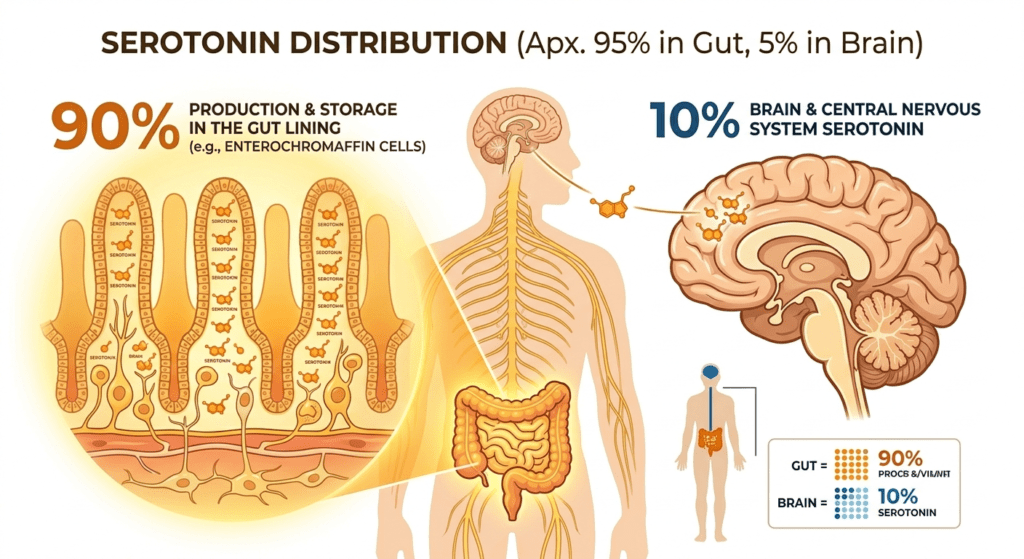
Here’s the fact that surprises most people: approximately 90% of your body’s serotonin is produced in your gut — not your brain.
Serotonin isn’t just a “feel good” chemical. In your gut, it acts as a critical messenger that regulates bowel movements, controls nausea responses, and manages the sensitivity of your gut lining. When anxiety disrupts serotonin levels, your gut’s entire signaling system goes haywire.
Low serotonin in the gut makes your digestive tract hypersensitive — meaning it overreacts to normal sensations. A small amount of stomach activity that you’d normally never notice suddenly feels like severe, unbearable nausea. This serotonin disruption is also exactly why anti-nausea medications that target serotonin receptors (like ondansetron) can work for some anxiety sufferers.
Related: Can Poor Gut Health Cause Panic Attacks and Anxiety?
Reason 5: Your Gut Microbiome Gets Destabilized
Your gut contains trillions of bacteria — your microbiome — that play a direct role in regulating your stress response, immune system, and digestive comfort.
When anxiety becomes chronic, the stress hormones it releases actively disrupt the balance of your gut microbiome. Beneficial bacteria die off. Harmful bacteria thrive. This microbial imbalance produces toxic byproducts, increases intestinal inflammation, and makes your gut hyperpermeable — commonly known as “leaky gut.”
The result is a gut that is chronically irritated, inflamed, and reactive — one that responds to even mild anxiety with intense nausea, bloating, and digestive distress. This is why people with long-term anxiety often find their nausea getting progressively worse over time rather than better.
Related: 7 Signs of Poor Gut Health and Anxiety
Reason 6: Hypervigilance Makes You Feel Every Sensation
Anxiety doesn’t just cause nausea — it also makes you hyper-aware of every physical sensation in your body.
This phenomenon is called somatic hypervigilance — your anxious brain scanning your body continuously for signs of danger. The same mild digestive sensation that a calm person wouldn’t even register becomes, in an anxious person, an overwhelming wave of sickness.
This creates a vicious feedback loop: anxiety causes a small stomach sensation → hypervigilance amplifies it into intense nausea → the intense nausea triggers more anxiety → the anxiety worsens the nausea → and the cycle spirals.
This is why anxiety nausea can feel far more severe than it “should” — your brain is adding a powerful amplification layer on top of what’s actually happening in your gut.
Reason 7: The Anticipatory Nausea Trap
One of the cruellest features of anxiety nausea is that it can start before the anxiety event even happens.
If you’ve experienced nausea from anxiety before, your brain learns to associate certain situations — a work meeting, a social event, an appointment — with nausea. Over time, the anticipation of anxiety is enough to trigger full nausea symptoms, even when your current anxiety level is low.
This is called anticipatory nausea — and it’s why many people with anxiety find themselves feeling sick the night before a stressful event, or waking up nauseated on mornings when something difficult is scheduled.
Your brain has essentially trained your gut to pre-emptively react. Breaking this pattern requires both physical gut support and nervous system retraining.
Related: Why Do I Feel Anxious for No Reason? 7 Real Causes
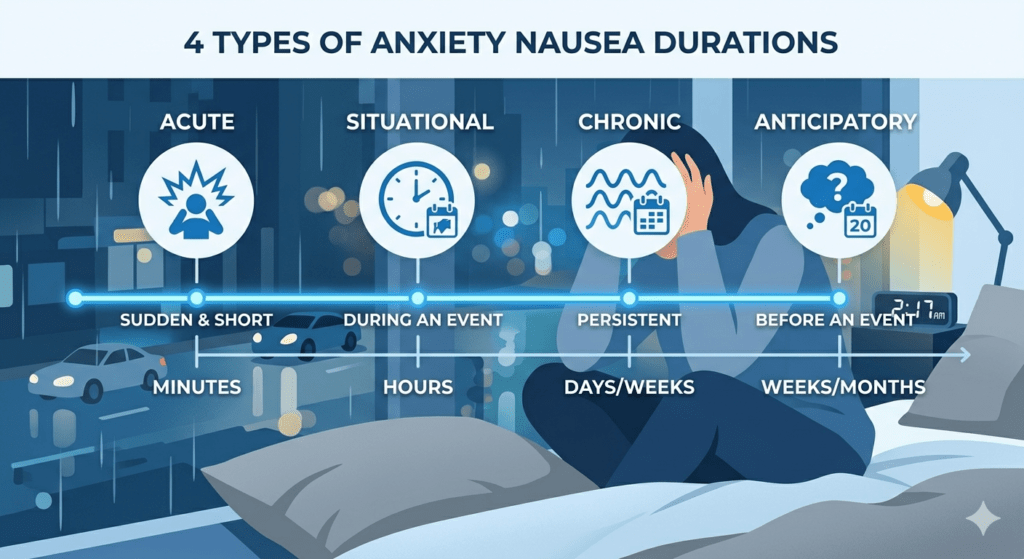
How Long Does Anxiety Nausea Last?
This is one of the most searched questions — and the honest answer is: it depends on the type.
| Type | Duration | Cause |
|---|---|---|
| Acute anxiety nausea | 20–60 minutes | Triggered by a specific panic episode |
| Situational nausea | Several hours | Tied to a specific stressor or event |
| Chronic anxiety nausea | Days to weeks | Ongoing gut microbiome disruption and cortisol elevation |
| Anticipatory nausea | Begins 12–24 hours before the trigger | Brain-gut conditioning from repeated episodes |
The key insight: acute nausea from a single anxiety episode usually resolves within an hour. But if your anxiety is chronic and your gut health has been compromised over time, the nausea can persist and become a daily pattern. That’s when gut-targeted treatment becomes essential — not just anxiety management.
7 Proven Ways to Stop Nausea From Anxiety Fast
1. Activate Your Vagus Nerve Immediately
The fastest way to stop anxiety nausea is to switch your nervous system from fight-or-flight to rest-and-digest — and the vagus nerve is the switch.
Try this right now:
- Exhale longer than you inhale. Breathe in for 4 counts, breathe out slowly for 7–8 counts. Repeat 5 times.
- Splash cold water on your face. Cold water on the face directly stimulates the vagus nerve through the dive reflex.
- Hum or sing softly. Vibrating your vocal cords activates the vagus nerve immediately.
These aren’t relaxation tricks. They are direct neurological interventions that physically switch off the stress response driving your nausea.
2. Use the 5-4-3-2-1 Grounding Technique
When anxiety nausea hits, your brain is catastrophizing. Grounding pulls it back to the present moment and interrupts the anxiety → nausea feedback loop.
Name out loud or in your head:
- 5 things you can see
- 4 things you can physically touch right now
- 3 things you can hear
- 2 things you can smell
- 1 thing you can taste
This takes 60–90 seconds and directly breaks the spiral that’s making your nausea worse.
3. Ginger — The Most Researched Anti-Nausea Remedy
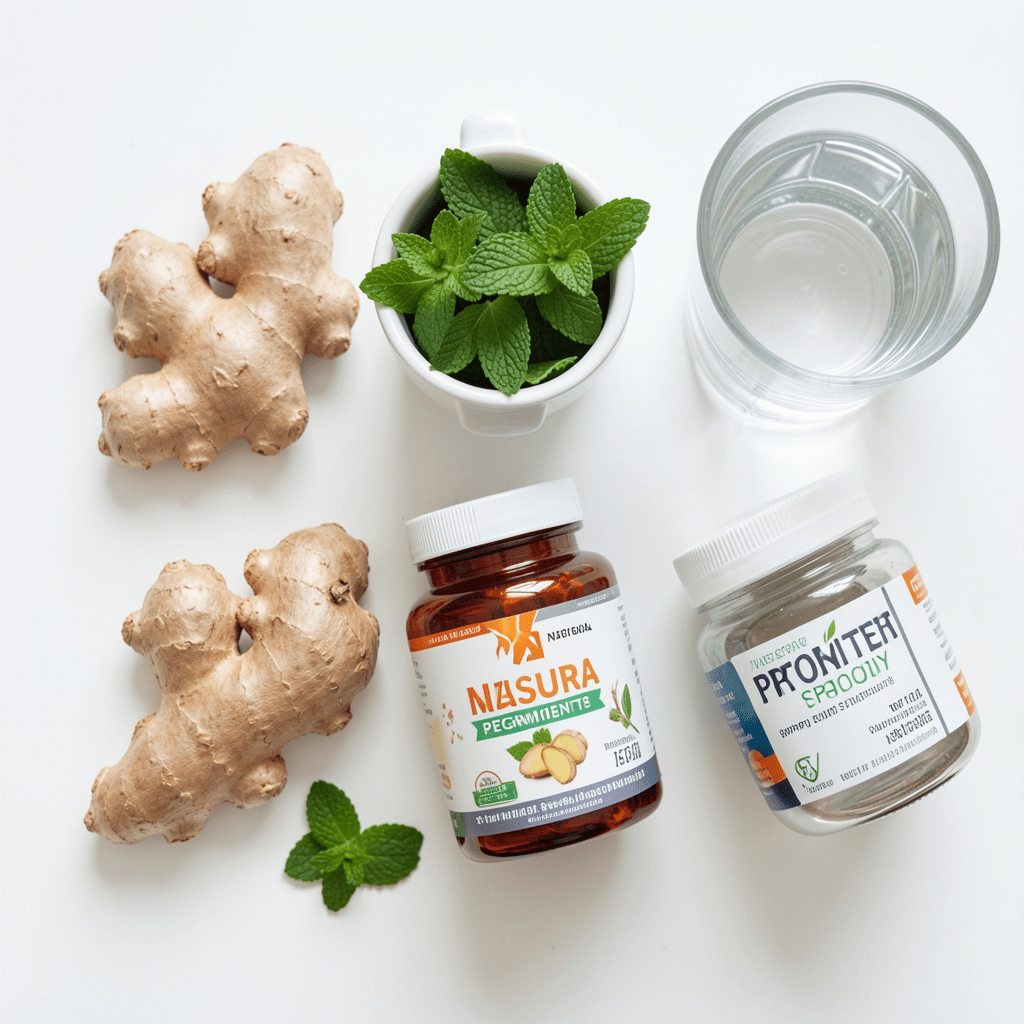
Ginger has been researched for decades as an anti-nausea agent, and it works for anxiety nausea too. It reduces prostaglandin activity in the gut (which cortisol ramps up) and directly calms gastric contractions.
Options:
- Ginger tea (steep fresh ginger for 5 minutes)
- Ginger chews or capsules (250–500mg)
- Ginger ale made with real ginger
Sip slowly — don’t gulp. Cold liquids on a cortisol-spiked stomach can make nausea worse.
4. Eat Small, Low-Trigger Foods
When you’re nauseated, your gut needs calm — not stimulation. Avoid the instinct to either skip eating entirely (which drops blood sugar and worsens anxiety) or eat a large meal (which overwhelms a stressed digestive system).
Best choices during anxiety nausea:
- Plain crackers or rice
- Banana (easy to digest, contains B6 which supports serotonin)
- Plain boiled potato
- Small portion of plain yogurt (live cultures calm gut inflammation)
Avoid: caffeine, alcohol, greasy food, spicy food, large portions.
Related: Best Foods for Gut Health to Reduce Anxiety
5. Peppermint — Fast Gut Muscle Relief
Peppermint (especially peppermint oil) contains menthol, which directly relaxes the smooth muscle of the gastrointestinal tract. This directly counteracts the gut muscle tightening caused by cortisol and vagal stress signals.
Options:
- Peppermint tea (sipped slowly)
- Peppermint oil capsules (enteric-coated work best)
- Simply inhaling peppermint oil from a cotton ball can reduce nausea within minutes
6. Support Your Gut Microbiome Daily
For chronic anxiety nausea — the kind that keeps coming back — the root issue is usually gut microbiome disruption. Short-term relief helps in the moment, but long-term recovery requires rebuilding your gut bacteria.
Daily habits that make a measurable difference:
- Probiotics (especially Lactobacillus rhamnosus and Bifidobacterium longum — both studied for gut-brain axis support)
- Fermented foods daily: yogurt, kefir, kimchi, sauerkraut
- Prebiotic fibre: oats, garlic, onion, bananas — feed the good bacteria
- Remove gut irritants: processed food, alcohol, excess caffeine
- Related: Best Probiotics for Gut Health and Anxiety
7. Magnesium Glycinate Before Bed
Magnesium is one of the most effective and most overlooked tools for anxiety nausea. It relaxes smooth muscle throughout the body (including your gut), regulates cortisol, and activates GABA — your brain’s primary calming neurotransmitter.
200–300mg of magnesium glycinate taken before bed reduces cortisol overnight, which means your stomach starts the next day in a significantly less inflamed, less reactive state.
Most people with anxiety-driven nausea are also magnesium deficient — making this one of the highest-impact supplements you can take.
Related: Does Magnesium Help With Anxiety and Sleep Problems?
When Is Nausea From Anxiety a Warning Sign?
Anxiety nausea is real and manageable — but it’s important to know when nausea might signal something else entirely.
See a doctor if your nausea:
- Comes with vomiting blood or dark material
- Is accompanied by severe abdominal pain
- Lasts more than 2 weeks continuously regardless of anxiety levels
- Comes with unexplained weight loss
- Is accompanied by fever
- Does not improve at all with anxiety management techniques
Conditions like GERD, gastritis, IBS, and H. pylori infection can all produce nausea that mimics anxiety nausea — and can also be worsened by anxiety. Getting a proper diagnosis rules out anything serious and often reveals a treatable physical cause alongside the anxiety component.
Related: Can IBS Cause Anxiety? 7 Shocking Gut-Brain Links
Final Thought
If anxiety nausea is a regular part of your life, here’s what I want you to remember:
It is not weakness. It is not “all in your head.” It is a real, physical, gut-driven response to a nervous system that has been pushed too hard for too long.
Your gut and your brain are in constant conversation. When that conversation becomes dominated by stress and anxiety, your gut suffers — and nausea is one of the loudest ways it tells you something needs to change.
Support your vagus nerve. Rebuild your gut microbiome. Regulate your cortisol. Give your digestive system the calm it needs to recover.
The nausea is a message. Start listening to it — and start answering it with the right tools.
Next Read: Why Does My Stomach Hurt When I’m Anxious? 5 Gut Reasons Explained
FAQ
Can anxiety cause nausea every day? Yes — if your anxiety is chronic and your gut microbiome has been disrupted over time, daily nausea is common. It typically improves when both the anxiety and the underlying gut imbalance are addressed together.
Why do I feel nauseous before a stressful event? This is anticipatory nausea — your brain has learned to associate the upcoming event with anxiety, and pre-activates your gut stress response before the event even starts. It’s a conditioned response, not a sign something is physically wrong.
Does nausea from anxiety mean I’m going to be sick? No. Anxiety nausea is caused by gut muscle contractions, cortisol, and nervous system activation — not a virus or infection. It feels real (because it is) but it’s not contagious and not dangerous.
What stops anxiety nausea fast? The fastest relief comes from vagus nerve activation (slow exhale breathing, cold water on the face) combined with ginger or peppermint. These work within minutes by directly calming the gut-brain stress response.
Can poor gut health make anxiety nausea worse? Yes — significantly. A disrupted gut microbiome makes your digestive system hypersensitive and inflamed, meaning anxiety triggers stronger and longer-lasting nausea. Healing your gut is the most effective long-term strategy for reducing anxiety nausea.
Is nausea a sign of a panic attack? Yes — nausea is one of the recognised physical symptoms of panic attacks, alongside racing heart, shortness of breath, and dizziness. If your nausea comes in sudden intense waves with other physical symptoms, you may be experiencing panic disorder.
Related: How to Stop a Panic Attack Fast: 7 Proven Techniques
Internal Links Summary
- Gut Health and Anxiety: The Complete Guide
- Panic Attacks After Eating
- Cortisol and Gut Health
- Vagus Nerve Exercises for Anxiety
- Can Poor Gut Health Cause Panic Attacks and Anxiety?
- 7 Signs of Poor Gut Health and Anxiety
- Why Do I Feel Anxious for No Reason?
- Best Foods for Gut Health to Reduce Anxiety
- Best Probiotics for Gut Health and Anxiety
- Does Magnesium Help With Anxiety and Sleep Problems?
- Can IBS Cause Anxiety?
- How to Stop a Panic Attack Fast
- Why Does My Stomach Hurt When I’m Anxious?
External Authority Links